Chainsaw Alternative Saw: Which One Should You Buy?
A reciprocating saw, pole saw, hand pruning saw or battery mini chainsaw can stand in for a chainsaw on limbs and storm cleanup; here is which alternative fits which job.

On this page
Top picks at a glance
As an Amazon Associate we earn from qualifying purchases.
- 1
 Husqvarna 460 Rancher Gas Powered Chainsaw9.7/10View on Amazon
- 2
 EGO POWER+ Chain Saw9.7/10View on Amazon
- 3
 SEESII 6-Inch Mini Chainsaw Cordless with Oiler System9.7/10View on Amazon
- 4
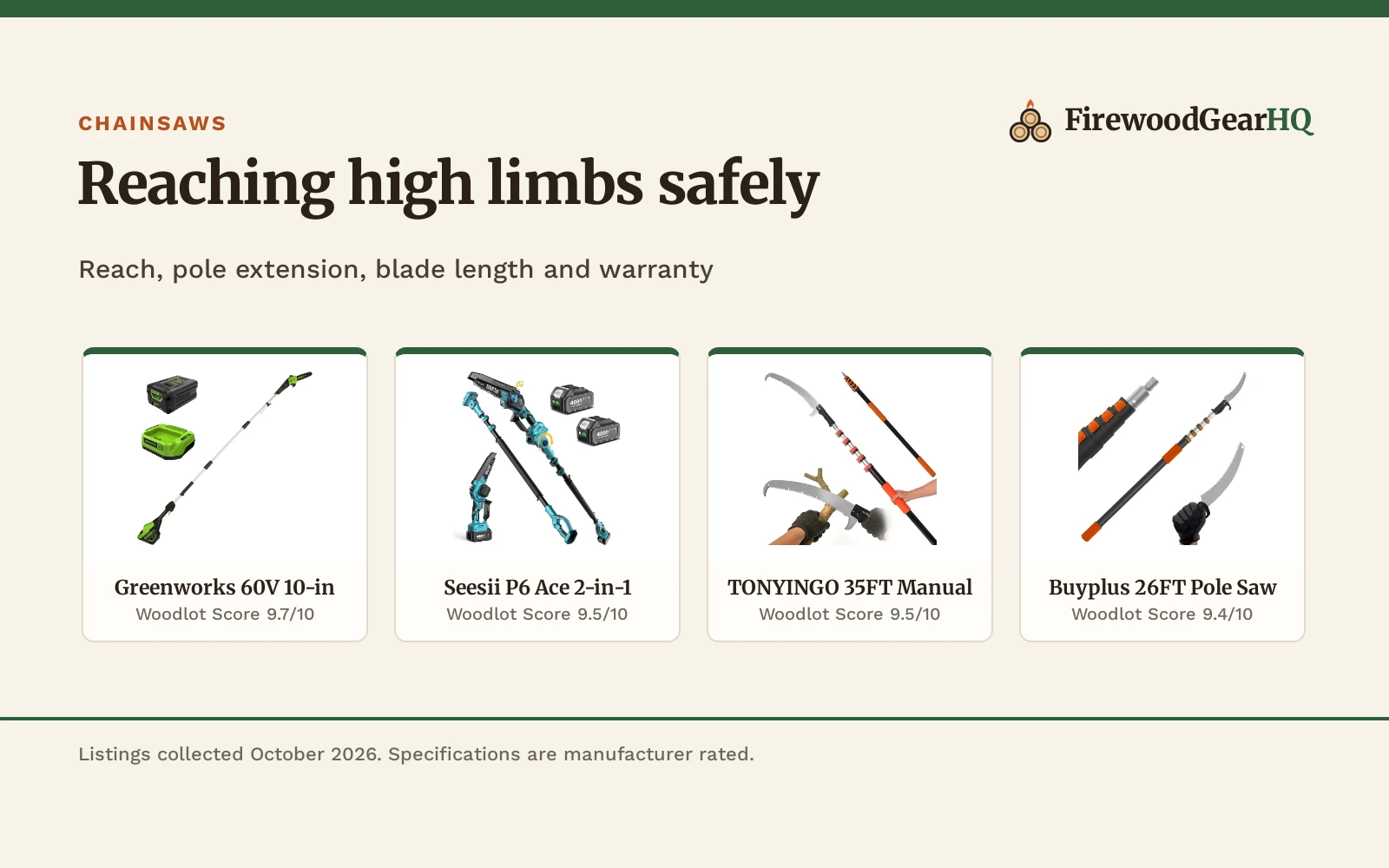
 2-in-1 Cordless Pole SawView on Amazon
- 5
 Electric Pole Saw 8-Inch Corded Pole Saw for Tree TrimmingView on Amazon
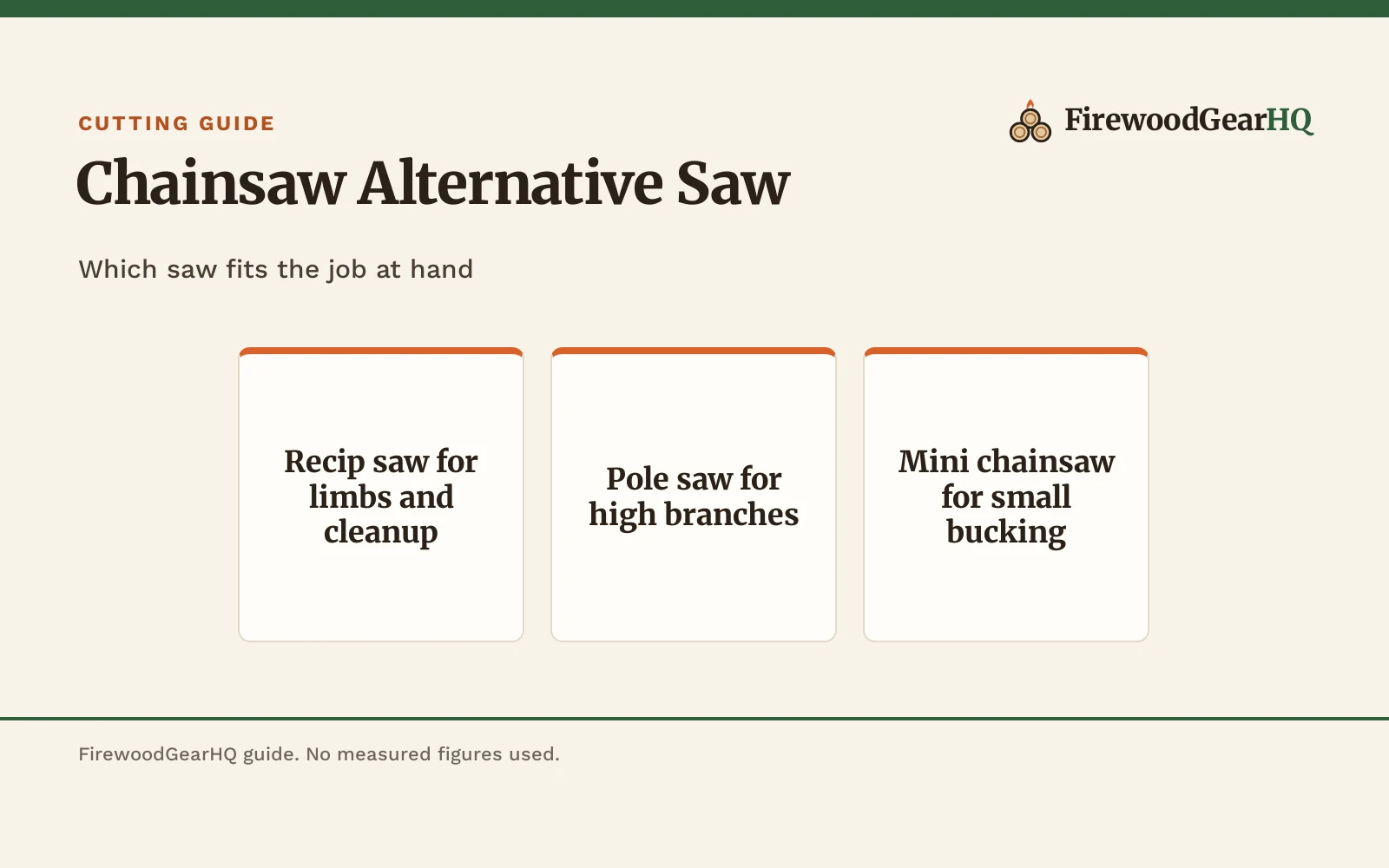
The chainsaw alternative saw that fits your job depends on what you are cutting. A reciprocating saw with a pruning blade handles small limbs and storm cleanup, a pole saw reaches high branches without a ladder, and a hand pruning saw does quiet detail work up close. A battery mini chainsaw sits in the middle for limbing and small bucking. Each of these replaces the chainsaw for part of the work, and none of them replaces it for felling a standing tree or bucking big rounds.
More options to compare
 2-in-1 Cordless Pole SawCheck price on Amazon
 Electric Pole Saw 8-Inch Corded Pole Saw for Tree TrimmingCheck price on Amazon
FirewoodGearHQ may earn a small commission if you buy through links on this page. The price you pay stays the same. Read our affiliate disclosure.
Chainsaw alternative saw: the quick answer
Think in terms of the cut, not the tool. Limbs and brush call for a reciprocating saw or a pruning saw. Branches overhead call for a pole saw. Limbing and cutting small rounds call for a battery mini chainsaw. Felling, big bucking and long firewood days still belong to the chainsaw. Match the saw to the thickest wood you will cut on a regular day, and you will rarely miss the bigger tool.
Reciprocating saw: the most versatile alternative
A reciprocating saw with a long pruning blade is the closest thing to a do-everything substitute for light work. It cuts limbs, roots and storm-tangled brush, it works one-handed in tight spots, and the same tool cuts pipe and lumber when the yard work is done. Battery versions free you from the cord. The limits are real, though: it is slow on thick rounds, the blade wanders on springy branches, and it has no business felling. For cleanup and trimming, it is the alternative most people reach for. See our cordless chainsaw vs reciprocating saw comparison.
Pole saw: the high-branch alternative
A pole saw puts the cutting head at the end of a long pole, so you can prune high limbs with your feet on the ground. Manual pole saws are light and silent and fine for occasional cuts; powered heads, usually battery, chew through thicker branches faster. The trade-off is control: a long pole flexes, and a heavy head at full reach tires arms quickly. Cut in small sections, stand clear of the drop zone so cut branches fall beside you, and never work near overhead wires. See our pole saw vs mini chainsaw comparison.
Hand pruning saw and bow saw: the quiet alternatives
For close work nothing beats a sharp hand saw. A folding pruning saw rides in a back pocket and handles limbs up to wrist thickness with steady strokes. A bow saw with a coarse blade takes larger limbs and small logs, and it costs little to keep and nothing to run. There is no fuel, no cord, no noise and almost nothing to maintain beyond a sharp blade. The cost is your time and your arm: hand saws are for occasional cuts and detail work, not for processing a winter of firewood.
Battery mini chainsaw: the middle-ground option
A battery mini chainsaw looks like a toy and cuts like a real saw on small wood. It limbs felled trees, bucks small rounds and cuts kindling faster than any hand saw, and it is light enough to carry all day. Battery life sets the limit: it is a limbing and cleanup tool, not a felling saw, and thick hardwood will stall a small bar. If most of your cutting is limbs and small rounds, it may be the only saw you need. See our chainsaw types guide for how the power sources compare.
What no alternative does well
Felling a standing tree is chainsaw work, full stop. So is bucking big rounds and processing large volumes of firewood in a day. The alternatives above shine at limbs, brush, overhead pruning and detail cuts; they turn slow and awkward the moment the wood gets thick. If your woodpile depends on big rounds, keep the chainsaw and use an alternative as the backup saw, not the replacement.
Safety gear stays the same
Smaller saws still cut flesh. Wear eye protection with every one of these tools, gloves that grip, and sturdy boots. A reciprocating saw blade is exposed and hungry, a pole saw drops branches on your head, and a mini chainsaw kicks like its bigger brother on a pinch. Chaps made for chainsaws still make sense around the mini saw. Keep bystanders clear and the work area free of trip hazards.
Borrowing or renting before you buy
If the job is a single storm cleanup, borrowing beats buying. A borrowed reciprocating saw and a pruning saw will clear most downed limbs in a day, and you learn which tool you actually reach for. Pole saws and mini chainsaws rent well for a weekend of pruning. If you borrow a chainsaw itself, ask the owner for a starting and safety walkthrough before you cut; a saw you have never run is not the tool to learn on alone.
Turn a stack's length, height and depth into full and face cords, and estimate how much wood a winter takes.
Frequently Asked Questions
Can a reciprocating saw replace a chainsaw for firewood?
For trimming limbs and cutting small rounds, yes. For felling, bucking big rounds or processing volume, no. Many firewood cutters who own them use the reciprocating saw for cleanup and the chainsaw for the heavy work.
Is a pole saw safer than a chainsaw?
For high limbs it keeps you off the ladder, which is a real safety gain. The blade is still dangerous, falling branches are the main hazard, and eye protection is a must. Never cut near overhead wires.
What is the best chainsaw alternative for storm cleanup?
A reciprocating saw with a pruning blade for tangled limbs, backed by a hand pruning saw for detail cuts. Add a battery mini chainsaw if the storm dropped anything thicker than a wrist.
Why won’t my chainsaw start?
The usual suspects are stale fuel, a flooded engine from too much priming, a dirty air filter or a dull chain dragging the engine down. Drain old fuel, let a flooded saw air out, clean the filter and sharpen the chain before assuming something is broken.
How do I use a chainsaw sharpening guide?
Clamp the guide on the bar so the file sits at the marked angle on the tooth. Push the file forward with steady, even strokes, the same number on every tooth, and work around the chain. Finish by checking the depth gauges so each tooth bites evenly.
Related guides
Also see our cordless chainsaw vs reciprocating saw. Also see our pole saw vs mini chainsaw. Also see our chainsaw types. Also see our corded electric vs battery chainsaw. Also see our battery chainsaw DeWalt vs Milwaukee.