Chainsaw File for 3/8 Chain: What Size File to Use
What size chainsaw file for 3/8 chain to use, comparing standard and low-profile chain file diameters, pitch sizes, and depth gauge maintenance.

On this page
Top picks at a glance
As an Amazon Associate we earn from qualifying purchases.
- 1
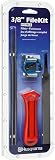 Husqvarna Chainsaw File Kit for 3/8" Pitch H Chainsaw Chains9.6/10View on Amazon
- 2
 Hipa 3/16" Chainsaw File Set for .325 Pitch Chain 12Pack9.6/10View on Amazon
- 3
 Stihl 56057504303 2-in-1 File Holder for Chainsaw Chain 3/8"9.5/10View on Amazon
- 4
 Hipa 5/32" 4.0mm Round Professional Chainsaw Chain FileView on Amazon
- 5
 Oregon 23727 3/16-Inch Chainsaw FileView on Amazon
When you are bucking firewood in the fall or cleaning up fallen timber after a winter storm, nothing halts cutting progress like a dull saw chain. If you need the right chainsaw file for 3/8 chain, the required round file diameter depends on whether your chainsaw runs standard full-size chain or low-profile chain. For standard 3/8 pitch chain, a 7/32 inch (5.5 mm) round file is generally used, while 3/8 low-profile chain requires a 5/32 inch (4.0 mm) round file. Selecting the correct diameter keeps the cutter gullet clear, maintains the proper cutting hook, and restores smooth cutting through firewood rounds.
More options to compare
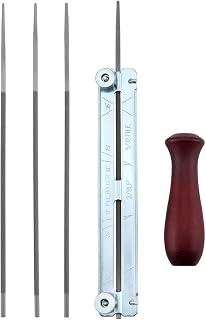 Hipa 5/32" 4.0mm Round Professional Chainsaw Chain FileCheck price on Amazon
 Oregon 23727 3/16-Inch Chainsaw FileCheck price on Amazon
FirewoodGearHQ may earn a small commission if you buy through links on this page. The price you pay stays the same. Read our affiliate disclosure.
The quick answer
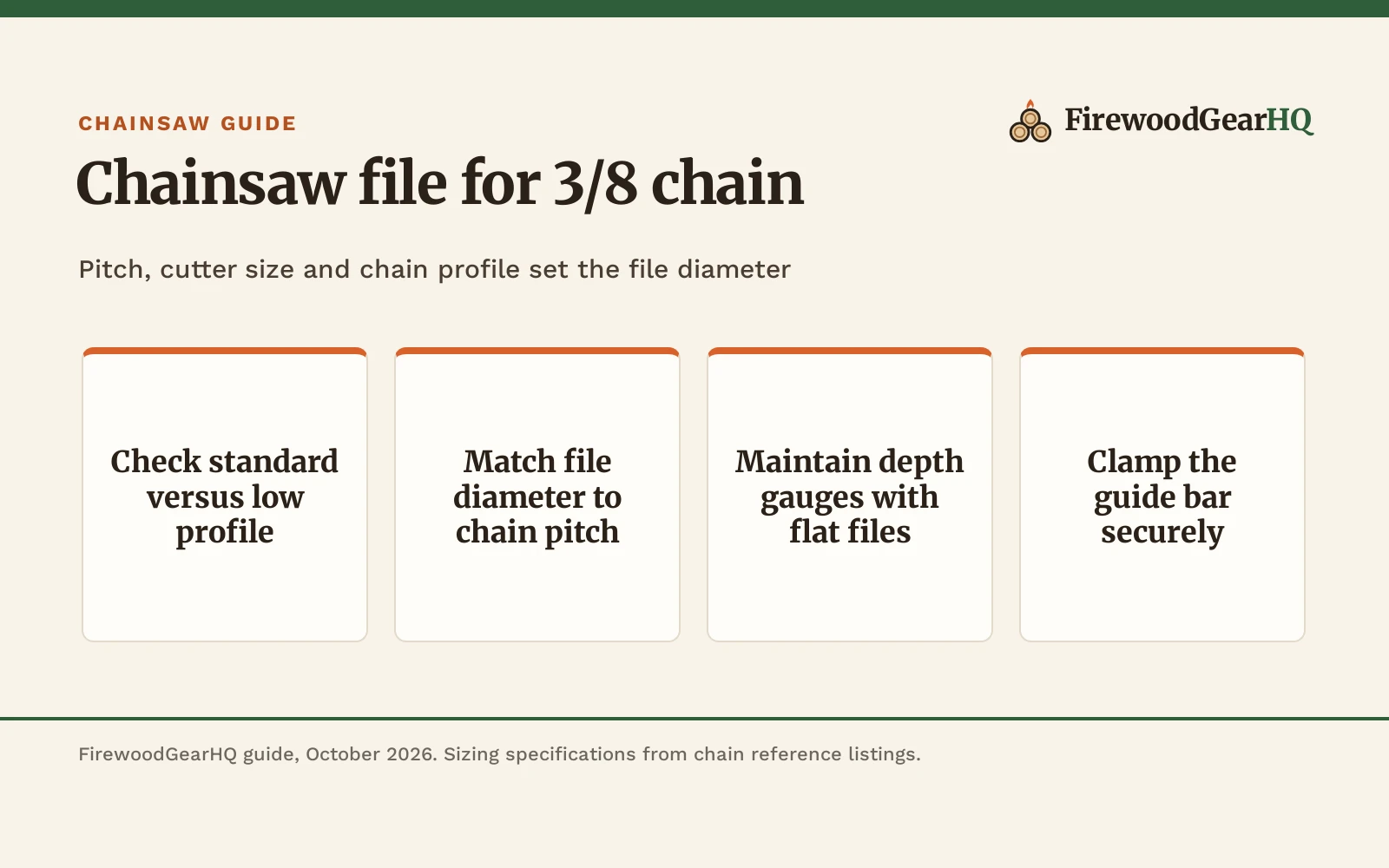
The correct chainsaw file for 3/8 chain depends on whether your saw uses standard full-size chain or low-profile chain. For standard 3/8 inch pitch chains, SKZIRI reference data notes that a 7/32 inch (5.5 mm) chainsaw file is generally used. However, some manufacturer chain types specify a 13/64 inch file, which is included in comprehensive kits like the karvayna set. In contrast, 3/8 inch low-profile chain (marked LP or Picco on compact saws) features smaller cutter teeth and uses a 5/32 inch (4.0 mm) round file, as supplied in Oregon and LIBRATON field kits.
Depth gauges (rakers) regulate how deeply each cutter tooth bites into timber. Sharpening kits from Oregon, LIBRATON, and YINGKESI include a 6 inch flat file and depth gauge tools to lower rakers as cutter teeth wear back. Maintaining proper depth gauge clearance allows the cutters to bite smoothly without grabbing or chattering in the cut.
Chainsaw file for 3/8 chain size chart
| Chain Pitch and Type | Round File Size | Notes and Applications |
|---|---|---|
| Standard 3/8 in pitch | 7/32 in (5.5 mm) | SKZIRI listing notes 7/32 in is generally used for 3/8 in chain |
| Standard 3/8 in (select brands) | 13/64 in | karvayna multi-size kit includes 13/64 in for specific 3/8 chains |
| 3/8 in Low Profile (LP) | 5/32 in (4.0 mm) | Oregon and LIBRATON listings note 5/32 in for compact cutter teeth |
| 0.325 in pitch | 3/16 in (4.8 mm) | SKZIRI listing notes 3/16 in is usually used for 0.325 in pitch |
| 1/4 in pitch | 5/32 in (4.0 mm) | SKZIRI listing notes 5/32 in can be used for 1/4 in pitch |
| Depth gauges (rakers) | 6 in flat file | Oregon, LIBRATON, and YINGKESI listings supply a 6 in flat file |
Use the chart to verify your chain specifications before sharpening. Selecting the wrong file diameter alters the cutting hook angle, leading to rough operation or premature dulling.
How to determine file size for chainsaw
Check the guide bar stampings
The quickest way to verify chain specifications is reading the stamped text on your guide bar near the powerhead mount. Manufacturers stamp the pitch, gauge, and drive link count into the steel. A 3/8 pitch mark confirms the pitch family, but you must also check for designations that distinguish standard from low-profile chain. Markings such as LP, P, or Picco indicate a low-profile chain requiring a 5/32 inch round file, whereas standard 3/8 chains generally use a 7/32 inch round file.
Distinguish standard 3/8 from 3/8 low profile
Standard 3/8 chain features taller, heavier cutters suited for high-displacement firewood saws. Low-profile 3/8 chain has shorter cutters and a narrower kerf for smaller gas or battery chainsaws. If you are unsure which chain you have, see our guides on what chainsaw chain do I need and the best chainsaw chains.
Identify the drive link markings
If bar stampings have rubbed off, inspect the drive links that ride inside the bar groove. Manufacturers stamp model numbers on these drive links that correspond to their pitch and gauge specifications.
Match the cutter gullet radius
A round file must match the curve of the tooth gullet so a portion of the file rides slightly above the top cutting plate. This geometry forms a sharp slicing hook. An undersized file cuts too deep into the gullet and weakens the tooth edge, while an oversized file rides too high and leaves a blunt cutting edge.
Pair round files with a flat file for depth gauges
As cutters shorten from repeated filing, depth gauges in front of each tooth must be lowered. The depth gauge sets how deep the tooth bites on each pass. Sharpening sets from Oregon, LIBRATON, and YINGKESI supply a 6 inch flat file and gauge guide for this task, ensuring the cutters take a consistent shaving without grabbing timber.
How to tell when a chainsaw chain is dull
Cutting with a dull chain strains the saw engine and overheats the guide bar. Watch for these clear field signs:
- Fine sawdust instead of chips: a sharp chain throws coarse wood chips, while dull cutters produce fine, powdery sawdust.
- Self-feeding stops: a sharp chain pulls itself into the wood. Needing downward force on the handlebars indicates dull teeth.
- Crooked cutting: if the bar pulls to one side during a cut, teeth on one side are duller or filed unevenly.
- Smoke and scorch marks: dull cutters create friction that scorches wood fibers and causes bar smoke even with proper oiling.
- Visible cutter wear: rounded cutting edges, flat spots, or nicked chrome corners from contact with dirt or stone.
The OSHA logging eTool emphasizes that sharp chain cutters and correct chain tension reduce cutting fatigue and help prevent kickback hazards during firewood bucking.
What happens if you use the wrong file size
Using the wrong file size alters the tooth angle. An oversized 7/32 inch file on a 3/8 low-profile chain sits too high, leaving a blunt edge that scrapes timber rather than cutting. The operator is forced to push down, causing premature bar wear.
An undersized 5/32 inch file on standard 3/8 chain digs too deep into the gullet, producing a thin, fragile hook that dulls quickly and chatters in the cut. If your saw wanders after sharpening, see our guide on why does my chainsaw cut crooked, and read how often should you sharpen a chainsaw chain.
Filing guides and complete sharpening kits
Freehand filing takes practice, but a filing guide holds the round file at a consistent angle. For example, PFERD’s CS-X sharpener guide provides a sharpening angle of 30 degrees, which is a common angle used for crosscutting firewood logs, though operators should always match the angle stamped on their chain’s witness mark.
Field kits from Oregon, Buhobha, and LIBRATON package round files, a 6 inch flat file, universal handles, and guides in a compact pouch. Securing your saw in a field vise makes sharpening easier on the woodlot. See our review of the stump vise for chain saw sharpening and learn how to use a stump vise. You can also explore our guide to the best chainsaw sharpeners.
Wear eye protection and gloves for cutting, splitting and handling, follow every tool's manual, install stoves to code, and have the chimney inspected and cleaned every year. See EPA Burn Wise and NFPA heating safety. Read our Safety Disclaimer.
Frequently Asked Questions
What size file for 3/8 chainsaw chain?
Standard full-size 3/8 pitch chain generally uses a 7/32 inch (5.5 mm) round file, as stated in SKZIRI reference data, though some specific chains use a 13/64 inch file. If your saw runs 3/8 low-profile chain (3/8 LP), it uses a 5/32 inch (4.0 mm) round file, as supplied in Oregon and LIBRATON kits.
What size file for .325 chainsaw chain?
A 0.325 pitch chain uses a 3/16 inch (4.8 mm) round file. SKZIRI reference data notes that a 3/16 inch (4.8 mm) file is usually used for a chain with a pitch of 0.325 inch.
What size file for my chainsaw chain?
Check your chain pitch on the guide bar stamping. A 1/4 pitch chain and 3/8 low-profile chain use a 5/32 inch (4.0 mm) file, a 0.325 pitch chain uses a 3/16 inch (4.8 mm) file, and standard 3/8 pitch chain generally uses a 7/32 inch (5.5 mm) file.
How to determine file size for chainsaw?
Read the stamped numbers near the motor end of your chainsaw guide bar to find the pitch and gauge. You can also check the manufacturer number on the drive links or verify tooth pitch with a quick check gauge from a sharpening kit.
What size chainsaw file to use on low profile chain?
A 3/8 low-profile chain uses a 5/32 inch (4.0 mm) round file. Because low-profile cutters are shorter, using a standard 7/32 inch file would sit too high and create a blunt edge.
Related guides
See the chainsaw gear hub, the best chainsaw sharpener guide, and the stump vise for chain saw sharpening review. Learn proper cutting maintenance in our guides on how often should you sharpen a chainsaw chain, why does my chainsaw cut crooked, and how to use a stump vise. Choosing replacement chain? Explore what chainsaw chain do I need, best chainsaw chain, full chisel vs semi chisel chain, and chainsaw chain with carbide teeth. For safe firewood cutting, review our chainsaw safety gear checklist, best chainsaw chaps, best chainsaw gloves, and the chainsaw chaps size chart. Also see our guides on the best chainsaw for firewood, best bar and chain oil, best chainsaw case, and top chainsaw manufacturers.