Wood Pucks vs Wood Chunks for Smoking: Which One Should You Buy?
Wood pucks and wood chunks compared for smoking, with four chunk listings for offset smokers, grills, fire pits and pizza ovens.

On this page
Top picks at a glance
As an Amazon Associate I earn from qualifying purchases.
- 1
 Weber® Pecan Wood Chunks9.7/10View on Amazon
- 2
 Fire & Flavor Hickory Wood Chunks for Smokers9.3/10View on Amazon
- 3
 Fire & Flavor Cherry Wood Chunks for Smokers9.2/10View on Amazon
- 4
 Weber® Cherry Wood ChunksView on Amazon
- 5
 Camerons All Natural Apple Wood Chunks for Smoking. 420 Cu inView on Amazon
- 6
 Almond Only 1-2 Inch Smoking Wood ChunksView on Amazon
- 7
 Lumberer Hickory Wood Smoking ChunksView on Amazon
- 8
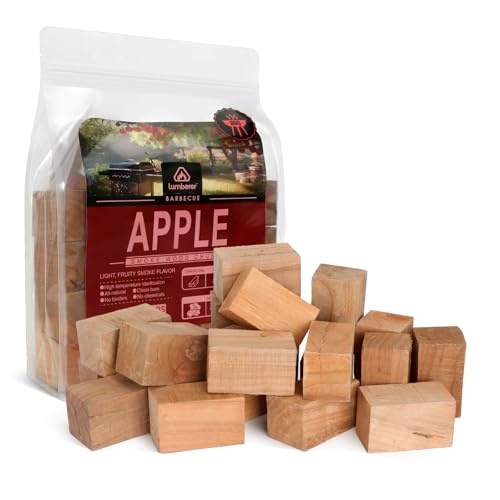 Lumberer Apple Wood Smoking ChunksView on Amazon
- 9
 Western Wood Smoking Chunks Variety PackView on Amazon
Standing at the smoker with a bag in hand, the choice comes down to format before flavor, and wood pucks vs wood chunks for smoking is really a question about what your smoker is built to burn. Pucks are small, uniform discs made to feed a puck smoker in a steady stream, while chunks are larger, irregular pieces of real wood that sit on coals or a heat source and smolder. If your smoker takes chunks, buy chunks. If it takes pucks, buy pucks. The rest of this guide explains how chunks behave, which flavors suit which foods, and which chunk listings fit which setup.
More options to weigh up
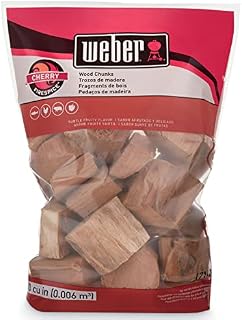 Weber® Cherry Wood ChunksCheck price on Amazon
 Camerons All Natural Apple Wood Chunks for Smoking. 420 Cu inCheck price on Amazon
 Almond Only 1-2 Inch Smoking Wood ChunksCheck price on Amazon
 Lumberer Hickory Wood Smoking ChunksCheck price on Amazon
 Lumberer Apple Wood Smoking ChunksCheck price on Amazon
 Western Wood Smoking Chunks Variety PackCheck price on Amazon
FirewoodGearHQ earns a small commission if you buy through links on this page. The price you pay stays the same. Read our affiliate disclosure.
The quick answer
Chunks suit offset smokers, charcoal grills, outdoor smokers and fire pits, because they can sit directly on hot coals or a heat source until they smolder, and more can be added to build flavor during a cook. Pucks suit a smoker designed around a puck feed, where uniform pieces advance on a schedule the smoker controls. Chunk sizes and pack volumes differ by listing, so check the stated size before buying. For most backyard smokers, chunks are the natural fit.
How pucks and chunks differ
A puck is a manufactured disc, pressed to a consistent size so a feeder can move it along without jamming. A chunk is a cut piece of hardwood, kiln dried or seasoned. That difference drives everything else. Pucks give steady, repeatable smoke from a machine built for them, but they are made for that feeder. Chunks give a cook control: place a piece on the coals, let it smolder, and add another when the smoke thins. Chunks also pair with a wider range of cookers, from gas grills and charcoal grills to offset smokers and fire pits, because they do not need a feeder.
Flavor works differently across the two formats as well. With chunks, the wood species is the flavor: apple is a mild fruitwood, mesquite is paired with pork, beef and cheese, pecan is paired with pork, beef and chicken, and almond gives a mild, sweet smoke. With pucks, the flavor still comes from the species, but the format limits the choice to whatever puck flavors the smoker maker sells. The Oklahoma Joe’s listings also suggest combining flavors to create a signature blend.
Handling is the other practical split. Chunk packs need dry storage and a hand to place each piece, and the listings state different weights and pack volumes. Pucks stack neatly and feed themselves, which suits a cook who wants to set the smoker and walk away. Soaking is not a step these listings ask for: the Camerons listing states no pre-soaking is required, and its direction is to place chunks on hot coals or a heat source until smoldering.
Wood pucks vs wood chunks for smoking: how to choose
Match the chunk to the smoker
Start with the cooker, not the flavor. The Oklahoma Joe’s listings recommend their chunks for Highland Offset, Longhorn Offset, Canyon Combo, Bandera Vertical and Bronco Drum Smokers, which covers offset, combo, vertical and drum shapes. The Camerons listing is broader, naming gas grills, charcoal grills, outdoor smokers, offset smokers and fire pits, so it suits a cook who moves between cookers. The almond listing adds pizza ovens and solo-style stoves to the list, which matters for a cook who wants one wood for both smoking and pizza. If the smoker is not named, check the listing before buying.
Match the flavor to the food
Apple is the safe all-rounder in this set. The Camerons listing pairs apple with poultry, beef, pork, seafood, lamb, game, veggies and cheese, and calls apple a mild fruitwood. The Oklahoma Joe’s mesquite listing pairs mesquite with pork, beef and cheese, while the pecan listing pairs pecan with pork, beef and chicken. Almond is mild and sweet, and its listing pairs it with meat, veggies and wood-fired pizza, with a note that it burns hot for crispy crusts. A cook who smokes mostly poultry and pork can start with apple or pecan, while a cook who wants mesquite smoke for beef can reach for mesquite.
Check size, weight and seasoning
Chunk listings state size in different ways, so read the box or bag, not just the title. Camerons states a 420 cu in box, while both Oklahoma Joe’s listings state 432 cu in bags, and the almond listing states chunks of 1 to 2 inches by 3 inches long. Weight follows the same pattern: Camerons lists 5 lb on the title while its bullets say approximately 3 to 5 lb depending on the wood variety, so expect the box weight to vary by variety. Almond lists 13 lb, more than the Camerons box weight. Seasoning also differs: Camerons lists kiln dried timber, Oklahoma Joe’s lists seasoned hardwood, and almond lists 14-month seasoned wood roasted at 400 degrees Fahrenheit for 80 minutes and 90 percent bark-free. Those details shape how a chunk burns.
The chunks in this guide
Camerons Apple Wood Chunks
Apple is the most versatile chunk in this guide, and it ranks first for that reason. The listing states kiln dried timber with no additives, chemicals or fillers, and it says the chunks ignite quickly and burn complete to a delicate smoky flavor, with no pre-soaking required. The stated uses run from gas grills and charcoal grills to outdoor smokers, offset smokers and fire pits, and the stated food pairings run from poultry and pork to seafood, lamb, game, veggies and cheese. The box is stated as 420 cu in. One contradiction needs a note: the title states 5 lb while the bullets state approximately 3 to 5 lb depending on the wood variety, so a buyer should expect the box weight to vary by variety, and the listing itself warns that unit weight varies by species.
Almond Only Smoking Wood Chunks
Almond ranks second because it brings the heaviest stated weight and the most detailed seasoning story. The listing states 13 lb of almond chunks at 1 to 2 inches by 3 inches long, roasted at 400 degrees Fahrenheit for 80 minutes, with 14-month seasoning and 90 percent bark-free wood. It also states a mild, sweet smoke for meat, veggies and wood-fired pizza, and a hot burn for crispy crusts in pizza ovens. That pizza-oven note sets it apart here. One contradiction needs a note: the title states chunks of 1 to 2 inches while the spec table lists dimensions of 2.5 inches by 1.5 inches by 1.5 inches, so trust the title and bullets over the spec table.
Oklahoma Joe’s Mesquite Wood Chunks
Mesquite ranks third as the bold-flavor chunk in this guide. The listing states 100 percent natural seasoned hardwood with no unwanted byproducts, consistently sized for reliable smoking, in a 432 cu in bag. It pairs mesquite smoke with pork, beef and cheese, and it recommends the chunks for Highland Offset, Longhorn Offset, Canyon Combo, Bandera Vertical and Bronco Drum Smokers. It also suggests combining flavors to create a signature blend, which suits a cook who already has a mild wood at home and wants a second flavor beside it. Mesquite suits beef and pork cooks more than poultry alone.
Oklahoma Joe’s Pecan Wood Chunks
Pecan ranks fourth, close behind mesquite, because its listing is nearly identical except for flavor and pairing. The listing states the same 100 percent natural seasoned hardwood, the same consistent sizing and the same 432 cu in bag, and it names the same recommended smokers. The difference is the pairing: pecan is paired with pork, beef and chicken, which makes it the better choice of the two for a cook who smokes chicken often. It is also stated as made in America, a point the mesquite listing does not state. Between the two Oklahoma Joe’s listings, the stated differences are flavor and the made-in-America note.
FAQ: wood, fire and gear
Can wood chunks be used in a gas grill?
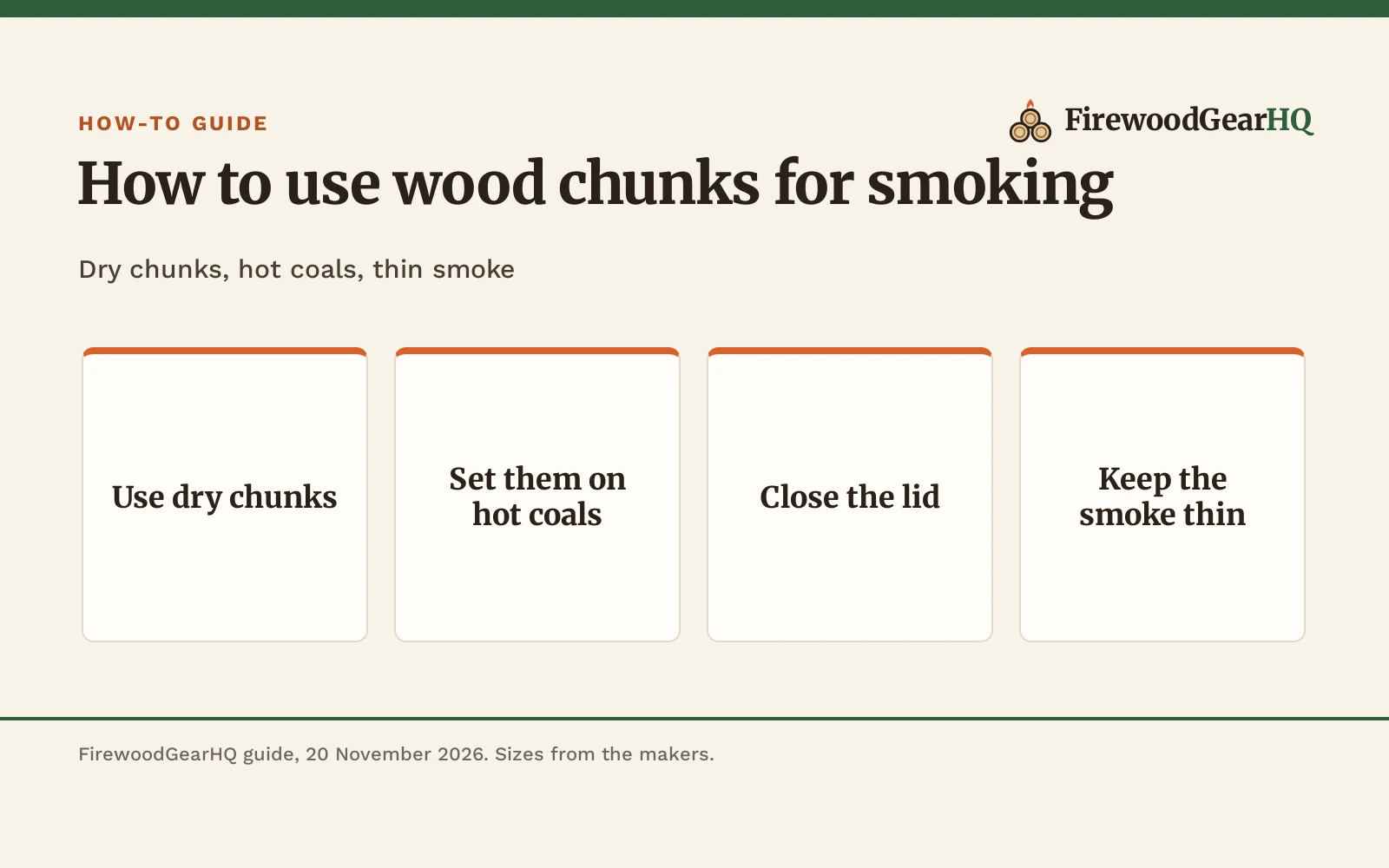
Yes, the Camerons listing names gas grills among its uses, with chunks placed on hot coals or a heat source until smoldering.
Do wood chunks need soaking before smoking?
The Camerons listing states no pre-soaking is required, and its direction is to place chunks on hot coals or a heat source until smoldering; the other listings here do not mention soaking.
Which chunk flavor suits pork and beef?
Apple suits both, mesquite is paired with pork and beef, and pecan is paired with pork, beef and chicken, so any of the three fits a pork and beef cook.
What size are the chunks in this guide?
Camerons states a 420 cu in box, both Oklahoma Joe’s listings state 432 cu in bags, and almond states chunks of 1 to 2 inches by 3 inches long.
Can the same chunks be used for pizza ovens?
The almond listing names pizza ovens and solo-style stoves among its uses, with a hot burn for crispy crusts, while the other listings here do not name pizza ovens.
More firewood guides
Also see our wood chips vs wood chunks for smoking, wood chunks vs wood pellets for smoking, wood splits vs wood chunks for smoking and best offset smoker for beginners guides.