Stove Cement vs Stove Paint: Which One Should You Buy?
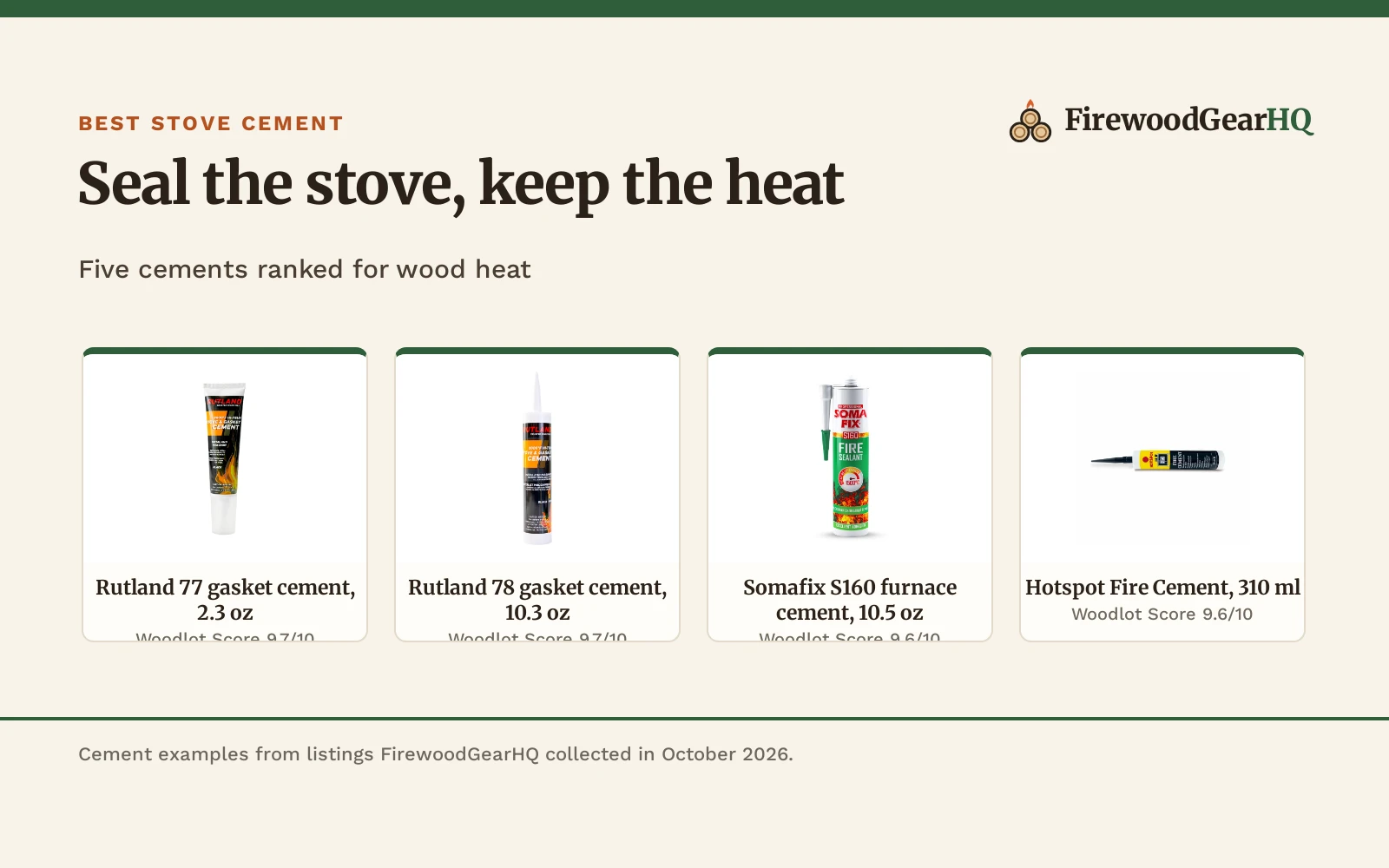
Stove cement seals cracks and joints while stove paint refinishes the surface, and two Rutland cement examples show what cement does.

On this page
Top picks at a glance
As an Amazon Associate I earn from qualifying purchases.
- 1
 Rutland Products Black, 10.3 fl oz Cartridge9.6/10View on Amazon
- 2
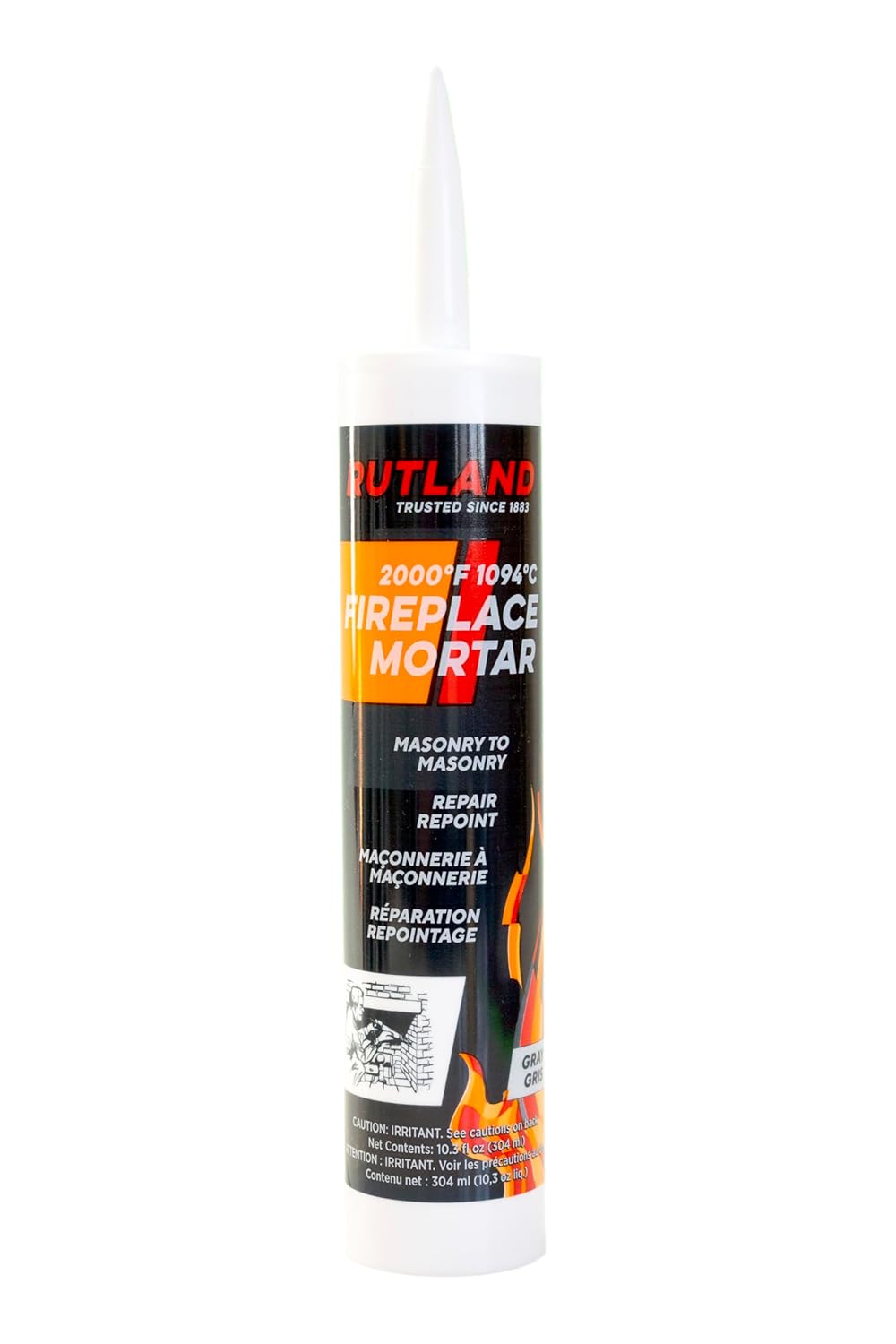 Rutland Fireplace Mortar for Fire Brick & Crack9.4/10View on Amazon
Verdict: Choose stove cement if the job is sealing a crack, re-pointing a mortar joint, resetting firebrick or bonding metal to masonry. Choose stove paint if the job is only the look of the stove surface, not a repair.
A cracked joint and a tired finish are different jobs. Stove cement vs stove paint comes down to that difference: cement seals and bonds, while paint coats a surface. This comparison walks through both jobs, then the cement examples from the listings.
FirewoodGearHQ earns a small commission if you buy through links on this page. The price you pay stays the same. Affiliate disclosure.
Two examples

Rutland Products Black, 10.3 fl oz Cartridge
A black furnace cement in a 10.3-ounce cartridge for bonding and sealing metal to metal or metal to masonry joints, rated to withstand up to 2000°F.
Pros
- Bonds and seals metal to metal or metal to masonry
- Rated to withstand up to 2000°F
- Approximate coverage of 99 feet with a 1/8-inch bead
- Water resistant per the spec table
Cons
- Black only in this listing
- Single cartridge per pack
- Coverage stated as approximate
- A repair compound, not a finish coat
Rutland Fireplace Mortar for Fire Brick & Crack
A gray fireplace mortar in a 10.3-ounce cartridge for bonding firebrick and masonry, withstanding temperatures up to 2,000°F.
Pros
- Bonds firebrick and masonry
- Withstands temperatures up to 2,000°F
- Paste in a 10.3-ounce cartridge
- From a maker founded in 1883 in Vermont
Cons
- Not water resistant per the spec table
- Gray only in this listing
- No coverage figure is stated
- Single cartridge per pack
More options to weigh up
 Furniture Clinic Stove RestorerCheck price on Amazon
 JENOLITE Directorust BBQ & Stove Aerosol PaintCheck price on Amazon
 Forrest Paint 1990 Stove Bright Paint Satin Black Brand:Check price on Amazon
 Furnace CementCheck price on Amazon
 Stove Bright High Temp PaintCheck price on Amazon
 Stove Bright Paint Prep Brand: Forrest PaintCheck price on Amazon
Stove cement vs stove paint side by side
| Factor | Stove cement | Stove paint | Example |
|---|---|---|---|
| Job | Seals cracks, joints and firebrick | Coats the stove surface | 63G and 64C |
| Form | Paste in a cartridge | Not stated | 63G and 64C |
| Heat limit | Up to 2,000°F | Not stated | 63G and 64C |
| Coverage | 99 feet with a 1/8-inch bead (64C only) | Not stated | 64C |
| Water resistance | Water Resistant (64C); Not Water Resistant (63G) | Not stated | 63G and 64C |
| Warranty | Eighteen (18) months; 12 months | Not stated | 63G and 64C |
| Example: Rutland 63G Fireplace Mortar | 10.3-ounce cartridge, Gray, 1.2 pounds | Not applicable | 63G |
| Example: Rutland 64C Furnace Cement | 10.3-ounce cartridge, Black, 1.4 pounds | Not applicable | 64C |
Cement figures are from the listings; paint figures are not stated in the listings, collected 25 October 2026.
The cement job: sealing and bonding
Cement is the repair side. The listings show it sealing stove cracks, re-pointing mortar joints, resetting firebrick, attaching a stove collar and bonding metal to metal or metal to masonry. Both examples come as a paste in a 10.3-ounce cartridge, and both are rated for high heat: the 63G example up to 2,000°F and the 64C example up to 2000°F. If a crack needs sealing, a joint needs re-pointing or a firebrick sits loose, cement is the product for that job.
The paint job: finish only
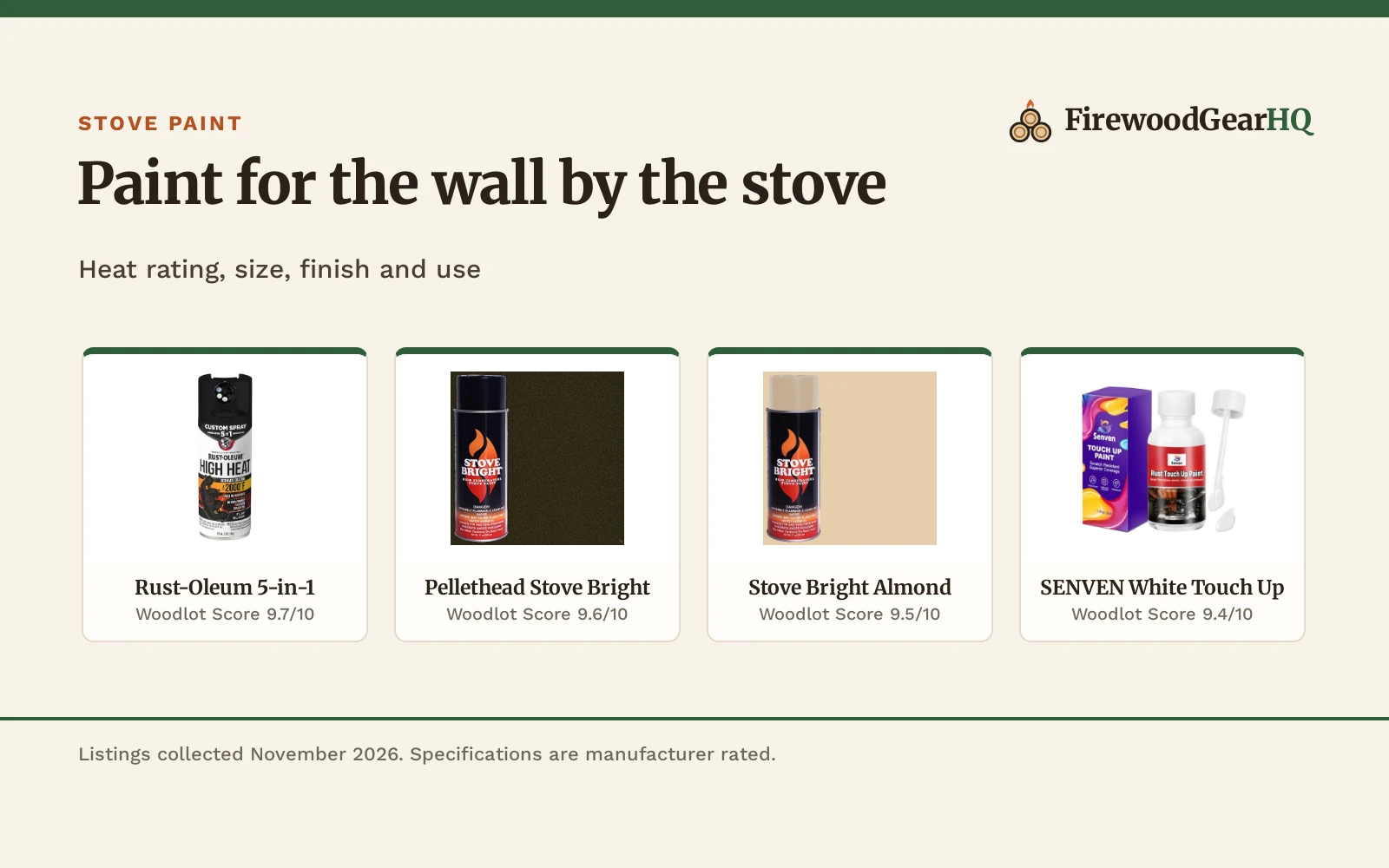
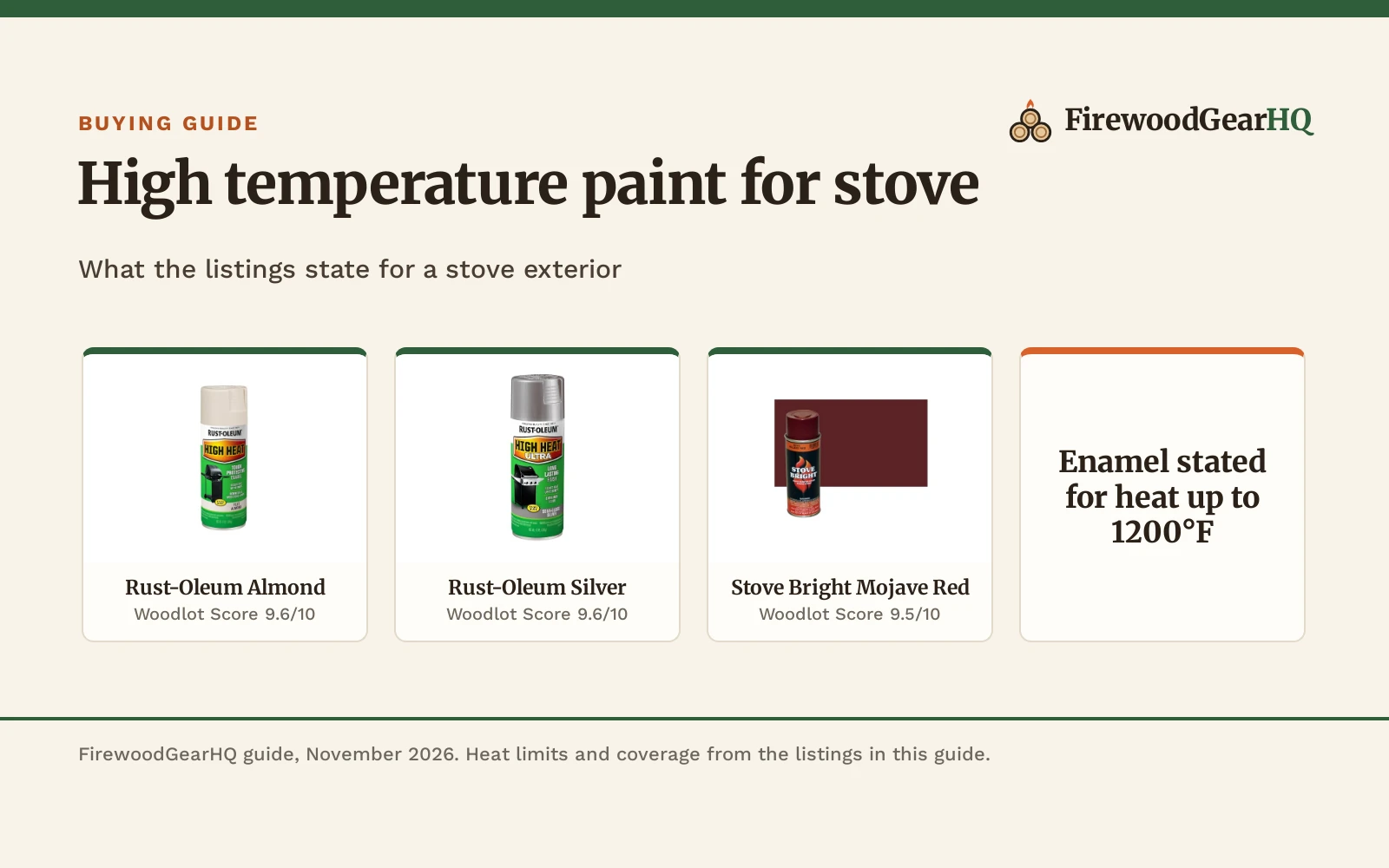
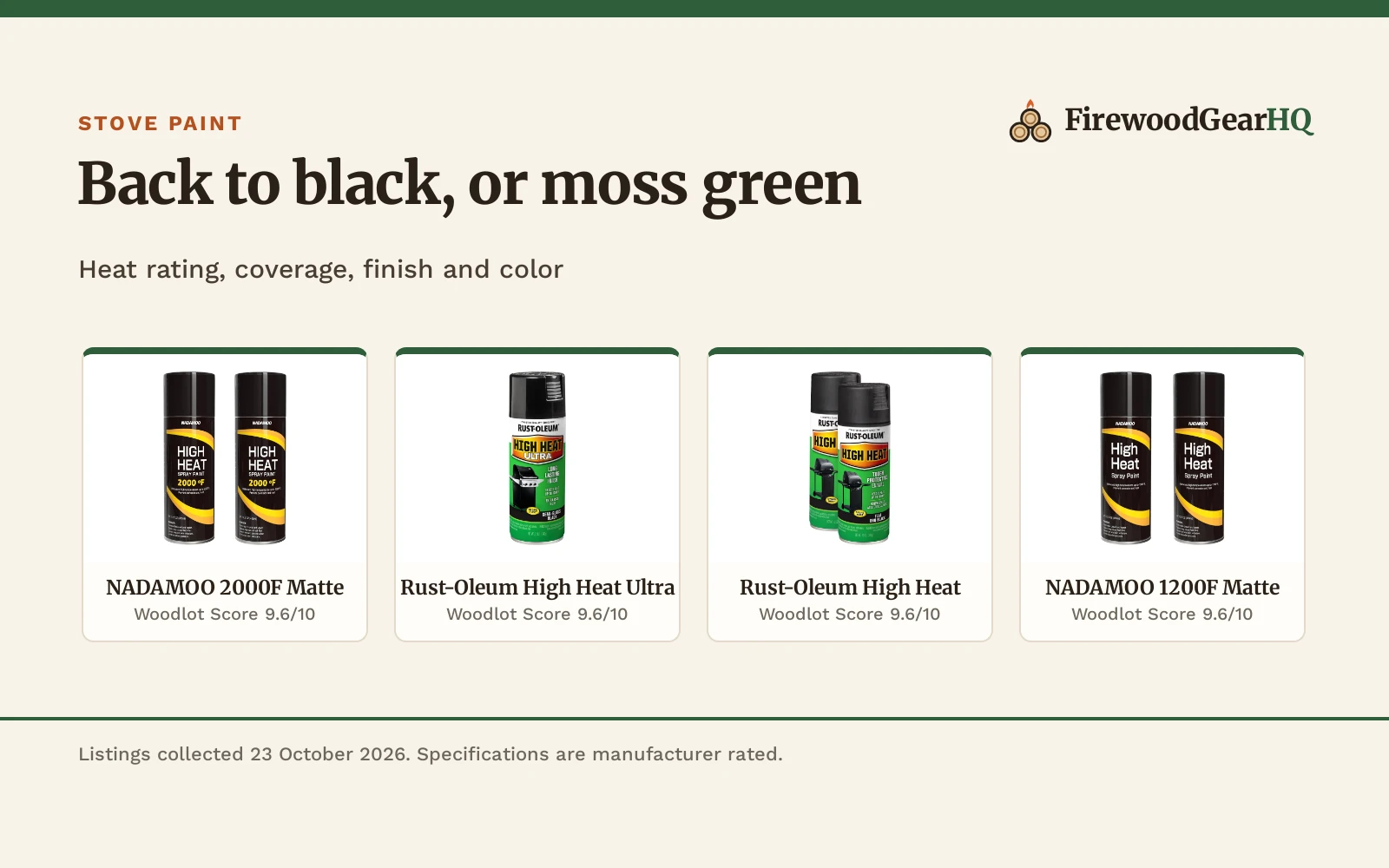
Paint is the finish side. It coats a stove surface and changes how the stove looks, but it does not seal a crack, bond a joint or reset firebrick. That distinction decides the purchase: a cracked joint painted over is still a cracked joint, and a sound stove does not need cement for looks alone. Where the job is appearance, paint is the right shelf; where the job is a repair, paint is the wrong product.
Heat, form and packaging
Both cement examples share the same package: a paste in a 10.3-ounce cartridge. The 63G example is Gray and weighs 1.2 pounds; the 64C example is Black and weighs 1.4 pounds. Both carry a high-heat limit, so heat alone does not separate them. Color and the small weight difference are the remaining differences, and neither changes what the product does.
Coverage and water resistance
Only the 64C example states a coverage figure: approximately 99 feet with a 1/8-inch bead. The 63G listing states no coverage figure, so a buyer planning a large rebuild cannot size the job from that listing alone. Water resistance splits the two examples: the spec table lists the 64C example as Water Resistant and the 63G example as Not Water Resistant.
Warranty
The warranty terms differ. The 63G example lists eighteen (18) months against defects in material and manufacture, while the 64C example lists 12 months. Neither term changes the job the product does, but the longer term on the 63G example is worth noting when the two cartridges sit side by side.
Scoring the woodpile
Each example is scored on performance, build, value, safety and warranty, using only what the listing publishes. The weights are on the How We Pick page.
| Product | Woodlot Score | Perf. /35 | Build /25 | Value /25 | Safety /10 | Warranty /5 |
|---|---|---|---|---|---|---|
| Rutland 64C Furnace Cement | 9.6 | 32 | 21 | 21 | 7 | 3 |
| Rutland 63G Fireplace Mortar | 9.4 | 30 | 20 | 19 | 7 | 0 |
We never show a score below 8.8 or above 9.8. Points set where a pick lands, and every rank in a guide sits at least 0.1 under the rank before it, so scores never tie.
Install stoves and inserts to the manufacturer's instructions and your local code, usually by a certified installer with a permit and inspection. Keep the listed clearances to combustibles, run working smoke and carbon monoxide detectors, have the chimney inspected and cleaned every year to prevent creosote fires, burn only seasoned wood, and check local burn rules. See EPA Burn Wise, NFPA heating safety, CPSC carbon monoxide guidance and the Chimney Safety Institute of America (CSIA). Read our Safety Disclaimer.
Around the Woodpile
- Use cement for cracks, joints and firebrick, not as a finish coat.
- Check the spec table for water resistance before choosing between the two examples.
- Confirm the warranty term on the listing: eighteen (18) months for the 63G example, 12 months for the 64C example.
- Keep smoke and carbon monoxide alarms working whenever the stove is in use.
FAQ: wood, fire and gear
Can stove paint seal a crack?
No. Paint coats a surface; sealing a crack is a cement job, and the cement examples here bond and seal joints and firebrick.
Can stove cement refinish a stove?
No. Cement is a repair compound, not a finish coat. The two examples are gray and black pastes for joints and firebrick, not a refinishing coat.
Which cement example states a coverage figure?
Only the 64C example states a coverage figure: approximately 99 feet with a 1/8-inch bead. The 63G listing states no coverage figure.
Do these cements carry a warranty?
The 63G example lists eighteen (18) months against defects in material and manufacture, and the 64C example lists 12 months.
More firewood guides
See the best wood stove thermometer, the best fireplace grate for wood burning, the best fire starters for wood stoves, the best ash bucket with lid and the best chimney sweep kit for wood stoves.