Self Inflating vs Closed Cell Sleeping Pad: Which One Should You Buy?
Self inflating and closed cell sleeping pads compared on thickness, weight, insulation and pack size, with an example of each type from the listings we reviewed.

On this page
Top picks at a glance
As an Amazon Associate I earn from qualifying purchases.
- 1
 Lost Horizon Option3 Self-Inflating Foam Camping9.6/10View on Amazon
- 2
 OGERY Self-Inflating Sleeping Pad9.5/10View on Amazon
- 3
 Ultralight Foam Sleeping Pad9.4/10View on Amazon
- 4
 Ultralight Foam Sleeping Pad9.3/10View on Amazon
Verdict: Self inflating vs closed cell sleeping pad comes down to comfort against weight. Choose a self inflating pad if you camp by car and want thick, quiet comfort. Choose a closed cell sleeping pad if you hike and count every pound, and want a pad that never deflates.
A cold night on the ground comes down to the pad under the sleeping bag. This comparison puts self inflating vs closed cell sleeping pad side by side, so you can match the pad to the way you camp.
FirewoodGearHQ earns a small commission if you buy through links on this page. The price you pay stays the same. Affiliate disclosure.
The examples
| # | Product | Woodlot Score | Buy |
|---|---|---|---|
| 1 | Lost Horizon Option3 Self-Inflating Foam Camping | 9.6/10 | Buy on Amazon |
| 2 | OGERY Self-Inflating Sleeping Pad | 9.5/10 | Buy on Amazon |
| 3 | Ultralight Foam Sleeping Pad | 9.4/10 | Buy on Amazon |
| 4 | Ultralight Foam Sleeping Pad | 9.3/10 | Buy on Amazon |
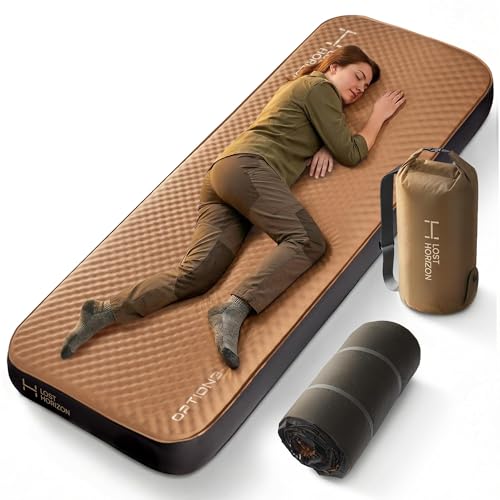
Lost Horizon Option3 Self-Inflating Foam Camping
A 4.5 in self-inflating foam camping mattress with an R-value of 13 and a 220 lb capacity, at 9.0 lb and a 1 year warranty.
Pros
- 4.5 in thick, thickest pad here
- R-value 13 for cold nights
- 220 lb weight capacity
- Adjustable firmness, quiet and stable
Cons
- 9.0 lb, heaviest pad here
- Not recommended for backpacking
- Deflation takes patience; electric pump sold separately
- Single size only
OGERY Self-Inflating Sleeping Pad
A 3 in self-inflating memory foam camping pad with a built-in foot pump and a non-slip base, at 6.0 lb and a 1 year warranty.
Pros
- Built-in foot pump, no mouth blowing
- 3 in memory foam, quiet for side sleepers
- Non-slip textured base stays put
- 6.0 lb, lighter than the 9.0 lb Lost Horizon
Cons
- 3 in thick, thinner than the 4.5 in Lost Horizon
- 6.0 lb, far heavier than the 0.7 lb closed cell pads
- Single size only
- No weight capacity stated for heavier sleepers
Ultralight Foam Sleeping Pad
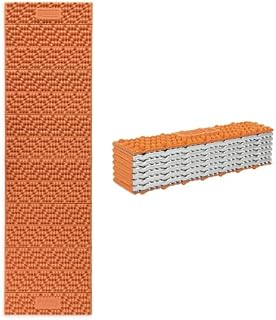
A 0.7 lb folding closed cell foam pad, 70.8 x 23.6 x 0.36 in, with an insulation figure of 2.1 and a heat-reflective aluminum film.
Pros
- 0.7 lb, lowest weight here
- Folds to 23.6 x 5.6 x 4.9 in for the pack
- Never deflates, no valve or pump
- Aluminum film reflects body heat
Cons
- 0.36 in thick, far thinner than the self-inflating pads
- Fixed firmness, no way to adjust softness
- Folded bundle is 23.6 in long to strap on a pack
- Thin foam gives less cushion for side sleepers
Ultralight Foam Sleeping Pad
A 0.7 lb folding closed cell foam pad in dark blue, 70.8 x 23.6 x 0.36 in, with an insulation figure of 2.1 and a heat-reflective aluminum film.
Pros
- 0.7 lb, lowest weight here
- Folds to 23.6 x 5.6 x 4.9 in for the pack
- Never deflates, no valve or pump
- Aluminum film reflects body heat
Cons
- 0.36 in thick, far thinner than the self-inflating pads
- Fixed firmness, no way to adjust softness
- Folded bundle is 23.6 in long to strap on a pack
- Thin foam gives less cushion for side sleepers
More options to weigh up
 OGERY 3.15" Memory Foam Sleeping PadCheck price on Amazon
 NEMO Equipment Switchback Foam Sleeping PadCheck price on Amazon
 Foam Sleeping PadCheck price on Amazon
 Wakeman Outdoors Foam Sleeping Pad for CampingCheck price on Amazon
 TEKIK Self Inflating Memory Foam Sleeping Pad with Pillow forCheck price on Amazon
 Zzuvjoy Memory Sleeping PadCheck price on Amazon
Side by side
| Pad | Woodlot Score | Thickness | Weight | Insulation |
|---|---|---|---|---|
| Lost Horizon Option3 | 9.6/10 | 4.5 in | 9.0 lb | R-value 13 |
| OGERY Self-Inflating | 9.5/10 | 3 in | 6.0 lb | No figure stated |
| fitply Foam Pad Blue | 9.4/10 | 0.36 in | 0.7 lb | Insulation figure 2.1 |
| fitply Foam Pad Dark Blue | 9.3/10 | 0.36 in | 0.7 lb | Insulation figure 2.1 |
Example figures are manufacturer stated, collected 14 November 2026.
Thickness and comfort
Thickness is the first difference you feel. The Lost Horizon Option3 measures 4.5 in thick, the OGERY measures 3 in thick, and the fitply pads measure 0.36 in thick. The Lost Horizon pairs its thickness with a foam filling of 6.5 pounds and a weight capacity of up to 220 pounds. The OGERY pairs its 3 in of memory foam with a hybrid foam-and-air structure for side sleepers, and the fitply pads use raised nodes for back support.
Weight and pack size
Weight runs the other way. The Lost Horizon lists 9.0 pounds, the OGERY lists 6.0 pounds, and the fitply pads list 0.7 pounds. The fitply pads fold to 23.6 x 5.6 x 4.9 inches. The Lost Horizon listing says the pad is not recommended for backpacking, with an electric pump sold separately. The OGERY lists backpacking among its uses, with a built-in foot pump and no separate pump to carry.
Insulation: what the figures say
Insulation is where the listings differ most in what they state. The Lost Horizon states an R-value of 13. The fitply pads state an insulation figure of 2.1, with XPE foam and a heat-reflective aluminum film that reflects body heat. The OGERY states no insulation figure; its maker says the foam layer helps reduce heat loss from the ground.
Self inflating vs closed cell sleeping pad: the differences that matter
The self inflating pads suit comfort first: thicker foam and a quiet night. The closed cell pads suit the trail: 0.7 lb and no valve, pump or deflation to manage.
Scoring the woodpile
Each example is scored on performance, build, value, safety and warranty, using only what the listing publishes.
| Product | Woodlot Score | Perf. /35 | Build /25 | Value /25 | Safety /10 | Warranty /5 |
|---|---|---|---|---|---|---|
| Lost Horizon Option3 | 9.6 | 32 | 21 | 19 | n/a | 3 |
| OGERY Self-Inflating | 9.5 | 28 | 21 | 21 | n/a | 3 |
| fitply Foam Pad Blue | 9.4 | 23 | 20 | 21 | n/a | 3 |
| fitply Foam Pad Dark Blue | 9.3 | 23 | 20 | 21 | n/a | 3 |
The 8.8 and 9.8 limits frame every score. Scores follow the ranking in each guide, dropping by at least 0.1 per place, so each pick has its own number. If a pick has no motor or battery and lists no safety features, safety is skipped and we score it out of 90.
Wear eye protection and gloves for cutting, splitting and handling, follow every tool's manual, install stoves to code, and have the chimney inspected and cleaned every year. See EPA Burn Wise and NFPA heating safety. Read our Safety Disclaimer.
Around the Woodpile
- Fold the closed cell pads to 23.6 x 5.6 x 4.9 in for the pack and unfold them flat at camp.
- Open the valve and let the foam draw in air before you fine-tune firmness.
- Give the Lost Horizon time to deflate and stow.
- Keep the pads on tent floors or cots, where the OGERY base helps it stay put.
FAQ: wood, fire and gear
Is a self inflating or a closed cell sleeping pad better?
No side wins in general. A self inflating pad suits car camping, where the 4.5 in Lost Horizon and the 3 in OGERY give thick, quiet comfort. A closed cell pad suits the trail, where the 0.7 lb fitply pads fold small.
Can a closed cell foam pad keep me warm?
The fitply pads state an insulation figure of 2.1, with a heat-reflective aluminum film that reflects body heat. For colder nights the Lost Horizon states an R-value of 13.
Are self-inflating pads good for backpacking?
The Lost Horizon listing says the pad is not recommended for backpacking. The OGERY lists backpacking among its uses at 6.0 lb, while the fitply pads weigh 0.7 lb.
Do closed cell foam pads deflate?
No. The fitply pads are foam, and foam sleeping pads do not deflate, so there is no valve to open and no pump to carry.
How thick should a sleeping pad be?
It depends on how you camp. The Lost Horizon measures 4.5 in thick, the OGERY measures 3 in thick, and the fitply pads measure 0.36 in thick.
More firewood guides
See the tents and sleep hub, the hot tent vs regular tent, the canvas vs nylon tent and the camping cot vs air mattress.