Satisfactory How to Use Chainsaw: Setup and Cutting Steps
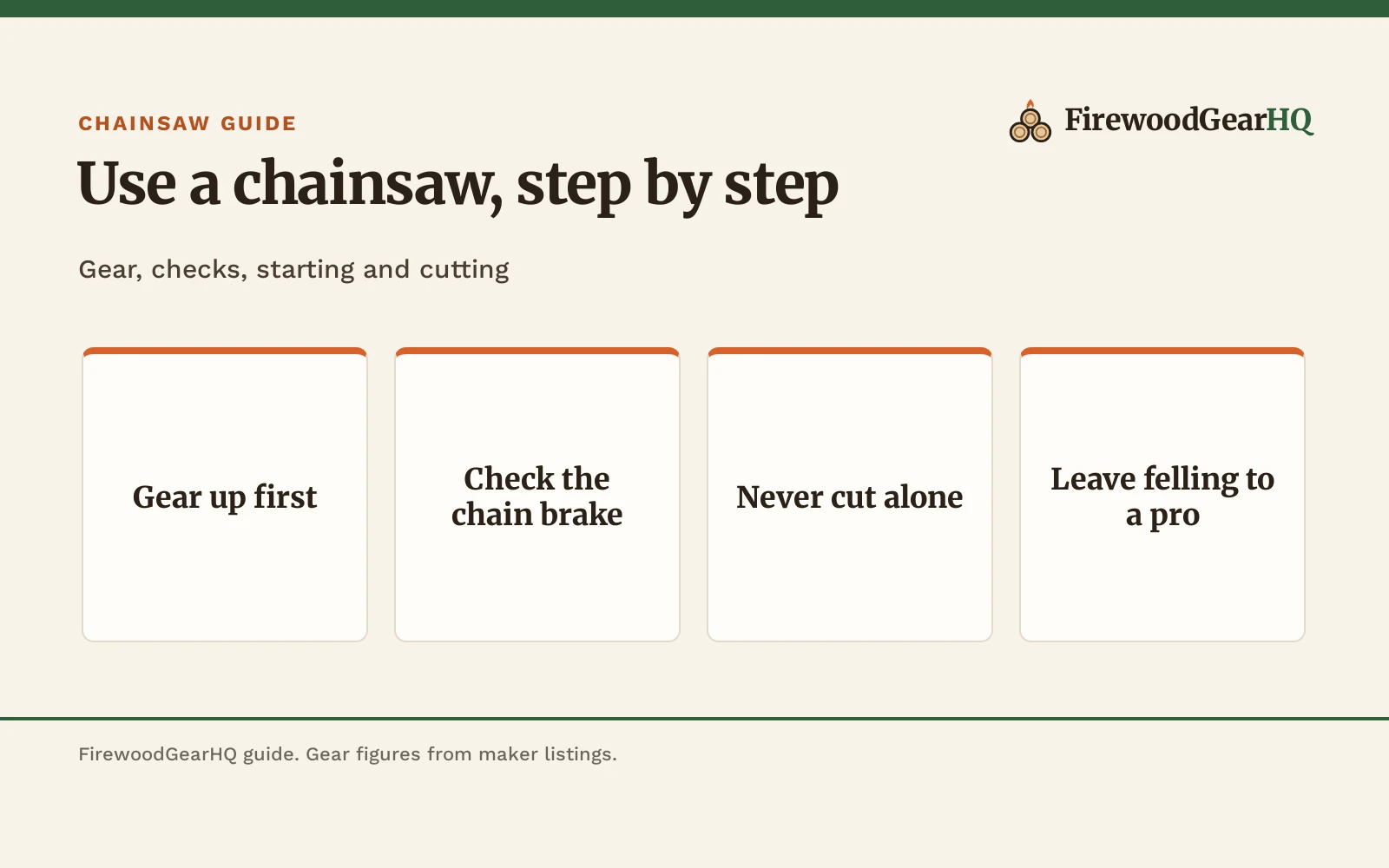
Gear up with chaps, a helmet, gloves and boots, check the chain brake, then cut with a steady stance and a clear path out.

On this page
Top picks at a glance
As an Amazon Associate I earn from qualifying purchases.
- 1
 Husqvarna 460 Rancher Gas Powered Chainsaw9.7/10View on Amazon
- 2
 Greenworks 40V 16" Brushless Cordless Chainsaw9.7/10View on Amazon
- 3
 WORX Cordless Chainsaw9.6/10View on Amazon
A pile of logs waits by the woodpile and the saw is ready to earn its keep. Satisfactory how to use chainsaw means gearing up with chaps, a helmet with a face screen and hearing protection, gloves and boots, checking the chain brake and bar oil, and cutting with a steady stance, a sharp chain and a clear path out. Never cut alone, and leave felling a standing tree to a certified pro.
FirewoodGearHQ earns a small commission if you buy through links on this page. The price you pay stays the same. Read our affiliate disclosure.
Satisfactory how to use chainsaw, step by step
Work through the steps in order, and stop if anything feels wrong. A chainsaw rewards a slow, steady routine and punishes rushing, so give each step its own moment.
Gear up first
Put on chaps, a helmet with a face screen and hearing protection, gloves and boots before the saw starts. Chaps guard the legs, the helmet guards the head, face and ears, and gloves and boots guard the hands and feet. The GeerDuo chaps (on Amazon) and apron combo pairs 900D Oxford fabric with 10 pockets and chaps that fit a waist from 25 to 49 inches, so the gear carries the tools you need and stays in place while you bend and move.
Check the saw
Check the chain brake, the chain tension and the bar oil before you start. The chain brake must stop the chain when you push it forward, the chain must sit snug on the bar without sagging, and the bar oil reservoir must hold oil. A dull chain makes dust instead of chips and forces you to push, so sharpen or swap it before you cut. Read the maker’s manual for the checks your saw needs.
Start the saw
Set the saw on flat ground, set the chain brake, and start it with a firm grip and both feet planted. Keep the bar clear of the ground and of your body while the chain spins up, and let the saw settle to a steady idle before you lift it. If the saw does not start or the chain moves at idle, stop and read the maker’s manual.
Cut a log on the ground
Set the log on flat ground so it cannot roll, and stand to one side with a steady stance and each hand gripping the saw. Let the chain do the work and guide the saw through the cut without forcing it. Cut from the top and stop before the chain reaches the ground, then turn the log over and finish the cut from the other side. Watch the kerf so the bar does not pinch. When the cut is done, set the chain brake before you move to the next log.
Stop, clean and store the saw
Set the chain brake, stop the engine and let the chain stop before you set the saw down. Brush off sawdust and chips, check the bar oil, and store the saw with the bar cover on, out of the weather. A clean saw is easier to check over next time.
What the safety gear covers
The safety gear covers the head, face, ears, eyes and legs. The GREEN DEVIL helmet (on Amazon) is a 4-in-1 set with a hard hat, a visor, a metal mesh face shield and ear muffs, with a 6-point suspension, vent holes and a chinstrap, in a size range from 53 to 63 cm. It meets ANSI/ISEA Z89.1-2014, Type I, Class C, with ear muffs to ANSI S3.19 and a face shield and visor to ANSI Z87.1-2015 and CE EN 1731. The NEIKO helmet (on Amazon) pairs a clear face shield and a steel mesh face shield with adjustable ear muffs and a dial fit, at 2.49 pounds. The GeerDuo chaps and apron combo uses 900D Oxford fabric with 10 pockets and chaps that fit a waist from 25 to 49 inches. The Echo safety kit packs chaps, a helmet, ear muffs, gloves and glasses in one kit.
What not to do
Never cut alone. Never fell a standing tree. Hire a certified pro for felling work. Never cut with the tip of the bar, where kickback starts, and never reach across the bar while the chain moves. Never run a saw with a loose chain, a missing chain brake or no bar oil, and never work when you are tired or rushed. If a tree is leaning, hung up or near a building or a power line, walk away and call a certified pro.
Wear cut-resistant chaps, a helmet with face screen and hearing protection, gloves and sturdy boots. Know where the kickback zone is (the upper tip of the bar), keep the chain brake working and the chain sharp, and never cut alone in the woods. Felling trees is hazardous work: hire a professional for large, leaning or storm-damaged trees, especially near buildings or power lines. See OSHA logging safety for chain saw operators. Read our Safety Disclaimer.
FAQ: wood, fire and gear
What gear do I need to use a chainsaw?
Chaps, a helmet with a face screen and hearing protection, gloves and boots. The GREEN DEVIL helmet meets ANSI/ISEA Z89.1-2014, Type I, Class C, with ear muffs to ANSI S3.19 and a face shield and visor to ANSI Z87.1-2015 and CE EN 1731, and the GeerDuo chaps use 900D Oxford fabric with 10 pockets and fit a waist from 25 to 49 inches.
Can I use a chainsaw alone?
No. Never cut alone. Bring another person who can help or call for help if something goes wrong, and make sure someone knows where you are cutting.
What is kickback?
Kickback is the sudden upward and backward jump of the bar when the tip of the bar catches the wood. It is the main reason to keep each hand gripping the saw, to keep the tip clear of wood and to keep the chain brake working. A sharp chain and a steady stance lower the risk, but no saw is free of kickback.
How do I know the chain is sharp?
A sharp chain pulls itself into the wood and throws clean chips, while a dull chain makes fine dust and forces you to push. If the saw drifts, smokes or needs pressure to cut, stop and sharpen the chain or swap it before you cut again.
Can a beginner fell a tree with a chainsaw?
No. Felling a standing tree needs training, a plan for where the tree will fall and a clear escape path, and the work is not covered here. Hire a certified pro for felling, and use the steps in this guide for cutting logs on the ground.
More firewood guides
See the chainsaws hub, the best chainsaw for firewood and the best chainsaw sharpener. Also see our chainsaw gear.