Oak vs Cherry Wood Pellets: Which One Should You Buy?
Oak vs cherry wood pellets compared for flavor, pairings, and bag choice, with oak and oak-blend bags ranked for pellet grills.

On this page
Top picks at a glance
As an Amazon Associate I earn from qualifying purchases.
- 1
 Old Potters Kiln Dried Smoker Chunks9.5/10View on Amazon
- 2
 BBQR's Delight Cherry Wood Pellets for Smoker & Grill9.4/10View on Amazon
- 3
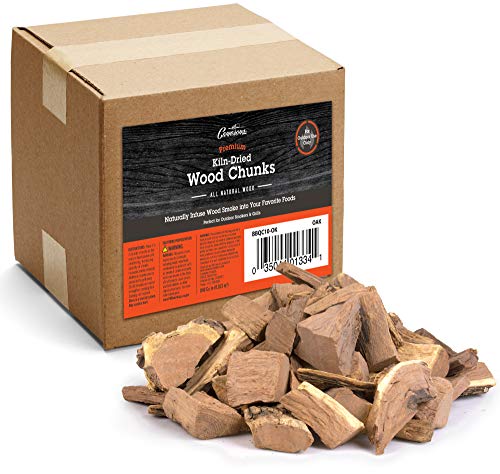 Camerons All Natural Oak Wood Chunks for Smoking. 840 Cu in9.5/10View on Amazon
- 4
 Kingsford Craftsmoke Premium Grilling Wood PelletsView on Amazon
- 5
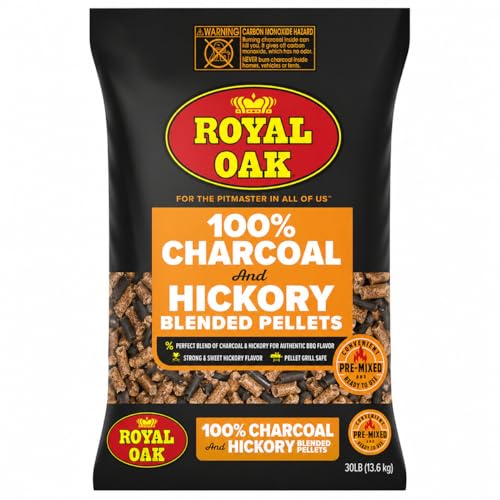 Royal Oak 100% Charcoal & Hickory PelletsView on Amazon
- 6
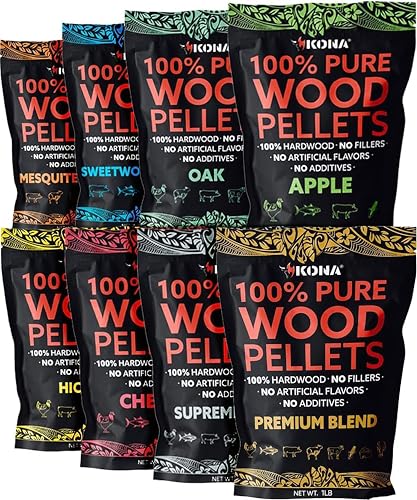 Kona Wood Pellet Variety Pack for Ninja WoodfireView on Amazon
- 7
 VERSAWOOD Wood Pellet Variety PackView on Amazon
- 8
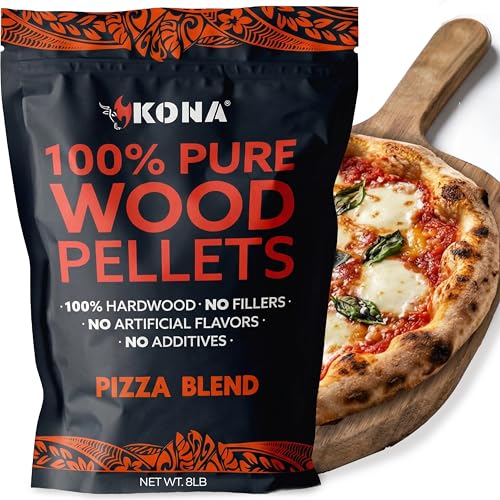 Kona Pizza Oven PelletsView on Amazon
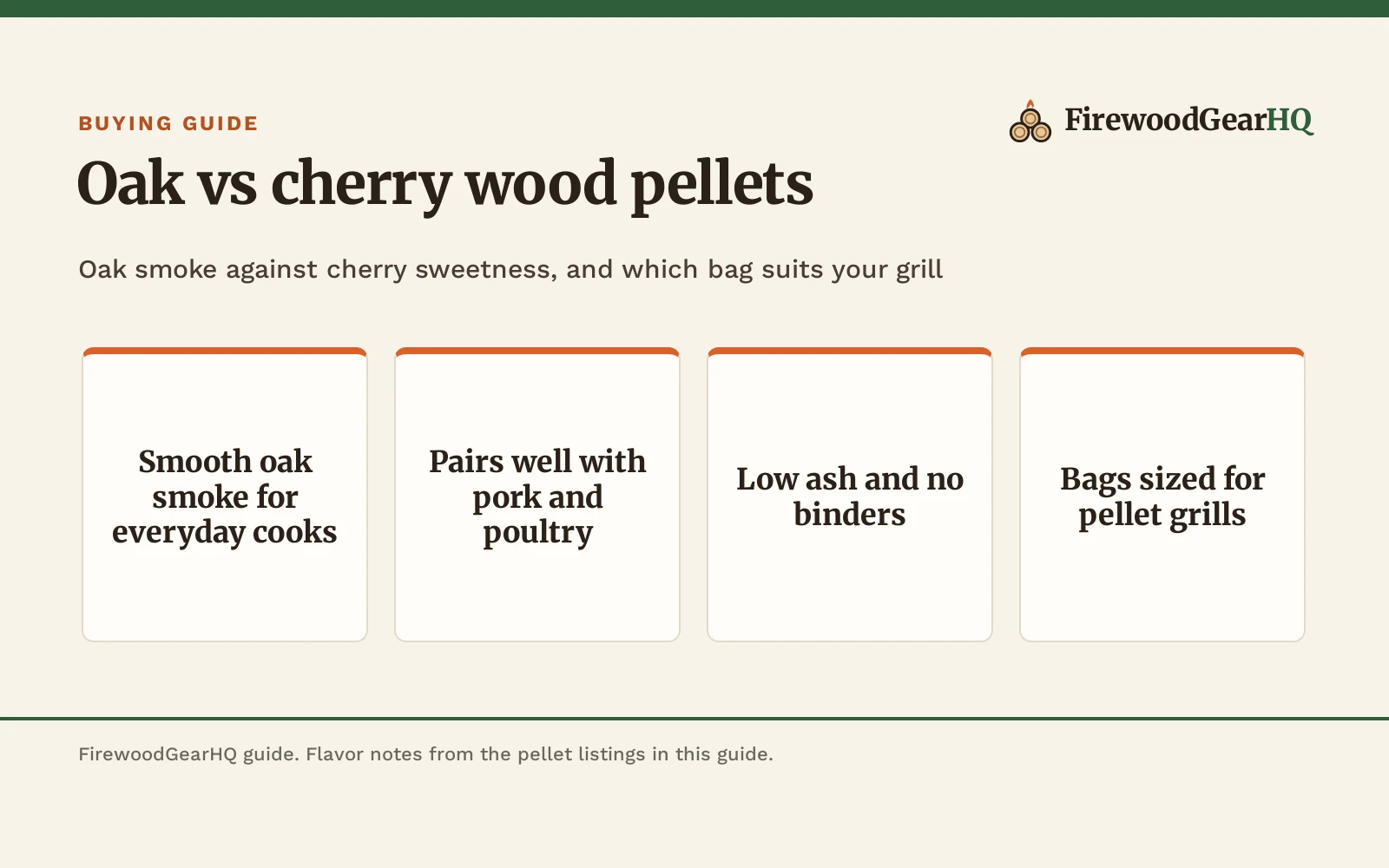
Fall cookouts and winter smokes call for a steady fire and a flavor that suits the meat on the grate. When the choice comes down to oak vs cherry wood pellets, pick oak for a smooth, steady smoke that pairs with almost everything, and pick cherry when you want a milder, fruitier note over pork, poultry, and vegetables. Oak carries the cook, and cherry softens it. The bags in this guide are all oak or oak blends, so the oak side of the comparison is covered in detail, while cherry enters as the lighter partner you can blend in or swap to for a gentler smoke.
More options to weigh up
 Kingsford Craftsmoke Premium Grilling Wood PelletsCheck price on Amazon
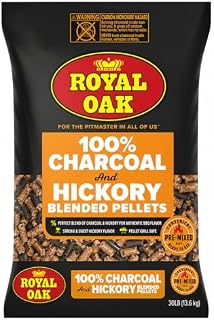 Royal Oak 100% Charcoal & Hickory PelletsCheck price on Amazon
 Kona Wood Pellet Variety Pack for Ninja WoodfireCheck price on Amazon
 VERSAWOOD Wood Pellet Variety PackCheck price on Amazon
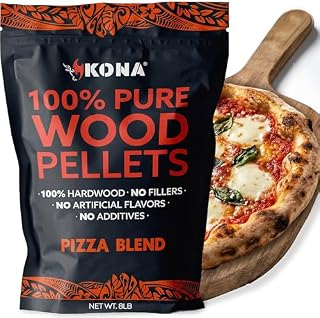 Kona Pizza Oven PelletsCheck price on Amazon
FirewoodGearHQ earns a small commission if you buy through links on this page. The price you pay stays the same. Read our affiliate disclosure.
The quick answer
Oak is the workhorse here. The Bear Mountain listing describes oak smoke as smooth, and the listings pair it with pork, poultry, seafood, beef, and vegetables. Cherry sits on the lighter side of the pair, with a fruitier note that suits cooks who want smoke in the background rather than up front. If you cook a bit of everything, start with oak. If your grill runs mainly on pork, poultry, and vegetables, cherry earns a bag of its own, or a share of the hopper alongside oak.
Oak vs cherry wood pellets: how they differ
Oak smoke reads as smooth in the Bear Mountain listing, and steady in these listings. The Traeger listing describes a balanced, dependable burn from its hardwood blend, the Camp Chef listing points to a kiln-dried pellet with low moisture content, and the Bear Mountain listing promises consistent smoke from low moisture content. That steadiness is why oak works as an everyday pellet: it seasons the cook without taking it over.
Cherry plays a different role. It brings a milder, fruitier note that stays in the background, which suits lighter meats and vegetables and cooks who find heavy smoke too much. Neither wood is the wrong call on its own. The choice turns on what is on the grate and how far forward you want the smoke to sit.
| Bag | What the listing pairs it with |
|---|---|
| Camp Chef Oak | Pork, poultry, and vegetables, plus seafood, baking, and beef |
| Bear Mountain Oak | Fish, pork, and vegetables |
| Traeger BBQ Select | Beef, poultry, pork, lamb, seafood, baked goods, and vegetables |
The pellets in this guide
The bags below are ranked for the oak side of this comparison, from the pure oak listings to the oak blend. Each note sticks to what its own listing states.
Camp Chef Oak
The Camp Chef bag is a pure oak pick here. The listing states 100% pure virgin hardwoods, with no oils, chemicals, or binders added. The kiln-dried process gives a very dry pellet with low moisture content, which the listing links to a hot burn and less ash to clean. The bag holds 20 lb, and the listing states the pellets are safe in all pellet grills, smokers, and barbecues. The maker lists the pellets as made in the U.S.A., in Arkansas and Missouri. Pairings run wide: pork, poultry, and vegetables lead, with seafood, baking, and beef also named.
Bear Mountain Oak, 2-Pack
The Bear Mountain listing covers two 20-pound bags of pure 100% hardwood, with no fillers or oils. The listing describes a smooth smoky flavor for fish, pork, and vegetables, and low moisture content that keeps smoke production consistent. It also states the pellets work in all major outdoor pellet grills, and in smokers, gas, charcoal, and electric grills. A wrinkle is worth noting: the spec table lists Item Weight as 0.0 pounds, which clashes with the title and bullets stating 20-pound bags. Trust the title and bullets here, since they agree with each other and with the pack size.
Traeger BBQ Select
The Traeger bag is an oak blend, not pure oak: the listing names a blend of oak, hickory, and maple hardwood. That blend is why it sits last in an oak ranking, even though it brings the largest bag in this guide at 30 lb. The listing states all-natural hardwood pellets with no binders, a clean burn, and low ash, and the pellets are made in the U.S.A. Pairings are the broadest of the group: beef, poultry, pork, lamb, seafood, baked goods, and vegetables. Pick this bag when you want a single pellet for a bit of everything and do not mind hickory and maple sharing the smoke with oak.
How to choose between oak and cherry
Choose oak when the grill handles a mix of meats across the week, or when you want smoke that stays steady from cook to cook. Choose cherry when the menu leans toward pork, poultry, and vegetables, and you want a gentler, fruitier note. Blending is a fair middle path: oak gives the cook its backbone, and cherry lightens the smoke without changing the routine. Bag size can break a tie. A 30 lb bag suits a grill that runs often, while a 20 lb bag suits a cook who likes to switch flavors between bags, and the Bear Mountain 2-pack totals 40 lb across two 20-pound bags.
Storing and handling pellets
Pellet flavor and burn depend on keeping the pellets dry, since the Camp Chef and Bear Mountain listings lean on low moisture content for a steady burn. Keep bags sealed and off damp ground, and store them where rain and ground damp cannot reach them. Move pellets to a sealed bin once a bag is open, and keep the bin dry between cooks. Damp pellets swell and burn unevenly, so a dry store is part of getting the flavor the listing promises.
FAQ: wood, fire and gear
Can I mix oak and cherry pellets in the same hopper?
Yes. Oak gives the smoke its backbone, and cherry lightens it with a milder, fruitier note. A mix suits cooks who like oak steadiness with a softer edge.
Which pellet should I pick for pork and poultry?
Oak is the safe pick, since the Camp Chef listing pairs oak with pork and poultry, and the Traeger blend listing names both meats too. Cherry is the lighter alternative when you want the smoke to sit further back on those meats.
Is the Traeger BBQ Select bag pure oak?
No. The listing names a blend of oak, hickory, and maple hardwood, so it is an oak blend rather than a pure oak pellet.
Do these pellets work in any pellet grill?
The Camp Chef listing states its pellets are safe in all pellet grills, smokers, and barbecues. The Bear Mountain listing states its pellets work in all major outdoor pellet grills. The Traeger listing describes pellets for smokers and pellet grills.
How should I store leftover pellets?
Keep them dry and sealed. The Camp Chef and Bear Mountain listings tie low moisture content to a steady burn, so a sealed bin away from damp keeps the pellets in the shape the maker intended.
More firewood guides
Compare more pellet flavors in our oak vs hickory wood pellets guide and our apple vs cherry wood pellets guide, or see mesquite vs oak wood pellets and oak vs maple wood pellets. For gear, see the best pellet storage bin and the best pellet grill for beginners.