Meat Cleaver vs Vegetable Cleaver: Which One Should You Buy?
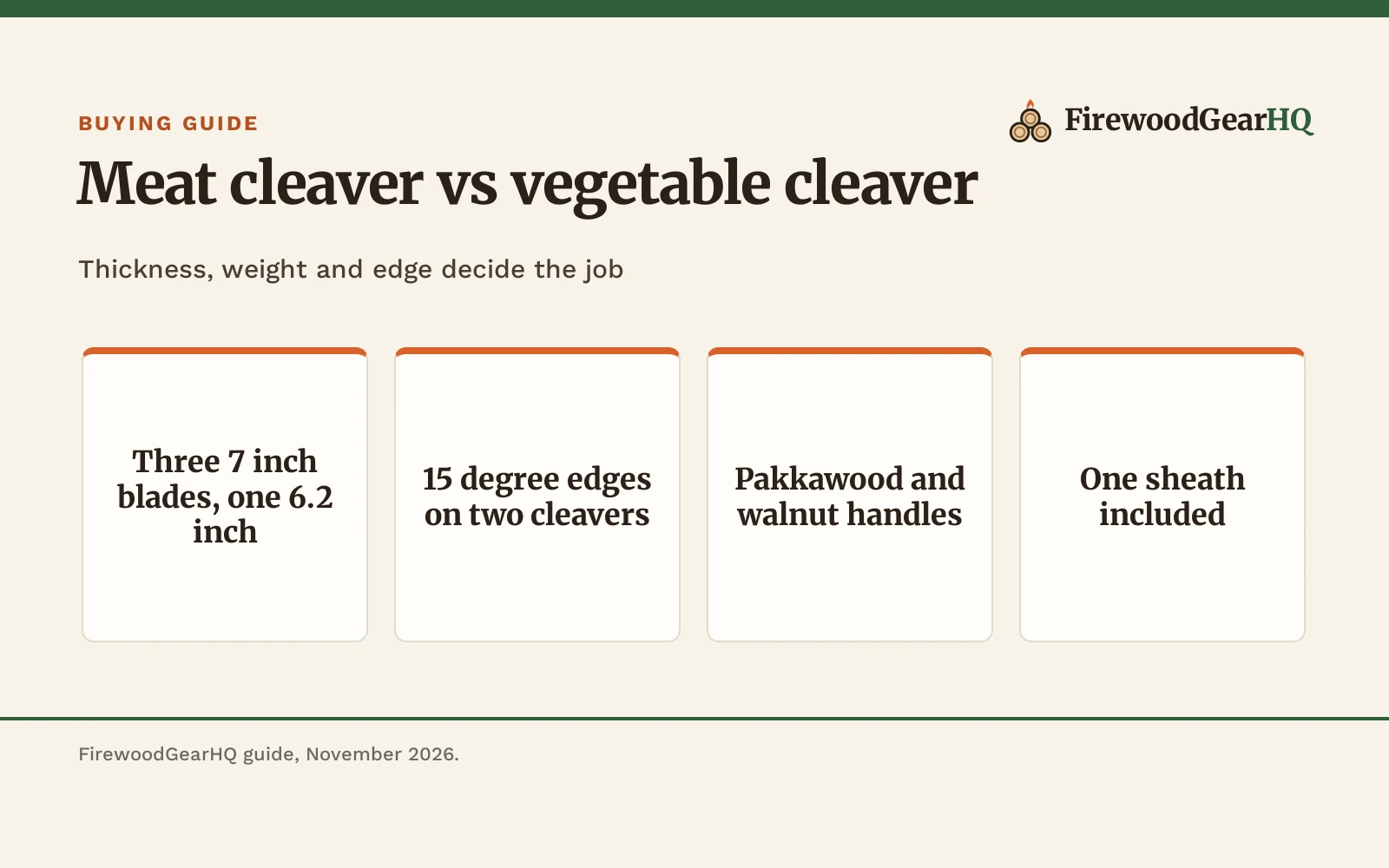
A traditional meat cleaver is thick and heavy for bone and tough cuts, while a vegetable cleaver is thin and light for precise slicing; four thin-bladed cleavers show where each one fits.

On this page
Top picks at a glance
As an Amazon Associate I earn from qualifying purchases.
- 1
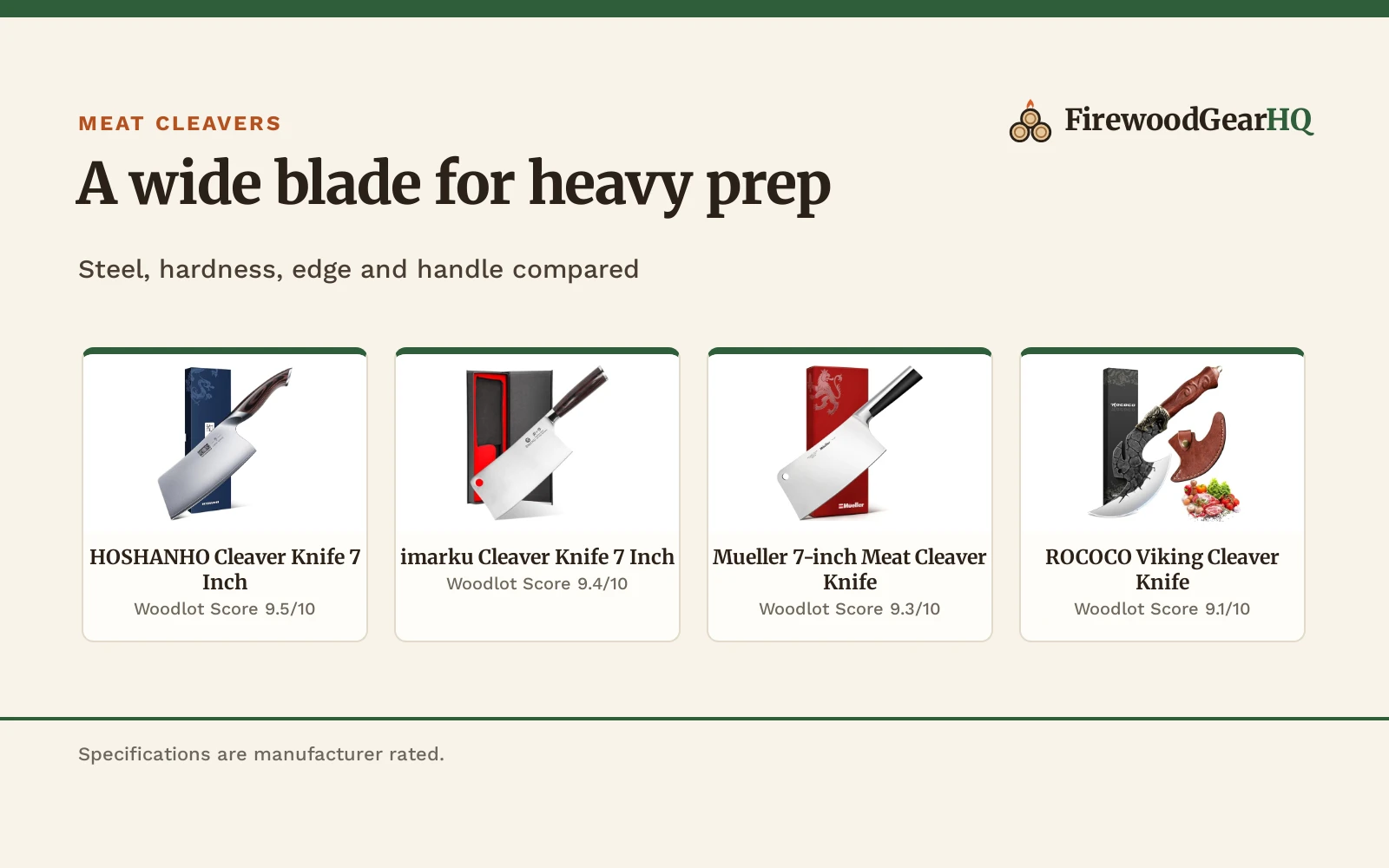
 imarku Cleaver Knife 7 InchView on Amazon
- 2
 imarku 7.5" Cleaver KnifeView on Amazon
- 3
 HOSHANHO Cleaver Knife 7 InchView on Amazon
- 4
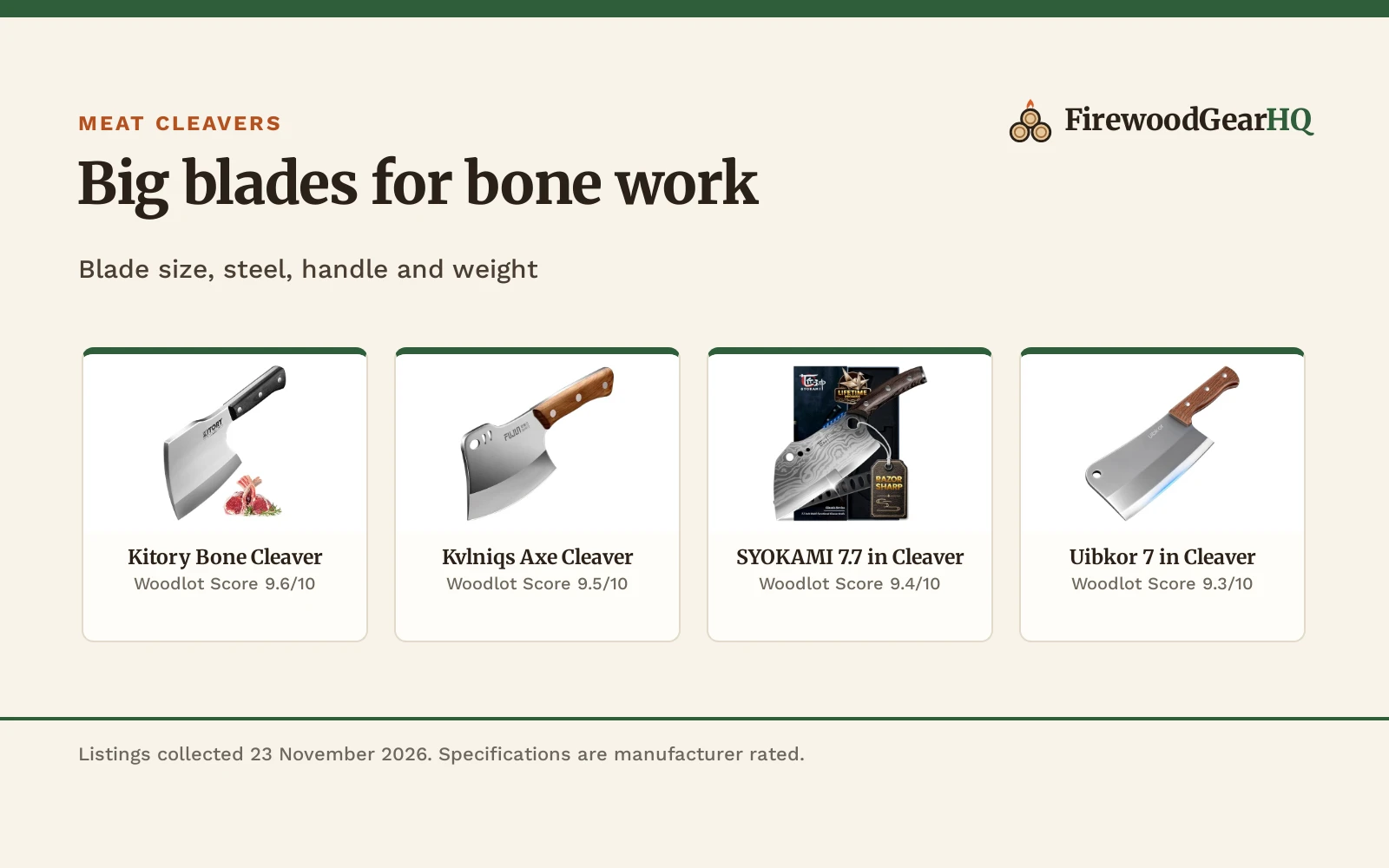
 SYOKAMI Meat Cleaver Chef Knife with SheathView on Amazon
- 5
 Kvlniqs Meat Bone Cleaver Knife for Meat CuttingView on Amazon
- 6
 HENCKELS Classic Razor-Sharp 6-inch Meat Cleaver KnifeView on Amazon
At the butcher block with a roast to break down and a pile of vegetables to slice, meat cleaver vs vegetable cleaver comes down to blade thickness and weight. A traditional meat cleaver is a thick, heavy blade made for bone and tough cuts, while a vegetable cleaver is a thin, light blade made for precise slicing. None of the four cleavers in this guide is a heavy bone cleaver: each one is a thin-bladed multifunction cleaver or nakiri described for meat and vegetables, so the guide shows where each one fits within that thinner class.
More options to weigh up
 imarku Cleaver Knife 7 InchCheck price on Amazon
 imarku 7.5" Cleaver KnifeCheck price on Amazon
 HOSHANHO Cleaver Knife 7 InchCheck price on Amazon
 SYOKAMI Meat Cleaver Chef Knife with SheathCheck price on Amazon
 Kvlniqs Meat Bone Cleaver Knife for Meat CuttingCheck price on Amazon
 HENCKELS Classic Razor-Sharp 6-inch Meat Cleaver KnifeCheck price on Amazon
FirewoodGearHQ earns a small commission if you buy through links on this page. The price you pay stays the same. Read our affiliate disclosure.
The quick answer
A traditional meat cleaver carries its weight in a thick blade for bone, joints and tough cuts. A vegetable cleaver carries a thinner blade for precise, clean cuts in vegetables; a nakiri and a Chinese chef’s knife are different thin-bladed shapes, and this guide has one nakiri, the PAUDIN, alongside Chinese-style cleavers. The stated thicknesses here are 2.4 mm for the imarku and 2.3 mm for the HOSHANHO, while thickness is not stated for the ROCOCO or the PAUDIN, and the PAUDIN nakiri pairs its blade with a light 0.5 lb weight for vegetable work. When one knife must do both jobs, the multifunction cleavers in this guide are each described for meat and vegetables.
Meat cleaver vs vegetable cleaver: the differences
Blade thickness is one part of the job. A heavy meat cleaver uses a thick spine to carry force into bone and gristle, while a vegetable cleaver uses a thin edge for slicing produce; none of the four cleavers here states a thick bone-cleaver spine, and the two stated thicknesses are 2.3 mm and 2.4 mm. Weight does not follow thickness in this set: the HOSHANHO cleaver weighs 1.0 lb at 2.3 mm and the imarku weighs 0.74 lb at 2.4 mm, while the PAUDIN nakiri weighs 0.5 lb. Edge angle matters too: the imarku and HOSHANHO blades are sharpened to 15 degrees on each side for clean, precise cuts.
| Cleaver | Blade | Thickness | Weight | Hardness |
|---|---|---|---|---|
| imarku 7 inch | 7 inch | 2.4 mm | 0.74 lb | 57+1 HRC |
| ROCOCO Viking | 6.2 inch | Not stated | 0.95 lb | Not stated |
| HOSHANHO 7 inch | 7 inch | 2.3 mm | 1.0 lb | 58+2 HRC |
| PAUDIN Nakiri 7 inch | 7 inch | Not stated | 0.5 lb | 56+ |
The four cleavers in this guide
Each cleaver below is ranked by its Woodlot Score, with the strongest all-round pick first. Every one handles meat and vegetables to some degree, and the notes say which job each one suits best.
imarku 7 Inch Cleaver Knife
The imarku is the strongest all-round pick here. Its 7 inch blade is forged from Japanese high carbon stainless steel at 57+1 HRC, sharpened to 15 degrees on each side, with a 2.4 mm spine that cuts through thick or tough food with little effort. The wide blade keeps fingers away from the cutting surface, and the FSC certified Pakkawood handle gives a comfortable grip for right-handed and left-handed users. It handles chopping, mincing, slicing, boning and cutting meat, fruits and large vegetables, and it arrives in a gift box.
Who it’s for: home cooks and restaurant kitchens that want one cleaver for meat and vegetables. Who should skip it: cooks who want a lighter blade, since this one weighs 0.74 lb.
ROCOCO Viking Cleaver Knife
The ROCOCO is the meat-first pick. Its curved 6.2 inch blade rocks over meat, fish, chicken and vegetables, and the wide blade captures ingredients on the board for even chopping. High-carbon steel holds a sharp edge, and the walnut handle adds comfort and durability. A sheath is included, and the knife can attach to a belt for outdoor travel, which suits BBQ and camping cooks. It weighs 0.95 lb, and the maker coats the blade lightly with oil before delivery.
Who it’s for: cooks who break down meat outdoors and want a sheath for carrying. Who should skip it: cooks who want a straight-edged 7 inch cleaver for the kitchen counter.
HOSHANHO 7 Inch Cleaver Knife
The HOSHANHO cleaver is forged from Japanese 10Cr15CoMoV stainless steel at 58+2 HRC, with a 15 degree edge on each side and a 2.3 mm blade. It handles fish, chicken and a range of vegetables, and the smooth surface sheds food residue for easy cleaning. The handle is shaped for comfort and control over long sessions, and the knife weighs 1.0 lb. Care is hand wash with clean water, a wipe with a dry cloth, and regular sharpening with a whetstone.
Who it’s for: cooks who want a hard edge and do not mind hand washing. Who should skip it: cooks who want a lighter cleaver, since this is the heaviest at 1.0 lb.
PAUDIN Nakiri Knife 7 Inch
The PAUDIN is the vegetable-first pick and the lowest weight here at 0.5 lb. Its 7 inch blade is made from 5Cr15Mov stainless steel at 56+ hardness, with a razor sharp edge for slicing, dicing, chopping and mincing. The wave pattern cuts food friction and makes the blade easy to clean, and the soft Pakkawood handle gives a comfortable grip at the pinch point. It is packed as a gift, and the maker answers questions within 24 hours.
Who it’s for: cooks who slice vegetables all day and want the lowest-weight blade here. Who should skip it: cooks who need a thick blade for bone, since this nakiri is built for slicing.
How to choose between them
Start with the job. Bone and joints call for a thick, heavy blade, which none of the four cleavers here states, while vegetables call for a thin edge. The imarku and HOSHANHO cleavers pair 7 inch blades with 2.4 mm and 2.3 mm blade thickness, and each maker describes its cleaver for meat and vegetables in one knife. The ROCOCO suits cooks who rock the blade and want a sheath for carrying, while the PAUDIN nakiri suits cooks who slice vegetables and want the lowest-weight knife at 0.5 lb.
Next, check the edge and the handle. The imarku and HOSHANHO cleavers are each sharpened to 15 degrees on each side; edge angle is not stated for the ROCOCO or the PAUDIN. The imarku handle is FSC certified Pakkawood and the PAUDIN handle is Pakkawood, the ROCOCO uses a walnut handle with carved patterns, and the HOSHANHO handle material is not stated, only that its handle is shaped for long sessions. Pick the grip that fits the cutting the kitchen does most.
Care and storage
Care differs by maker. The HOSHANHO maker recommends hand washing with clean water, wiping with a dry cloth, and sharpening regularly with a whetstone or a suitable sharpener. The imarku and PAUDIN blades are easy to resharpen, clean and maintain. The ROCOCO maker coats the blade lightly with oil before delivery and recommends storing the knife in a dry place after cleaning to keep the edge, and keeping it away from children. The ROCOCO sheath covers its blade in storage and on the move; a sheath is not stated for the other three.
FAQ: wood, fire and gear
How do you use a meat cleaver?
Use the cleaver for the tasks its maker states. The imarku handles chopping, mincing, slicing and boning, while the ROCOCO rocks its curved blade over meat, fish, chicken and vegetables. None of the four cleavers here states use on bone.
Do I need a meat cleaver?
It depends on the cooking. A heavy meat cleaver suits cooks who break down roasts, poultry and bone-in cuts, while a vegetable cleaver suits cooks who slice vegetables. The multifunction cleavers here are each described for meat and vegetables in one knife, and none states bone use.
How do I clean a meat cleaver?
Follow each maker. The HOSHANHO maker recommends hand washing with clean water and wiping dry with a cloth. The imarku and PAUDIN blades are described as easy to clean and maintain, and the ROCOCO maker recommends storing the knife in a dry place after cleaning.
How long is a meat cleaver?
In this guide, three cleavers have 7 inch blades and the ROCOCO has a 6.2 inch blade. The imarku measures 12.0 inches long overall, so check the full length as well as the blade before ordering.
Can one cleaver cut both meat and vegetables?
Yes. The imarku, HOSHANHO and PAUDIN cleavers are all described as multifunction knives for meat and vegetables. The ROCOCO also cuts meat, fish, chicken and vegetables, with a curved blade that rocks.
More firewood guides
See every BBQ knives and boards guide and all BBQ prep guides. Also see best boning knife for butchers. Also see best meat slicing knife. Also see best knife for cutting brisket. Also see best brisket knife set. Also see best grill knife.