How to Use Propane Tank: Setup and Safe Operation
How to use a propane tank with a regulator and hose: connect the fittings, check the connection, open the valve and light the appliance outdoors.

On this page
Top picks at a glance
As an Amazon Associate I earn from qualifying purchases.
- 1
 Flame King (KT12ACR-2) 2-Stage Auto Changeover LP9.6/10View on Amazon
- 2
 3 Feet Propane Regulator Hose with Tank Gauge9.5/10View on Amazon
- 3
 GASONE Propane Regulator9.3/10View on Amazon
- 4
 GasOne Propane Regulator 3 Feet Universal QCC19.2/10View on Amazon
How to use propane tank gear comes down to the connection between the tank and the appliance: a regulator, a hose that fits both ends, and a check of the fittings before anything is lit. The regulator connects to the tank valve, the hose runs to the appliance, and the valve opens only after the fittings are checked. Light the appliance outdoors, away from walls and overhangs, never in a garage or tent.
FirewoodGearHQ earns a small commission if you buy through links on this page. The price you pay stays the same. Read our affiliate disclosure.
Below: the steps in order, which regulator fits which job, and the picks for the setup.
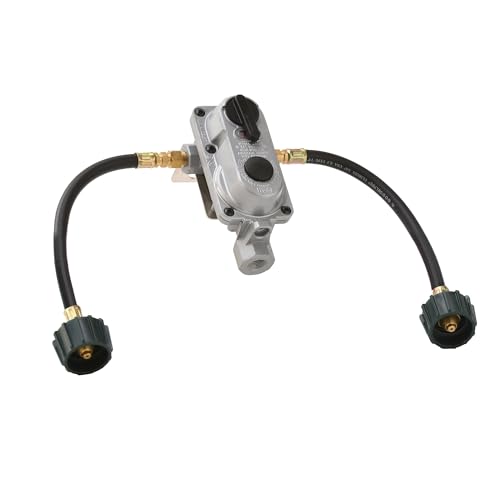
Flame King (KT12ACR-2) 2-Stage Auto Changeover LP
A 2-stage auto changeover LP propane regulator with 2 12-inch pigtails for dual-tank RVs, rated at 345,200 BTU.
Pros
- Switches from the primary tank to the reserve tank when the primary tank is empty
- 2 12-inch pigtails connect the regulator to the tanks
- UL Listed, with 1/4-inch SAE inverted flare inlets and 3/8-inch NPT female outlet
- Double-stage design maintains constant gas pressure under changing demand
Cons
- Made for RVs with dual tanks; a setup without a reserve tank does not use the changeover
- 30 day warranty is the shortest term in this group
- No tank gauge is stated, so the tank level is not read at the regulator
- Built for RVs, vans and trailers, not for grills or fire pits
3 Feet Propane Regulator Hose with Tank Gauge
A 3-foot propane regulator hose with a tank gauge and type-1 (QCC-1) connection for grills, fire pits and heaters.
Pros
- Tank gauge reads the propane level at the hose
- Tool-less attachment to the tank, with no tools required
- CSA certified, with an air-tight connection and no gas leaks
- Fits Weber Genesis 300 series grills and grills with a 3/8-inch male flare fitting
Cons
- No warranty term is stated
- 3-foot hose is shorter than the 4-foot 2109-RED
- Made for low-pressure use, so high-pressure burners need a different regulator
- Fits only grills with a 3/8-inch male flare fitting
GASONE Propane Regulator
A 4-foot high-pressure propane regulator and hose, adjustable from 0-20 PSI, for burners, heaters, smokers and fryers.
Pros
- Adjusts from 0-20 PSI with a red knob
- 4-foot hose with a type-1 (QCC-1) tank connection
- Brass orifice fitting, 3/8 flare M by 1/8 MNPT, with rubber and brass
- 1 Year Manufacture warranty
Cons
- Tightening with tools is suggested, so setup is not tool-less
- High-pressure only, so low-pressure grills and fire pits need a different regulator
- 1.0 pound, the heaviest hose regulator here
- No tank gauge is stated
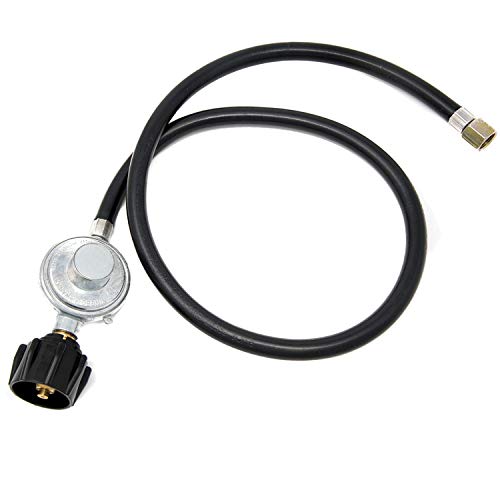
GasOne Propane Regulator 3 Feet Universal QCC1
A 3-foot low-pressure propane regulator and hose with type-1 (QCC-1) connection for grills, fire pit tables and heaters.
Pros
- Universal QCC-1 fit for a wide variety of grills, fire pit tables and other propane appliances
- Fiber-reinforced hose with PVC and brass connections
- Ready to use out of the box, with no additional tools to set up
- 3/8-inch flare fitting inside, 5/8 inches outside diameter
Cons
- No warranty term is stated
- Low pressure only, so burners and fryers need a high-pressure regulator
- No tank gauge is stated
- 3-foot hose is shorter than the 4-foot 2109-RED
How to use propane tank, step by step
Start with the fitting: the three hose regulators here, the DOZYANT hose (on Amazon) and the two GasOne regulators, use a type-1 (QCC-1) tank connection with a 3/8-inch flare fitting on the hose end, so the regulator, hose and appliance need matching ends. The Flame King is different: it connects to the tanks with 2 12-inch pigtails and 1/4-inch SAE inverted flare inlets. The DOZYANT hose and the GasOne 2106 attach without tools, while the GasOne 2109-RED suggests tightening with tools.
Connect the regulator to the tank valve, then the hose to the appliance. The makers describe an air-tight connection with no gas leaks, and the DOZYANT hose adds a tank gauge so the tank level can be read at the hose. Open the tank valve slowly: the DOZYANT maker notes that noise in the regulator is normal, the resonance of the gas in the regulator.
Light the appliance only outdoors, away from walls and overhangs, never in a garage or tent, with a carbon monoxide alarm where a fuel-burning appliance runs near people.
Which regulator fits which job
A low-pressure regulator suits grills, fire pit tables and heaters, as the GasOne 2106 lists: it comes with a 3-foot hose and a type-1 (QCC-1) tank connection. A high-pressure regulator suits burners, heaters, smokers and fryers, as the GasOne 2109-RED lists: it adjusts from 0-20 PSI with a red knob and a 4-foot hose. Heaters appear on both lists, so match the regulator to the pressure the appliance states. For an RV with dual tanks, the Flame King auto changeover regulator switches from the primary tank to the reserve tank when the primary tank is empty, and it allows removal of the empty cylinder for refill without interrupting the supply. Its 2 12-inch pigtails connect the regulator to the tanks, and it is rated at 345,200 BTU.
The DOZYANT hose is the gauged option: a 3-foot regulator hose with a tank gauge for a grill or a fire pit, with a type-1 (QCC-1) tank connection and a 3/8-inch female flare nut. Its 5/16-inch diameter LP hose and swivel nut attach without tools, and the maker lists it as a replacement for Weber Genesis 300 series gas grills and grills with a 3/8-inch male flare fitting.
Regulators and hoses for the job
The picks below cover the steps above: the auto changeover regulator for dual tanks, the gauged hose for reading the tank, the adjustable high-pressure regulator for burners, and the low-pressure regulator for grills.
FAQ: wood, fire and gear
Do I need a regulator to use a propane tank?
Yes, for the appliances in this guide. The regulator sits between the tank and the appliance and holds the gas pressure steady: the Flame King double-stage design maintains constant gas pressure under changing demand and conditions, factory set at 11WC.
What is the difference between a low-pressure and a high-pressure regulator?
The listings split them by appliance: low pressure for grills, fire pit tables and heaters, as with the GasOne 2106, and high pressure for burners, smokers and fryers, as with the GasOne 2109-RED at 0-20 PSI.
Is it normal to hear noise in the regulator?
Yes, per the DOZYANT maker: it is normal if you hear noise in the regulator, it is the resonance of the gas in the regulator.
Can a regulator serve dual propane tanks?
The Flame King auto changeover regulator does: it connects to both tanks with 2 12-inch pigtails and switches from the primary tank to the reserve tank when the primary tank is empty, so the empty cylinder can be removed for refill without interrupting the supply.
How do I know how much propane is left in the tank?
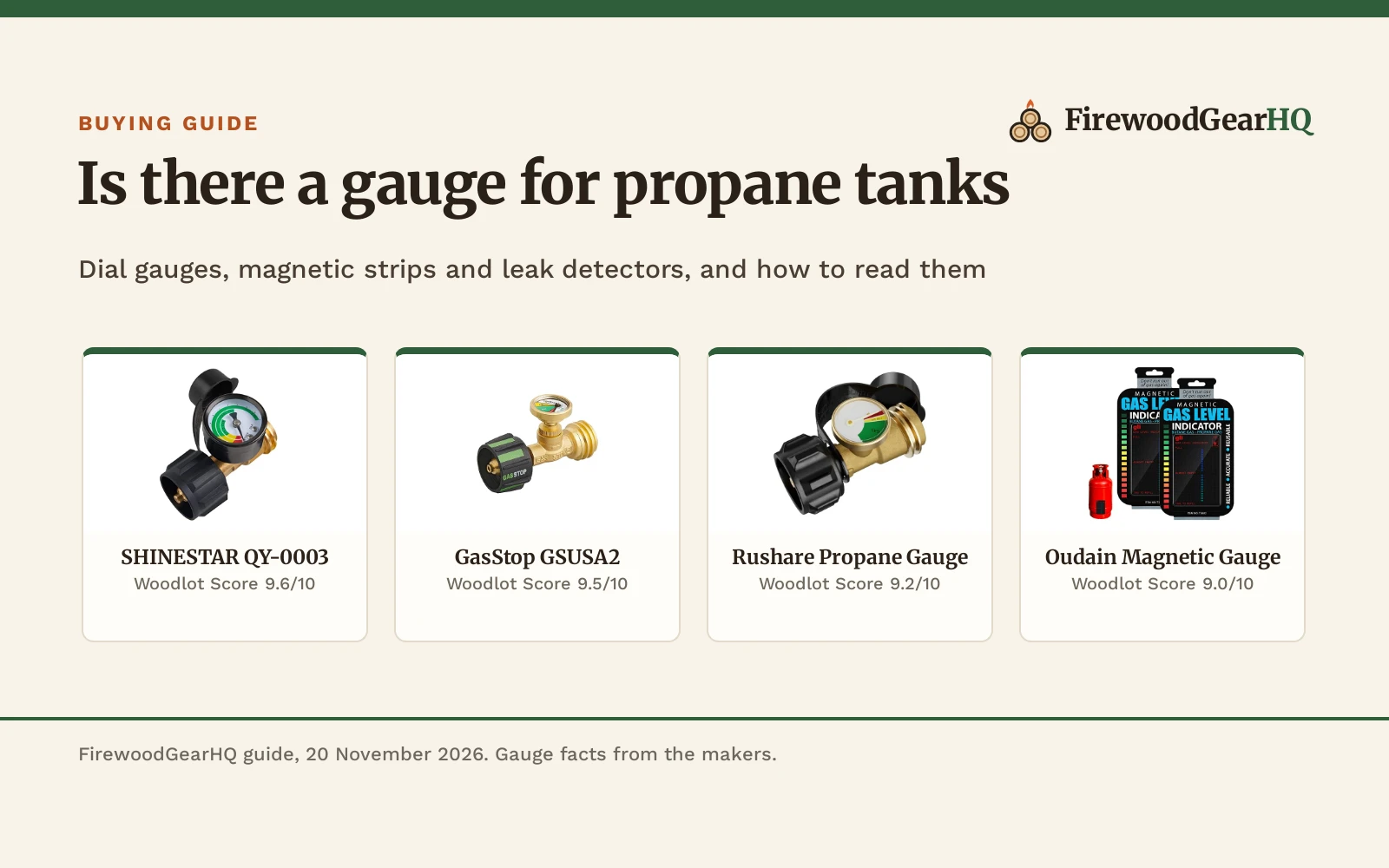
Read the gauge on the hose: the DOZYANT regulator hose is equipped with a propane tank gauge. See the how to tell how much propane is in a tank guide.
More firewood guides
See the how to turn off a propane tank guide, the small propane tank run times and the propane vs butane camp stove comparison.