How to Use Alaskan Chainsaw Mill
How to use an Alaskan chainsaw mill step by step: log setup, clamping the mill, the flat first cut, board thickness and stacking green boards.

On this page
Top picks at a glance
As an Amazon Associate I earn from qualifying purchases.
- 1
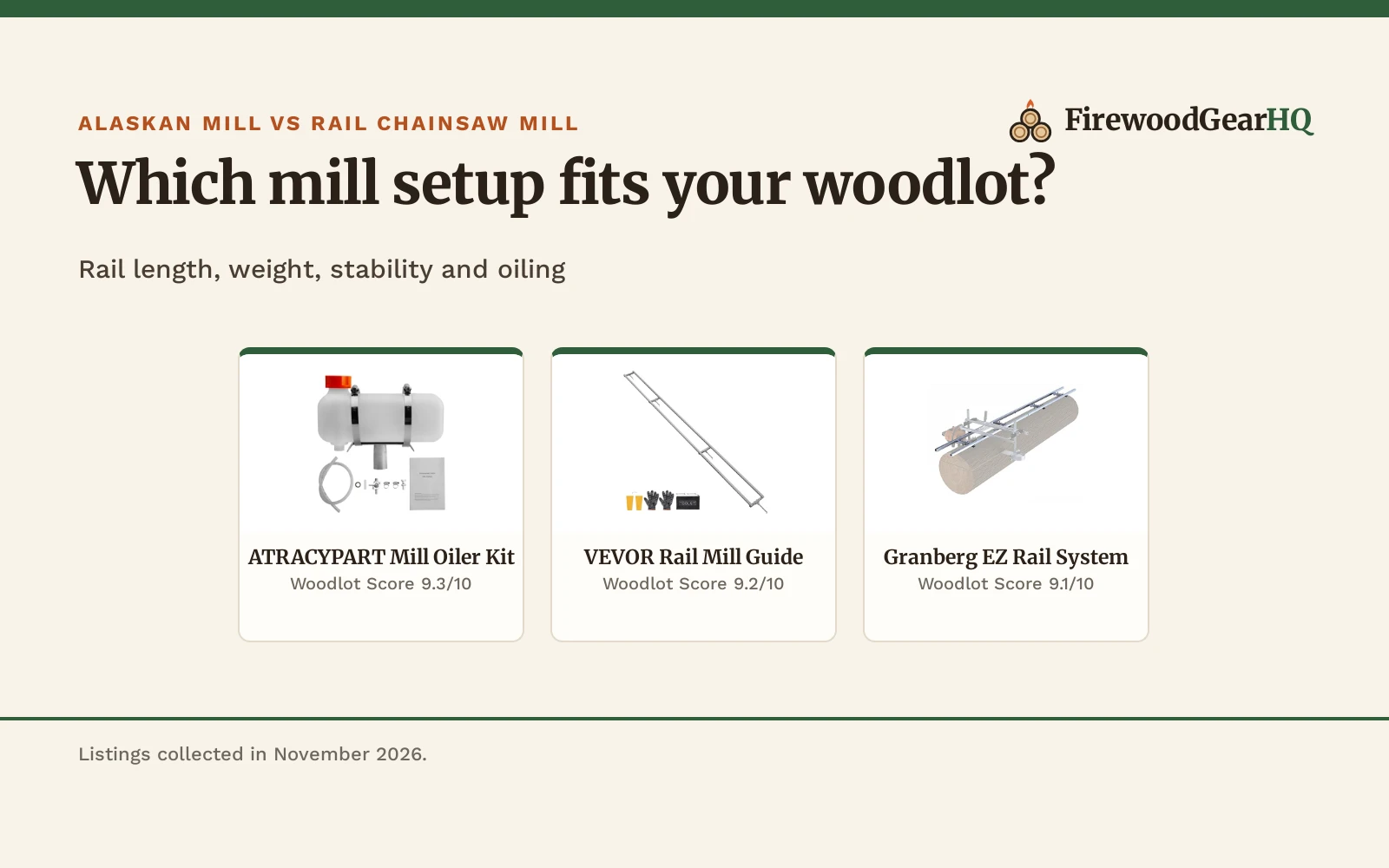
 Auxiliary Mill Oiler Kit9.3/10View on Amazon
- 2
 VEVOR Rail Mill Guide System9.2/10View on Amazon
- 3
 Granberg G1010 EZ Rail System9.1/10View on Amazon
Spring cutting leaves good logs on the ground that are too nice to buck into rounds, and that is where milling earns its place in the firewood year. An Alaskan chainsaw mill clamps to a chainsaw you already own and guides it along the log to cut boards and slabs where the tree fell. This guide on how to use alaskan chainsaw mill covers the setup, the flat first cut, board thickness, and the steady feed that keeps cuts even.
FirewoodGearHQ earns a small commission if you buy through links on this page. The price you pay stays the same. Read our affiliate disclosure.
How to use alaskan chainsaw mill: the quick answer
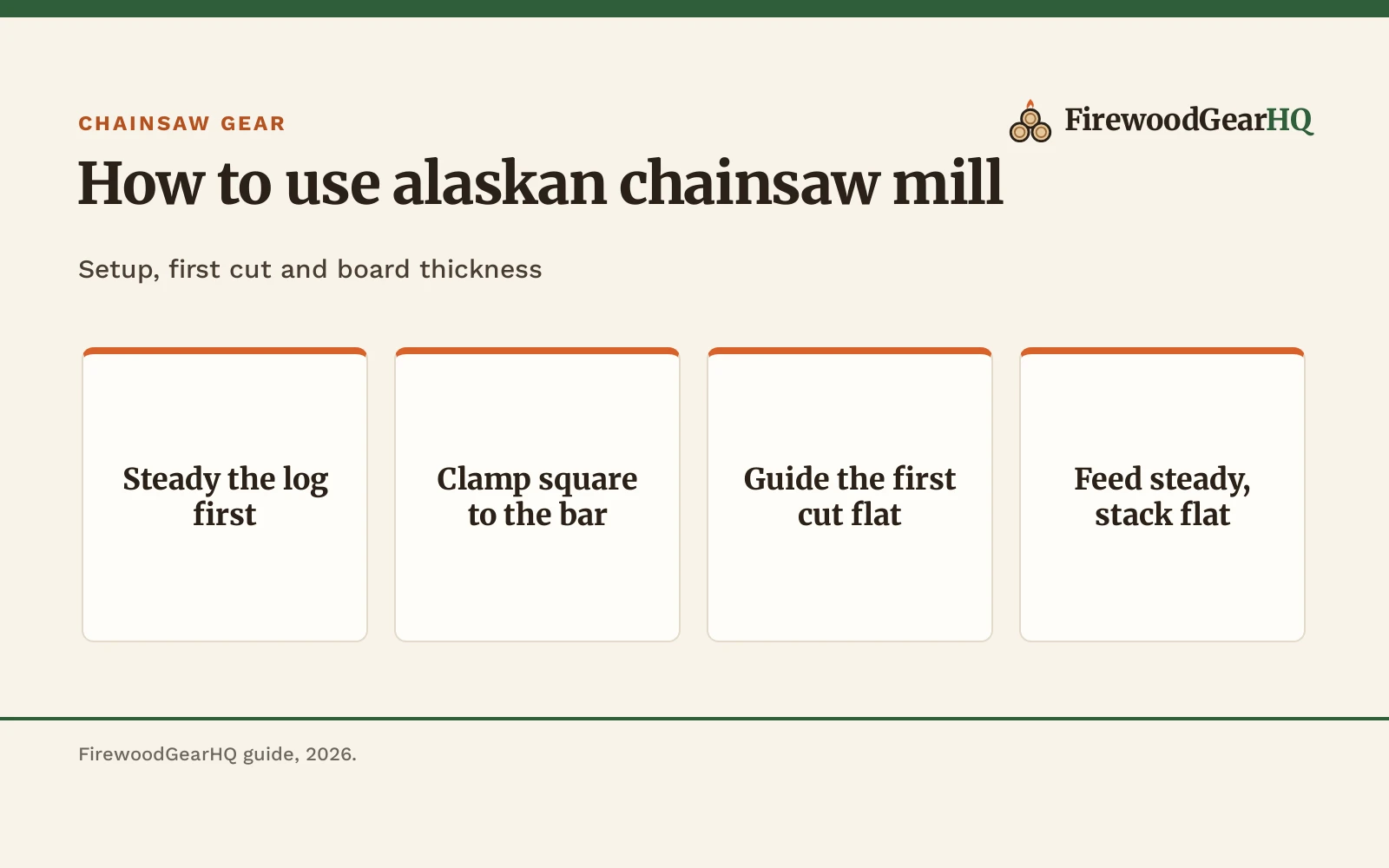
Clamp the mill frame to your chainsaw bar, set the board thickness on the rails, and make a flat first cut along the top of the log with a guide. After that first flat face exists, the mill rides on the flat surface and each pass cuts a board of even thickness. Work with a sharp chain, let the saw pull itself through the cut, and keep bar oil flowing. The sections below walk through each step in order.
| Step | What you do | Why it matters |
|---|---|---|
| Set up the log | Raise and steady the log on blocks or rails | A log that rolls or sags makes wavy boards |
| Clamp the mill | Mount the frame to the bar with the supplied hardware | The frame sets cut depth and holds the bar parallel to the guide face |
| Make the first cut | Run the mill along a flat guide on top of the log | The first flat face guides every later pass |
| Set thickness | Adjust the rails to the board thickness you want | Even thickness stacks and dries evenly |
| Mill the boards | Feed steadily and let the chain do the cutting | Forcing the saw bends the cut and dulls the chain |
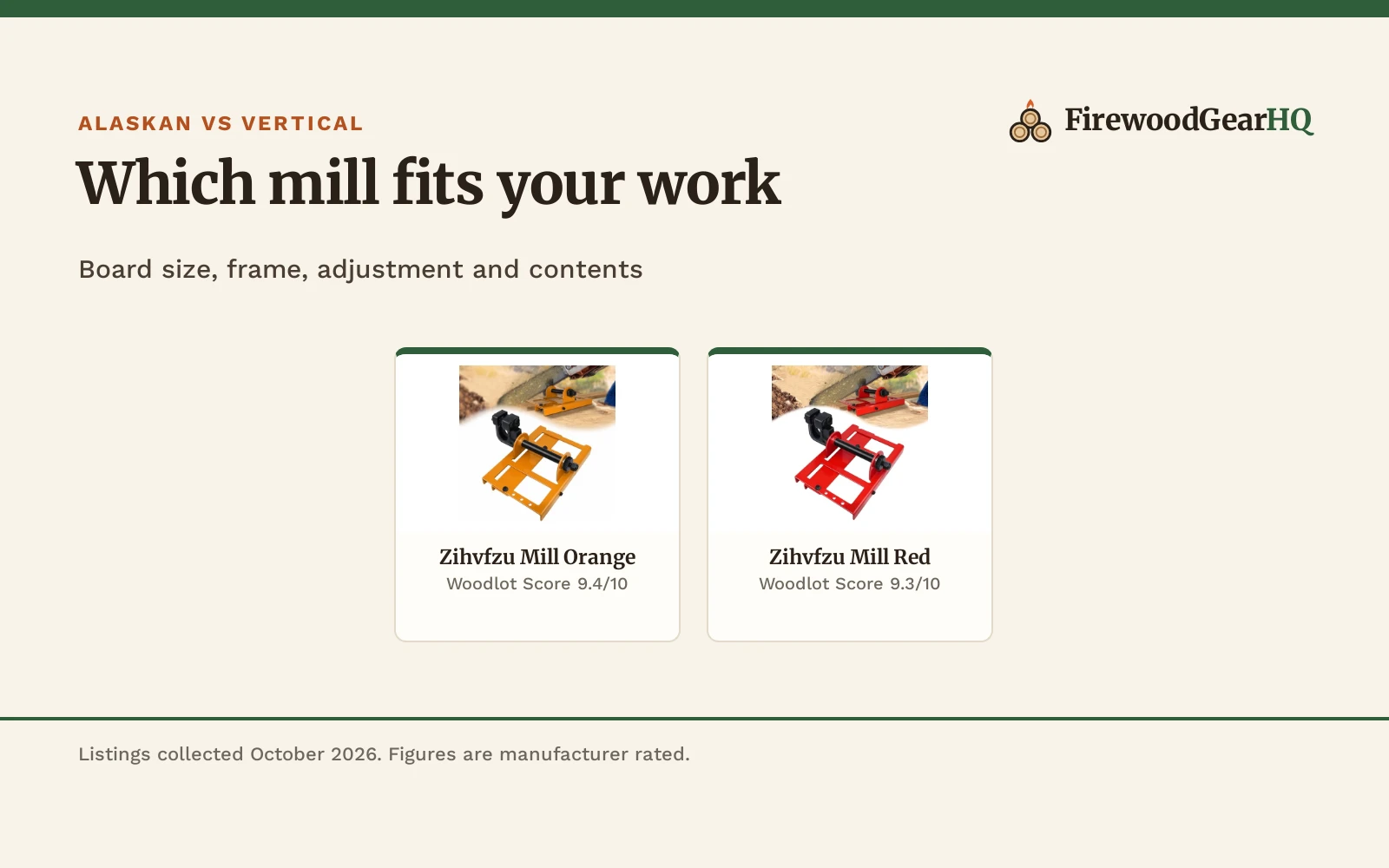
Mill sizes vary by bar length. The Timber Tuff mill (on Amazon) frame adjusts to chainsaw bars from 16 to 24 inches, while FARMMAC mills run to 36 inches, one converting between 16 and 36 inches, for projects from 14 to 36 inches. Match the mill to the bar and log size you plan to cut. See our chainsaw mill roundup and our chainsaw mill for homeowners guide for the options.
Step 1: set up the log
Pick a log that is sound, straight enough for the boards you want, and free of embedded metal, stone and dirt in the bark. Raise it off the ground on blocks, skids or a rail bed so the mill can pass along the full length and the cut board can fall clear. Steady the log so it cannot roll toward you during the cut. Clear the work area of brush and trip hazards, and plan where boards will land and where you will stand for each pass. Milling where the tree fell saves hauling whole logs, and log length is limited only by the log itself.
Step 2: clamp the mill to the saw
An Alaskan mill is an unpowered attachment with no engine of its own. It clamps to the chainsaw bar with the supplied hardware, so follow the mill maker’s mounting steps and check that clamps sit square to the bar before you tighten them. The Timber Tuff setup is stated to take minutes with hand tools, and the frame adjusts to bars from 16 to 24 inches. Fit a sharp chain suited to ripping along the grain, fill the fuel and bar oil tanks, and check chain tension. Our bar oil for chainsaw mill guide covers oil choices for long ripping cuts.
Step 3: make a flat first cut
The first cut decides the quality of every board after it. Lay a flat guide, such as a straight board or ladder section, along the top of the log and fix it so it cannot shift. Set the mill depth on the rails, start the saw, and let the mill slide along the guide in a steady pass. Keep the mill rails in contact with the guide for the whole cut. When the slab comes off, the log has a flat face. Remove the guide, and the mill now rides on that flat face for the rest of the log.
Step 4: set board thickness and mill the boards
Set thickness on the mill rails before each pass. The Timber Tuff mill sets board thickness from 0.20 to 11.81 inches with its thumbscrew rails, covering thin siding, 1 inch stock, bench slabs and squared beams. Lower the rails by your chosen thickness after each pass, and keep the same setting for boards that will stack together. Feed the saw with steady, light pressure and let the chain cut at its own pace. Pushing hard twists the bar in the cut and leaves a wavy surface. Watch the offcut side so falling boards land clear of your feet, and stop to clear sawdust and check bar oil as the cut goes on.
Step 5: handle, stack and store the boards
Fresh milled boards are green and heavy, and they warp if they dry unevenly. Stack them flat on level stickers, with stickers aligned over the supports so air moves through the stack and weight carries straight down. Keep the stack off the ground, cover the top against rain, and leave the sides open to air. Sort boards by thickness as you stack, and set aside slabs and offcuts for kindling and firewood. A tidy stack at the milling site saves handling the same board again later.
Common mistakes to avoid
- Skipping the guide on the first cut, which leaves a rounded face that rocks under the mill.
- Forcing the saw through the cut instead of letting the chain feed at its own pace.
- Milling with a dull chain, which wanders, burns the wood and strains the saw.
- Letting the log roll or sag during a pass, which changes thickness along the board.
- Stacking green boards without stickers, which traps moisture and invites warp.
Safety
Wear a helmet with a face screen, eye and hearing protection, gloves, chaps or chainsaw trousers, and sturdy boots for every cut. Keep a firm grip on the saw handles, stand to the side of the cut line, and never reach across a running chain. Keep children, pets and bystanders clear of the milling area, and never mill alone. Refuel only with the engine off and cool, and set the chain brake whenever you move the saw between passes. Follow the saw and mill manuals for your models. See our chainsaw gear section for protective equipment.
FAQ: wood, fire and gear
What size chainsaw mill do I need?
Match the mill to your bar length and log size. The Timber Tuff frame adjusts to bars from 16 to 24 inches, while FARMMAC mills run to 36 inches, one converting between 16 and 36 inches, for projects from 14 to 36 inches.
How thick can an Alaskan mill cut boards?
Thickness is set on the mill rails. The Timber Tuff mill sets board thickness from 0.20 to 11.81 inches, covering thin siding, 1 inch stock, bench slabs and squared beams.
Do I need a guide for the first cut?
Yes. A flat guide fixed along the top of the log gives the mill a level path for the first pass. That first flat face then guides every later pass on the log.
Can I mill a log where it fell?
Yes. A portable mill breaks a felled trunk down into planks and boards on site, and log length is limited only by the log itself. Steady the log on blocks before you start.
What do I do with boards after milling?
Stack green boards flat on level stickers with air space between layers, keep the stack off the ground, and cover the top against rain while the sides stay open to air.
More firewood guides
Also see our chainsaw mill roundup, our chainsaw mill for homeowners guide, our bar oil for chainsaw mill guide and our chainsaw gear section.