How to Slide Pizza Off Peel: A Step-by-Step Guide for Wood-Fired Ovens
How to slide pizza off a peel without sticking, from dusting and building on the peel to the shake check and the launch into a hot wood-fired oven.

On this page
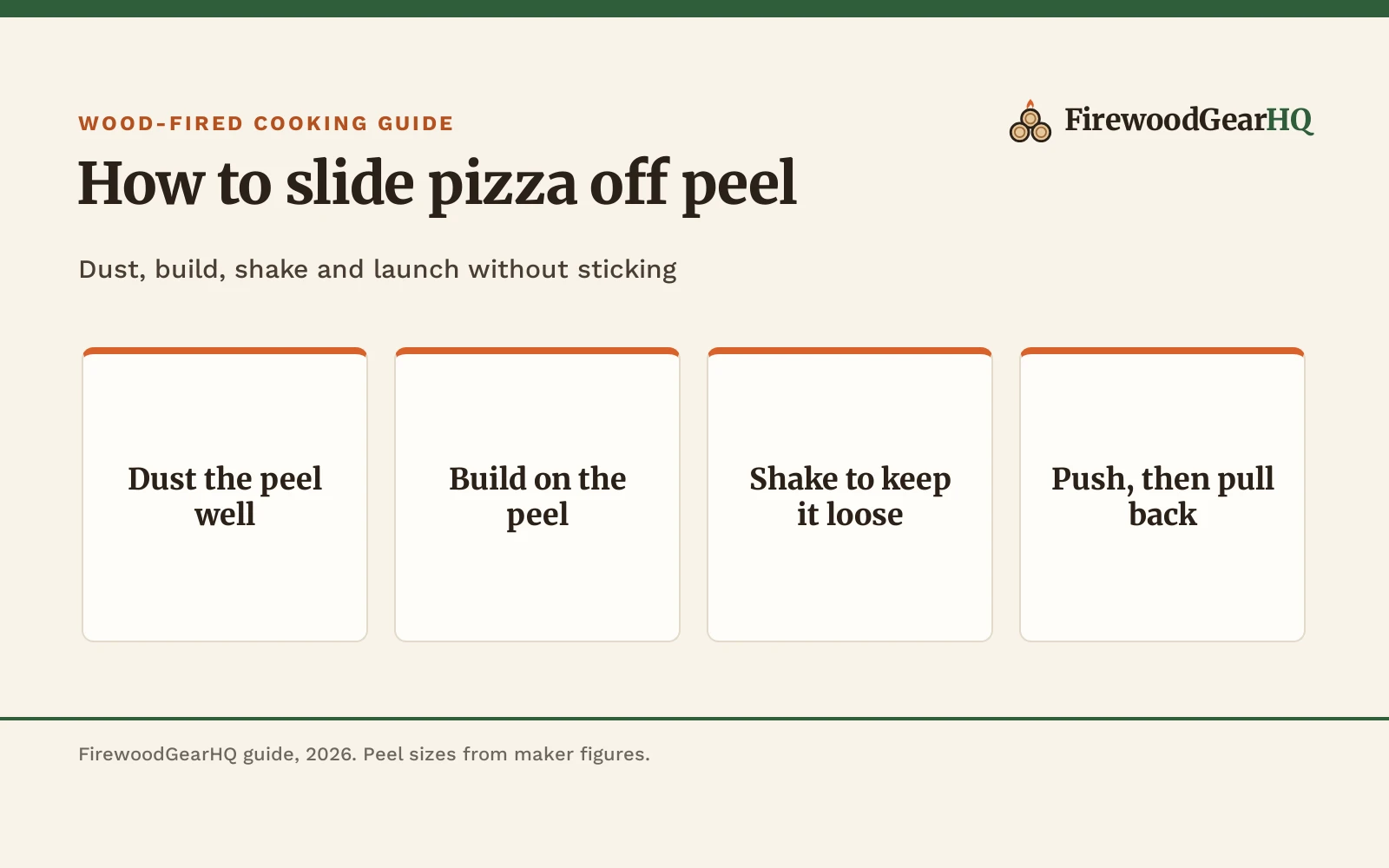
The oven is hot, the dough is stretched and topped, and the pizza will not move. A stuck launch usually starts long before the oven door opens, with wet dough sitting on a bare peel while toppings go on. Learning how to slide pizza off peel is mostly about keeping the dough dry, dusted and moving from the moment it lands on the peel until it lands on the stone or steel. Dust the peel, build the pizza on the peel, shake it gently to keep it loose, then slide it forward with a short push and pull the peel back.
As an Amazon Associate I earn from qualifying purchases. FirewoodGearHQ earns a small commission if you buy through links on this page. The price you pay stays the same. Read our affiliate disclosure.
The quick answer
Dust a dry peel with flour, semolina or cornmeal, set the stretched dough on the peel, and add sauce and toppings on the peel. Give the peel a gentle shake as you work so the dough never settles in place. At the oven, rest the front edge of the peel on the stone or steel, push forward so the pizza slides off, and pull the peel back in a smooth motion. If the pizza stops moving on the peel at any point, stop, lift an edge, add more dusting under the dough, and shake again before you try to launch.
Step by step: how to slide pizza off peel
Dust the peel before the dough goes down
Start with a clean, dry peel. A damp peel grabs dough, and old flour can turn sticky. Dust the surface evenly with flour, semolina or cornmeal. Semolina and cornmeal stay loose under the dough longer than fine flour. Flour absorbs moisture and can turn pasty if the pizza sits. Coat the area under the pizza, and brush away loose piles at the edges.
Build the pizza on the peel
Stretch the dough on the counter, then move it to the dusted peel and finish shaping it there. Building on the peel avoids a risky transfer of a topped pizza from counter to peel. Keep sauce away from the outer rim, because sauce that runs under the dough glues it to the peel. Add toppings in an even layer and go easy on wet toppings. A heavy, wet pizza presses down, squeezes moisture into the dusting, and slides poorly. Work steadily after the dough is on the peel, because dough left sitting absorbs the dusting and starts to stick.
Shake and turn while you top
After the sauce goes on, give the peel a short, gentle shake. The pizza should shift freely. Shake again after the cheese and toppings go on. Turn the peel as you work and check that the dough is not hanging over the edge. Dough that drapes over the front edge can fold under during the launch. If a spot sticks, lift that edge with a spatula, toss a pinch of dusting underneath, and shake again.
Check the slide before you walk to the oven
Hold the peel level and shake it again with a little more energy. The whole pizza should glide as a unit. If it moves, you are ready. If it drags, do not force it. Lift the stuck edge, add dusting, and shake until it glides. Carry the peel level to the oven so toppings stay put and the dough does not slide toward the handle. Keep the peel level at the oven mouth as well, because a tilted peel can dump toppings before the pizza leaves the surface.
Launch with a push and a pull
Set the front edge of the peel down on the stone or steel where you want the pizza to land. Push the peel forward with a short, confident motion so the pizza starts to slide, then pull the peel back toward you while the pizza stays in place. The push starts the movement and the pull leaves the pizza behind. Keep the peel flat during the pull so the front edge does not catch the crust. If the pizza lands a little off center, leave it alone and let it bake. Dragging a raw pizza around on a hot stone tears the dough. For the bake itself, see how to cook pizza in a pizza oven.
Why pizza sticks to the peel
Most sticking comes from moisture, time and weight. Wet dough on a bare peel bonds as it sits. Sauce that leaks under the dough acts as glue. Heavy toppings press the dough down and push moisture into the flour layer. A damp peel, baked-on residue and torn dough also grab. Most causes share the same fix: a dry peel, generous dusting, a steady pace, and frequent shakes. Scrape baked-on residue off the peel before you dust. Parchment paper is not a fix for a wood-fired launch, since it scorches on a wood-fired oven floor, so keep the dough dry and dusted instead.
Peel size, edge and material
Peel size sets the largest pizza you can build and launch with control. The Chicago Brick Oven peel (on Amazon) has an aluminum head that measures 12 by 14 inches, with an overall length of 25 inches and a wooden handle of 11 inches, and the maker states that it folds flat. The SkyJourney wooden peel (on Amazon) measures 23.62 by 16 inches and fits pizza up to 16 inches, with a sloped rounded edge. The KitchenStar wooden peel (on Amazon) is a 16 inch acacia peel with a beveled edge, and the maker gives dimensions of 24.0 by 16.0 inches. The Epicurean peel (on Amazon) measures 21 by 14 inches with a beveled front edge, and the maker states temperature resistance to 350 Degree F. A beveled or sloped edge helps the peel slide under dough and helps dough slide off at the oven. Compare dimensions in the pizza peel sizes chart before you choose a peel for your oven.
| Peel | Size figure | Edge and material |
|---|---|---|
| Chicago Brick Oven | 12 by 14 inches, 25 inches overall | Aluminum head, wooden handle, folds flat |
| SkyJourney | 23.62 by 16 inches, fits pizza up to 16 inches | Bamboo, sloped rounded edge |
| KitchenStar | 16 inch peel, 24.0 by 16.0 inches | Acacia wood, beveled edge |
| Epicurean | 21 by 14 inches | Beveled front edge, temperature resistant to 350 Degree F |
Wood absorbs a little moisture from the dough, while smooth metal can trap moisture underneath, so either surface can grip a damp pizza. Dust both well and shake to check the glide. Either material launches well when the dough is dry underneath and moving freely. Pick a peel that fits your oven opening with room to spare.
Launching into a wood-fired oven
A wood-fired oven adds heat and a live fire to the launch, so set up before you build the pizza. Have the peel dusted, the toppings ready, and a clear path to the oven mouth. Keep the handle and your hands away from the flame and the hot oven rim. Rest the peel edge on the oven floor, push and pull, and step back. If a pizza sticks partway, pull the peel out, fix the stuck spot on the counter with more dusting, and launch again. Sweep loose flour off the oven floor between pizzas so it does not scorch.
FAQ: wood, fire and gear
Why does pizza stick to the peel?
Pizza sticks when moisture reaches the peel surface. Wet dough sitting on a bare peel, sauce running under the dough, and heavy wet toppings all break down the dusting layer. A damp peel and torn dough cause sticking as well. Dust well, build on the peel, and shake often.
What can I dust a pizza peel with?
Flour, semolina and cornmeal all work as dusting. Semolina and cornmeal stay loose under the dough and help it glide. Flour absorbs moisture faster, so a flour-dusted pizza should not sit long before launch. Coat the peel evenly and brush away loose piles at the edges.
Should I build pizza on the peel or on the counter?
Build on the peel. Moving a topped pizza from the counter to the peel risks stretching, tearing and sticking. Stretch the dough, set it on the dusted peel, finish shaping it there, and add sauce and toppings on the peel. Shake the peel as you work to keep the dough loose.
How do I slide pizza off a wooden peel?
Dust a wooden peel generously, since dough still grips wood once the dusting turns damp. The SkyJourney bamboo peel has a sloped rounded edge and the KitchenStar acacia peel has a beveled edge, and each edge shape helps dough move. Shake often, check the glide, then push and pull at the oven.
What size peel do I need for homemade pizza?
Match the peel to the pizza you make and to your oven opening. The Chicago Brick Oven peel measures 12 by 14 inches. The SkyJourney and KitchenStar peels fit pizza up to 16 inches. The Epicurean peel measures 21 by 14 inches. Leave room around the pizza so the dough does not drape over the edge.
More firewood guides
See the wood-fired cooking hub for oven basics, compare peels in the best pizza peel guide, and read the best wooden pizza peel guide if you prefer wood. For material trade-offs, see metal vs wood pizza peel.