How to Clean Spark Plugs on Small Engines
How to clean spark plugs on a small engine, from pulling the plug and brushing off carbon to checking the gap and putting it back.

On this page
Top picks at a glance
As an Amazon Associate I earn from qualifying purchases.
- 1
 NGK9.5/10View on Amazon
- 2
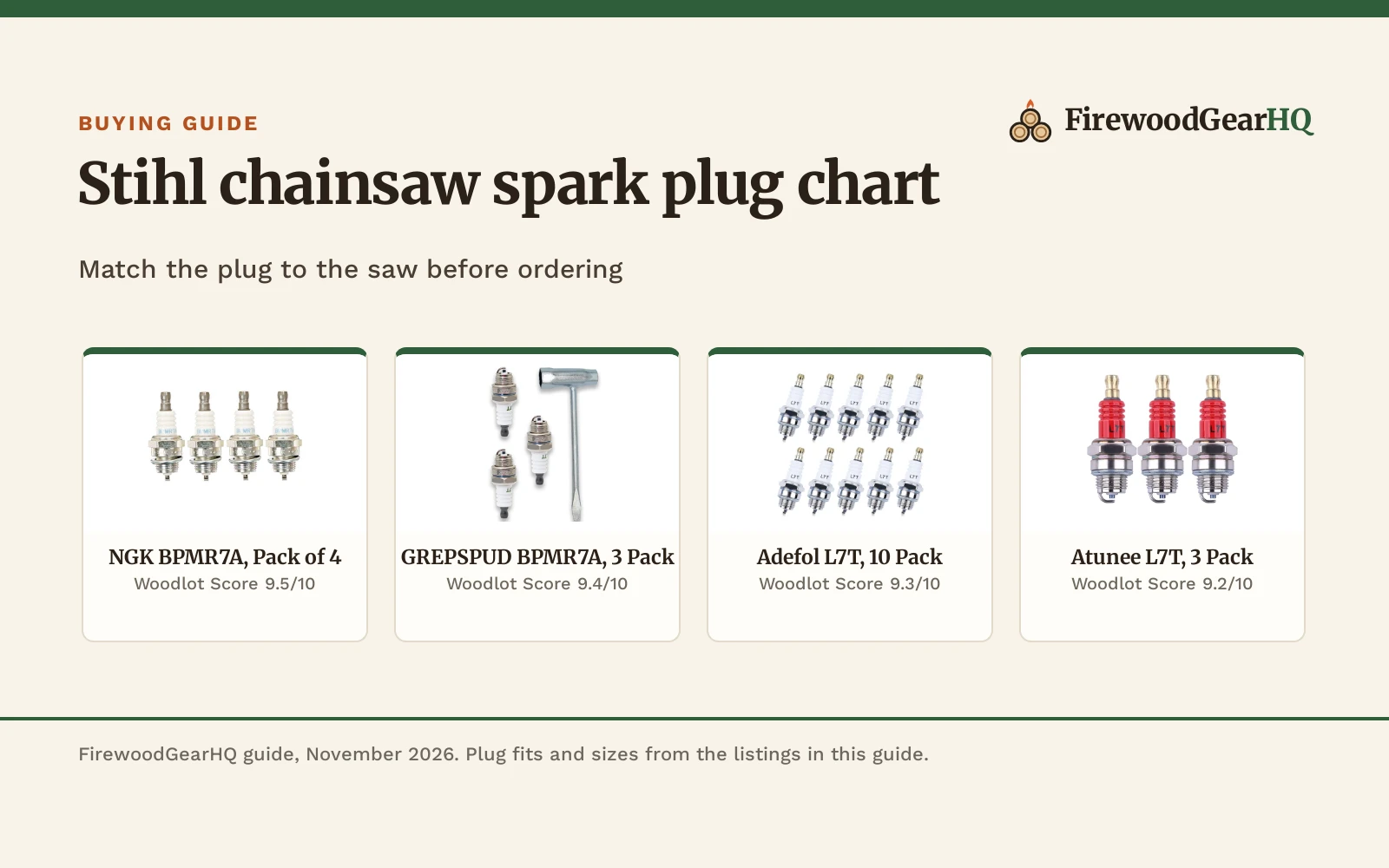
 GREPSPUD 3pcs BPMR7A L7T Spark Plugs with 13 by 19 mm9.4/10View on Amazon
- 3
 L7T Spark Plug for NGK BPMR7A9.3/10View on Amazon
When the woodpile is stacked for fall and the saw is about to earn its keep through winter, a hard start or a rough idle often points to a dirty plug. This guide shows how to clean spark plugs on a small engine: pull the plug, brush the carbon off the electrode and threads, check the gap, and put it back. If the ceramic is cracked or the electrode is worn down, a new plug is the fix.
FirewoodGearHQ earns a small commission if you buy through links on this page. The price you pay stays the same. Read our affiliate disclosure.
The quick answer
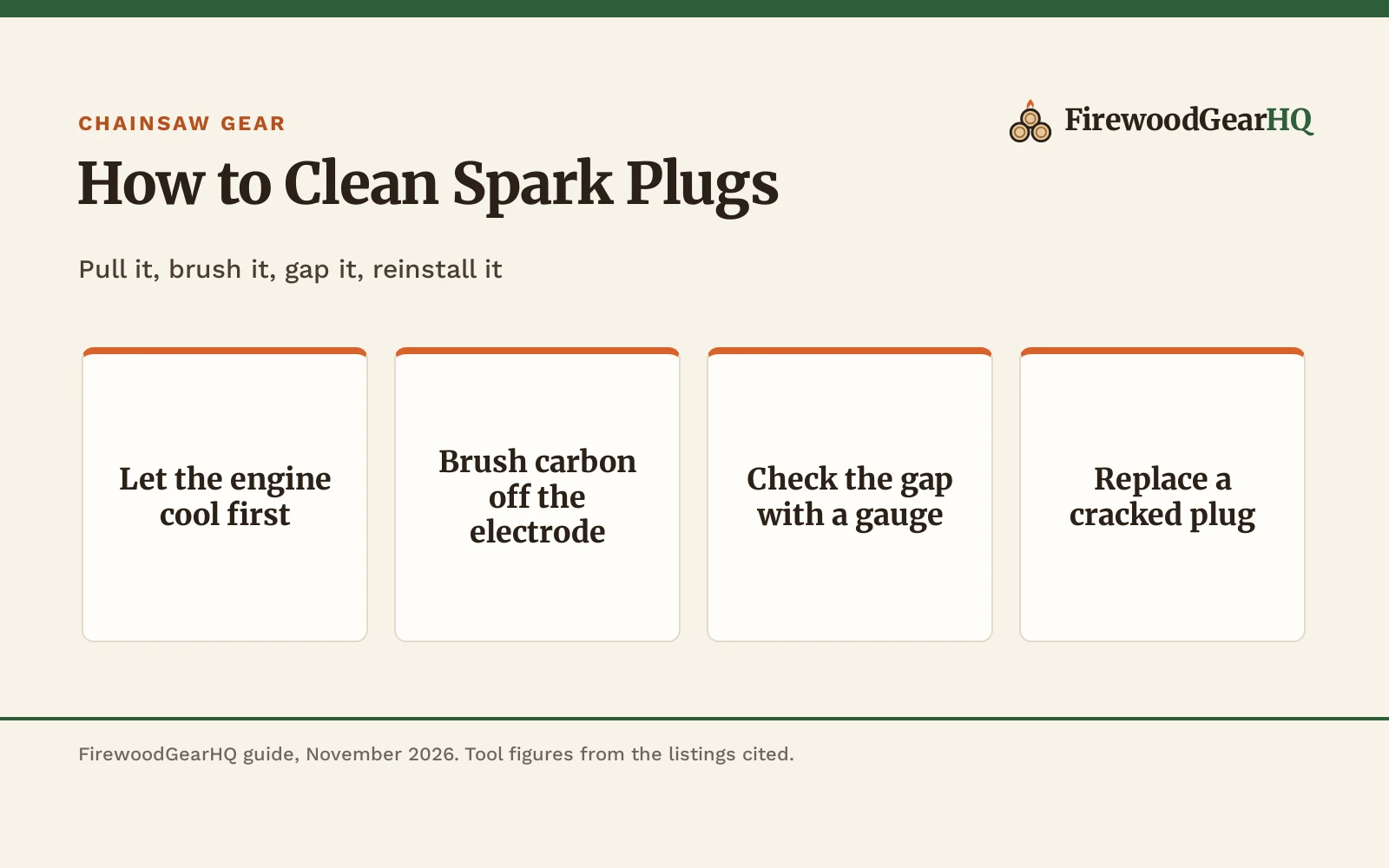
Let the engine cool, pull the plug wire off the boot, and unscrew the plug. Brush carbon off the electrode and threads, or blast it clean in a pneumatic cleaner if a compressor is on hand. Check the gap with a feeler gauge against the figure in the engine manual, and thread the plug back in by hand before tightening.
What you need
Cleaning a plug takes a brush set, a gap tool and, for the blasting method, a compressor and a pneumatic cleaner. The kits below are the reference listings for this guide.
| Tool | What the listing states |
|---|---|
| Fododo carburetor cleaning kit | 33 pieces: 13 stainless steel wires, 5 nylon brushes, 10 needles, 3 double-ended brushes, 4 hooks |
| Peuxmall spark plug gap tool | 32-blade steel feeler gauge, fits 10mm, 12mm, 14mm and 16mm plugs, not for 18mm thread |
| ABN pneumatic spark plug cleaner | 90 PSI, 7.7CFM, 1/4 inch NPT inlet, 3/8 inch hose, 1.7 oz bag of abrasive |
| Leriton spark plug wire removal pliers | 2-pack, sleeve puller about 10.83 inches, round plier about 11 inches, 9/16 inch clamp opening |
The Fododo kit (on Amazon) covers wires from 1.5mm to 7mm, each about 4.33 inches long. Its wires are 304 stainless steel, and the set also carries 5 nylon brushes for softer scrubbing. The Motfittings kit (on Amazon) is smaller: 13 wires, 10 needles, 5 brushes and 1 pick, with wires from 2mm to 7mm and needles from 0.4mm to 0.8mm. The Gwukaop kit runs to 36 pieces, with 13 wires from 0.4mm to 1.6mm, 2 large brushes, 4 hooks, a pick and a wrench.
For the gap, the Peuxmall tool (on Amazon) pairs a gapper with a 32-blade steel feeler gauge and fits most 10mm, 12mm, 14mm and 16mm spark plugs. It is not for 18mm thread and long-reach plugs, so check the plug size before buying. The CNRAQR kit (on Amazon) combines a pneumatic cleaner with a gap tool and a feeler gauge that reads from 0.04mm to 0.88mm, and it includes 50g of silicon carbide abrasive for 12mm to 16mm plugs.
How to clean spark plugs step by step
Step 1: Let the engine cool and pull the wire
Work on a cold engine. A hot plug can burn a hand, and forcing a plug out of a hot head can damage the threads. Give the saw time to cool, then pull the boot straight off the plug. Grip the boot itself, never the wire, so the wire does not separate inside the boot. Pulling the wire also makes sure the engine cannot fire while hands are near the plug hole. Wear eye protection and gloves.
Step 2: Remove the plug
Unscrew the plug slowly so grit around the plug hole does not fall into the cylinder. If the boot is stuck, the Leriton 2-pack removal pliers (on Amazon) are made for this: the sleeve puller is about 10.83 inches long and the round plier is about 11 inches, with a clamp opening of about 9/16 inch. Set the plug on a clean rag with the electrode facing up. A plug coated in dry, black carbon is a candidate for cleaning. A plug with a cracked ceramic insulator or a chipped electrode is not.
Step 3: Brush the carbon off
Hold the plug by the ceramic and brush the electrode, the ground strap and the threads. Use a wire that fits the gap: the Gwukaop wires run from 0.4mm to 1.6mm for finer work, and its 2 large brushes cover the threads and the plug body. The Fododo wires run from 1.5mm to 7mm and are about 4.33 inches long. Brush along the electrode, not across it, with light strokes so the electrode does not bend. A nylon brush finishes the ceramic and the threads. Tap the plug gently to shake loosened carbon out of the gap.
Step 4: Blast it clean with a pneumatic cleaner
A pneumatic cleaner does the same job with abrasive grit and compressed air. The Purthog and YGDMD cleaners take a 1/4-inch inlet and a 3/8-inch air hose at 90 PSI, and the ABN cleaner adds a 7.7CFM air consumption figure with the same 90 PSI and 1/4 inch NPT inlet. Mount the cleaner upright, fill it with abrasive, and insert the plug electrode end down. The ABN kit includes a 1.7 oz bag of abrasive, and the CNRAQR kit includes 50g of silicon carbide. Turn on the compressor and move the plug in a slow circular motion so the grit reaches every face of the electrode. When the electrode shows clean metal, brush off every trace of grit before the plug goes near the engine.
Step 5: Check and set the gap
Cleaning can move the gap, so check it before the plug goes back in. Find the gap figure in the engine manual, since this guide gives no gap number of its own. Slide the right feeler gauge blade between the center electrode and the ground strap. The Peuxmall gauge has 32 blades, and the CNRAQR gauge reads from 0.04mm to 0.88mm. The blade should drag lightly. If the gap is wide, press the ground strap down a little at a time. If the gap is tight, lift the strap gently. The Peuxmall listing notes that an electrode can spring back after bending, so check the gap again after each adjustment. The Peuxmall tool fits 10mm, 12mm, 14mm and 16mm plugs and is not for 18mm thread.
Step 6: Reinstall the plug and reconnect the wire
Thread the plug back in by hand first, turning it gently until it seats. Hand threading keeps the plug from cross-threading, which can damage the threads in the head. Once it is seated, tighten it to the figure in the engine manual, then push the boot firmly back onto the plug until it seats fully. Start the engine and listen: a clean plug with the right gap should give a steady idle. If the engine still stumbles, the problem may be fuel or air, not the plug. See the fuel stabilizer guide and the 2 stroke oil guide for the fuel side of a hard start.
When to replace the plug instead
Cleaning only helps a plug that is dirty. Replace the plug when the ceramic insulator is cracked or chipped, when the center electrode is rounded or eaten away, or when the ground strap is bent beyond a gentle correction. Oil fouling that returns right after cleaning points at an engine problem, not a plug problem. Keep a spare plug in the kit so a cracked plug found at the woodpile does not end the cutting day.
Mistakes to avoid
Do not clean a plug while the engine is hot, and do not yank the plug wire by the cable instead of the boot. Do not force a plug that will not turn, since a seized plug can strip the threads in the head. Do not blast a plug without the catch bag, and do not put a plug back in with grit still on it. Do not guess the gap: use a feeler gauge and the figure from the engine manual, and recheck after bending the strap, since the electrode can spring back. Do not use a gap tool on a plug size it does not fit: the Peuxmall tool is not for 18mm thread. Do not clean a cracked plug and hope it holds; a cracked insulator can misfire under load.
FAQ: wood, fire and gear
Can I clean a spark plug instead of replacing it?
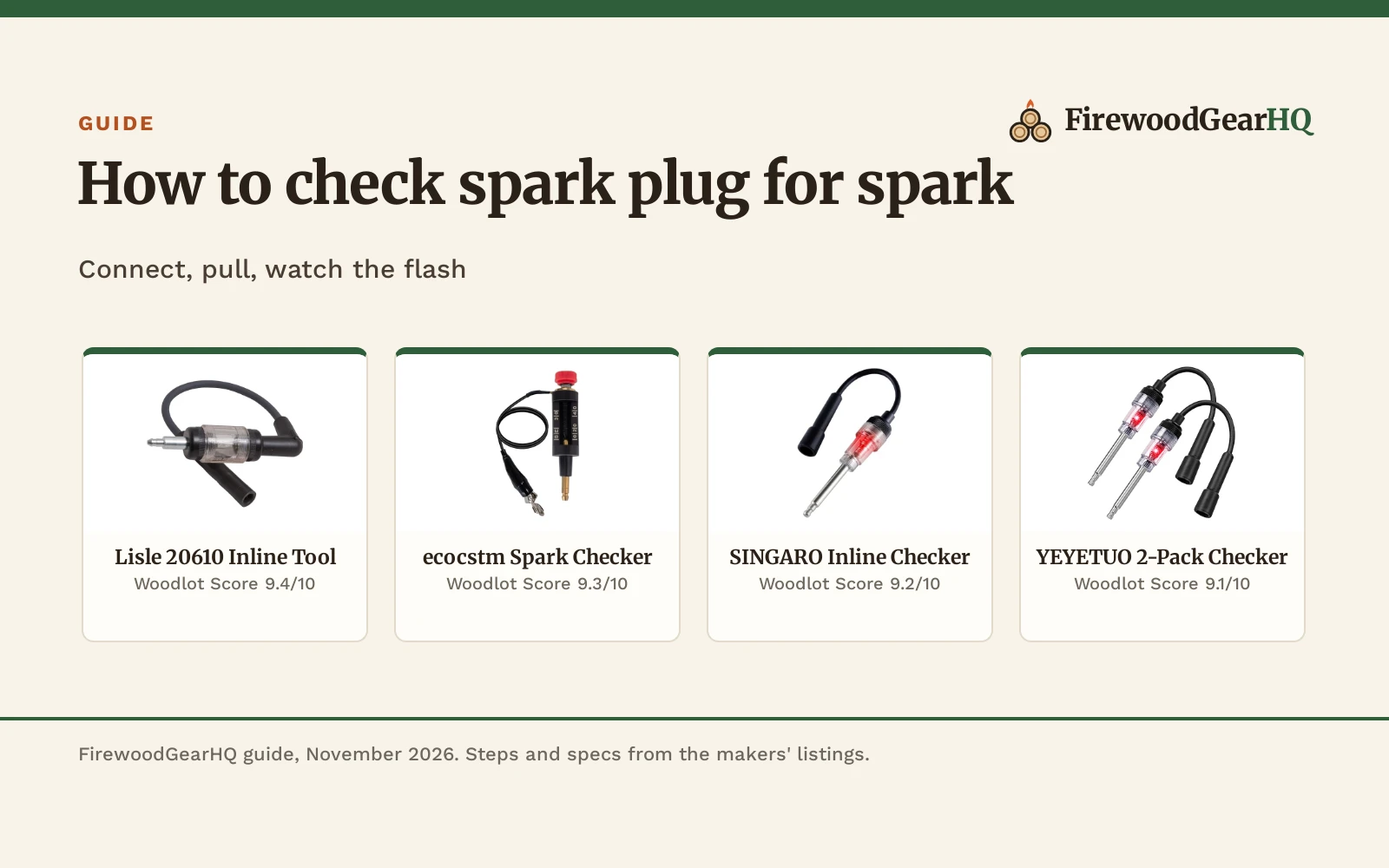
Yes, when the plug is only dirty. Carbon on the electrode and threads brushes or blasts off. Replace it when the ceramic is cracked, the electrode is worn down, or the threads are damaged.
How do I know the plug needs cleaning?
A hard start, a rough idle, or a saw that dies under load can point at the plug. Dry black carbon on the electrode and threads is the sign that cleaning will help.
What pressure does a pneumatic spark plug cleaner need?
The cleaners in this guide run at 90 PSI. The Purthog, YGDMD and ABN cleaners state a 1/4-inch inlet and a 3/8-inch air hose, and the ABN and CNRAQR cleaners list 7.7CFM air consumption, so the compressor must keep up with that flow.
What size gap tool fits my plug?
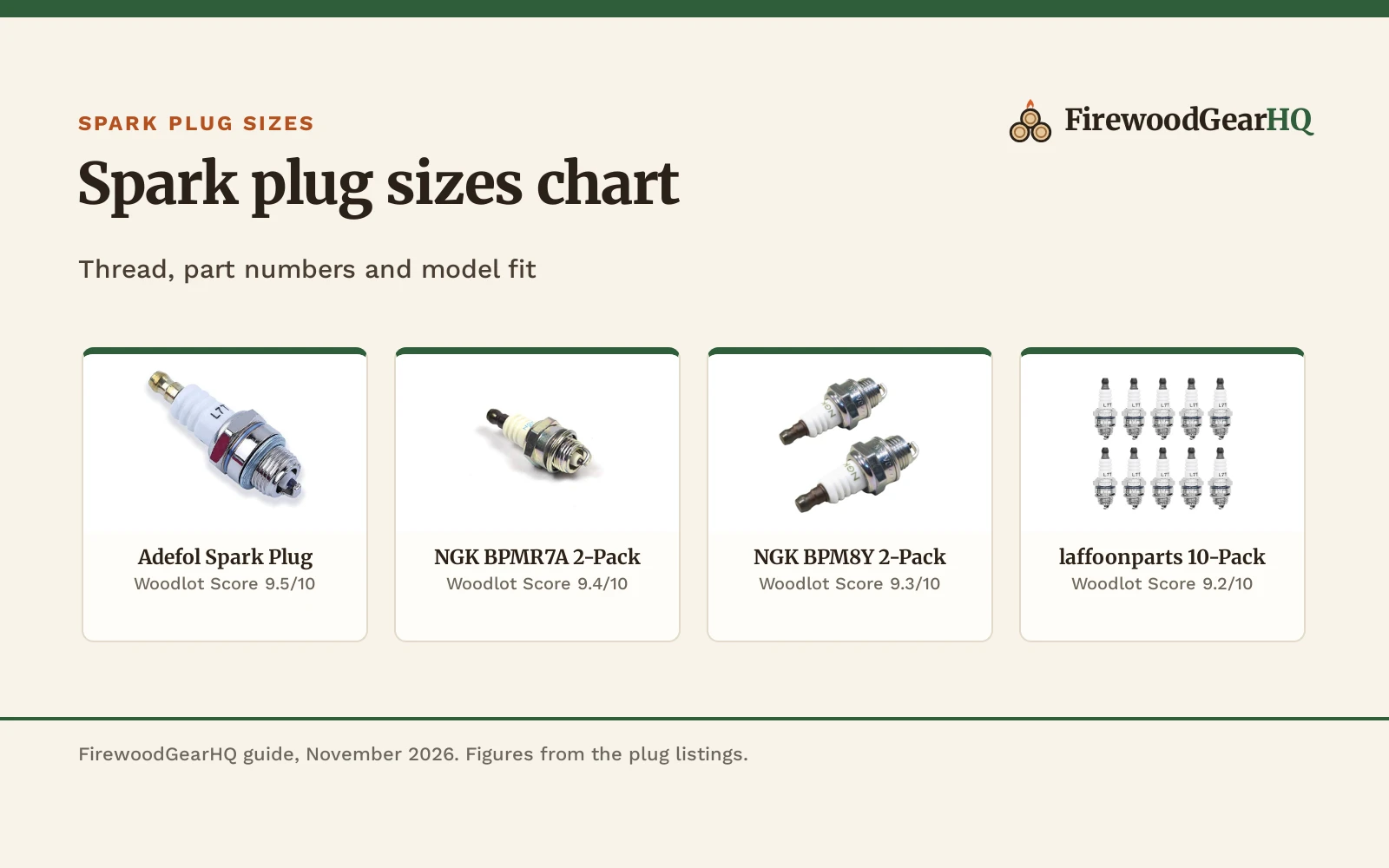
The Peuxmall gap tool fits most 10mm, 12mm, 14mm and 16mm spark plugs and is not for 18mm thread or long-reach plugs. The CNRAQR kit works with 12mm to 16mm plugs. Check the plug size first.
Can I use a wire brush on a spark plug?
Yes. The Fododo kit uses 304 stainless steel wires from 1.5mm to 7mm, and the kits carry nylon brushes for the ceramic and threads. Brush along the electrode with light strokes.
More firewood guides
See every chainsaw gear guide and all chainsaw maintenance tools. Keep the saw in shape with the Stihl chainsaw maintenance kit guide, the best chainsaw for firewood and the best chainsaw sharpener.