How to Clean a Propane Tank Safely
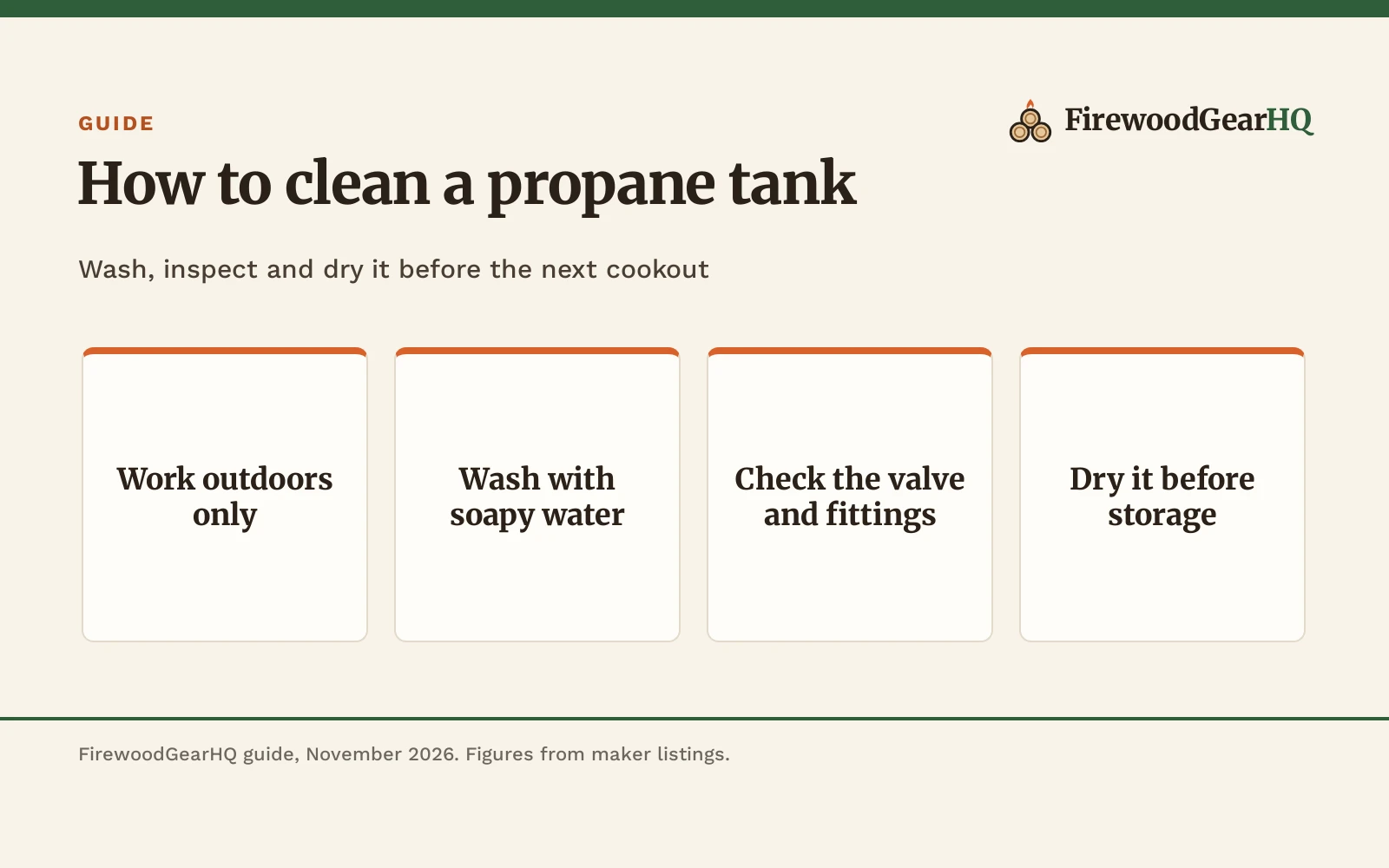
How to clean a propane tank: wash the outside with soapy water, check the valve and fittings, and dry it before storage.

On this page
Top picks at a glance
As an Amazon Associate I earn from qualifying purchases.
- 1
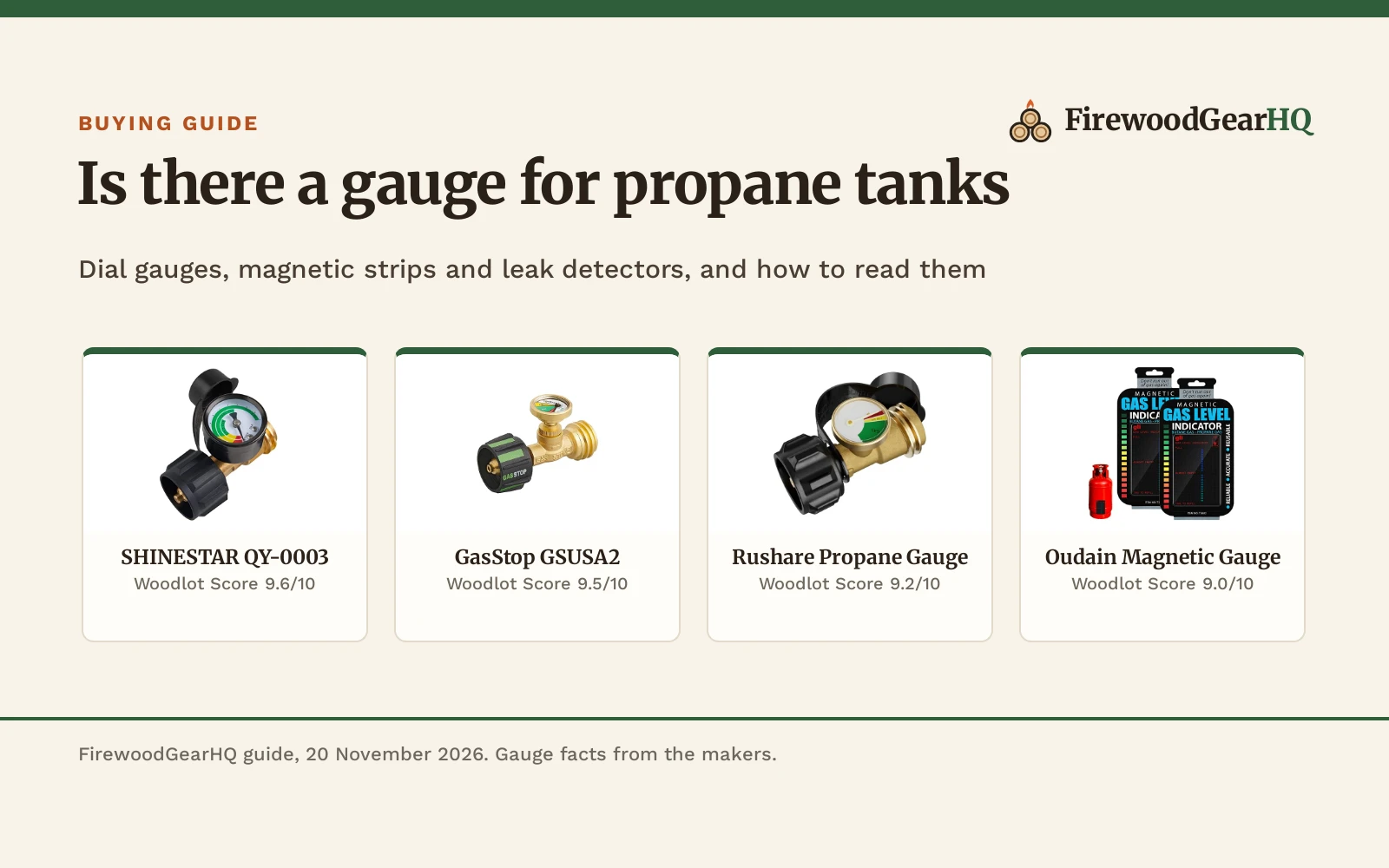
 Flame King Propane Tank Gauge Level Indicator Leak Detector9.7/10View on Amazon
- 2
 Flame King Propane Tank Gauge Level Indicator9.7/10View on Amazon
- 3
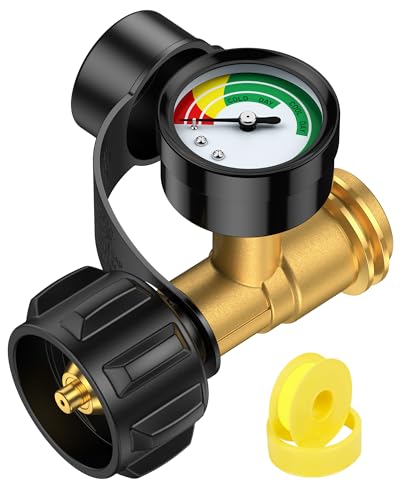 GasXpert Propane Tank Gauge Level Indicator9.6/10View on Amazon
By late fall the grill tank has spent a season outside, and it shows. Dust, pollen and a season of rain leave a film on the steel, and the valve and fittings pick up grime where the hose connects. This guide shows how to clean a propane tank: wash the outside with mild soapy water, rinse it, and let it dry in the open air before you store it. Work outdoors, keep the valve closed, and stay away from open flames while you work.
FirewoodGearHQ earns a small commission if you buy through links on this page. The price you pay stays the same. Read our affiliate disclosure.
What you need before you start
Keep the job simple. A bucket of warm water with a small amount of mild dish soap, a soft brush or sponge, and clean rags cover the outside of the tank. A garden hose rinses the soap off without scrubbing. Keep a wrench nearby only if a fitting needs tightening after cleaning, and keep the tank away from the grill and any open flame while you work. Do not use harsh solvents or abrasive pads on the paint or the valve.
How to clean a propane tank, step by step
Move the tank outside and close the valve
Set the tank on level ground outdoors, away from walls, overhangs and anything that burns. Turn the valve handle until it is fully closed, and disconnect the hose or regulator if one is attached. If you smell gas, stop, close the valve if you can reach it, disconnect the hose, and move away from the tank. Never clean a tank indoors, in a garage or inside a tent.
Wash the outside with soapy water
Dip the brush or sponge in the soapy water and wash the tank from the top down, working around the collar and the base ring where dirt collects. Let the soapy water sit for a few minutes on stubborn grime, then scrub again with the soft brush. Rinse with the hose until the water runs clear. Avoid spraying water straight into the valve opening, and keep the valve closed through the whole wash.
Clean around the valve and fittings
Wipe the valve body, the handwheel and the connection threads with a damp rag, then dry them with a clean rag. Check the threads for dirt, grit or damage, and brush away anything loose with the soft brush. If a hose uses a rubber gasket, check that the gasket sits flat and has no cracks or tears; the WGXY refill (on Amazon) kit ships with 6 extra gaskets for this kind of swap. Do not force a fitting that will not thread on by hand.
Rinse and let it dry
Rinse the whole tank once more and wipe off the standing water with a clean rag. Stand the tank upright outdoors and let the air dry the valve area and the base ring, where water hides. Do not store a damp tank under a cover, since trapped moisture feeds rust on the steel. Once the tank is dry to the touch, reconnect the hose only if the threads are clean and the gasket is sound.
Check the tank before you store it
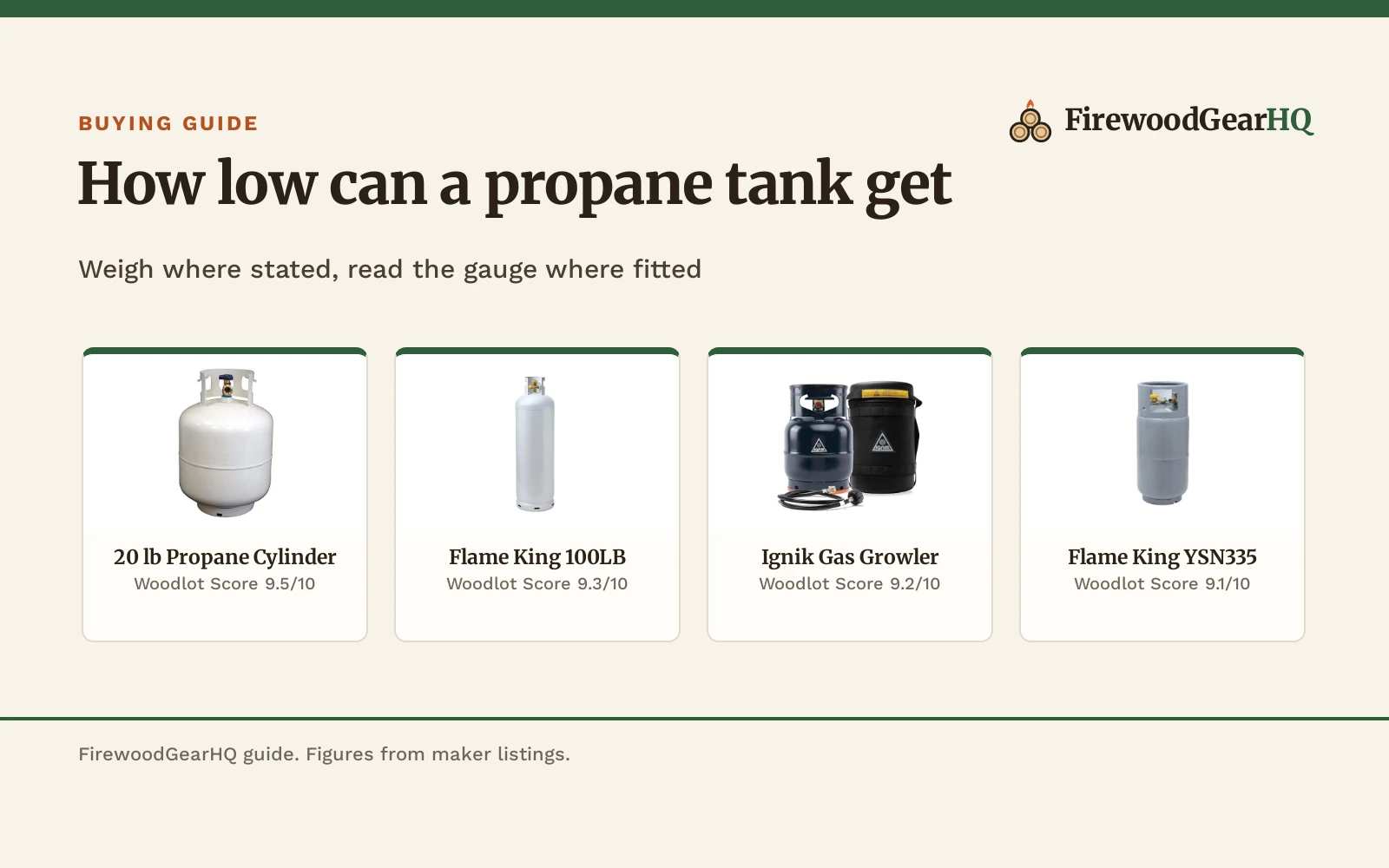
Look over the tank once it is clean and dry. Check the valve handle turns, the collar is straight, and the base ring sits flat so the tank stands steady. A WADEO refill kit includes 3 stabilizing feet that fit a 20 lb tank, which shows how much a steady base matters during a refill. If the valve is bent, the tank is dented, or rust has eaten through the paint to bare metal in patches, set the tank aside and ask your propane supplier what to do with it.
What the hoses, gauges and valves tell you
The fittings around a propane tank tell you a lot about its condition, and cleaning is a good time to read them. The MENGBEI, WGXY and YTFSA refill adapters (on Amazon) in these listings use a 3-foot hose to a 20 lb tank, and the RV kits in these listings run a 5-foot tank hose and a 12-foot appliance hose in braided stainless steel. Look for cuts, kinks and cracked rubber on any hose, and check that the brass fittings are free of green corrosion. Two hoses in these listings carry a 350 PSI rating, the ETERMETA dual-tank hose (on Amazon) and the YTFSA refill hose, and the service valves for 100 lb tanks in these listings vent through an automatic relief valve at 375 PSI. A 10.2-inch dip tube on the BBQHKCX valve (on Amazon) reaches deep into the tank, and the Solimeta kit (on Amazon) pairs its valve with a QCC1 adapter for modern hoses. If a hose or valve looks worn, replace it rather than cleaning around the damage.
When to stop and get help
Cleaning is a surface job. If the valve leaks, the threads are stripped, or the tank has a deep dent, do not try to fix it yourself. Propane work past the outside of the tank belongs to the maker or a propane professional, who has the tools and the training to check it. A tank that hisses, smells of gas after the valve is closed, or shows a cracked weld goes back to the supplier. Keep the tank outdoors and away from flames until it is picked up.
FAQ: wood, fire and gear
Can I wash a propane tank with a hose?
Yes. Wash the outside with mild soapy water and rinse with a hose until the water runs clear. Keep the valve closed and avoid spraying water straight into the valve opening, then let the tank dry outdoors before you store it.
How do I clean a rusty propane tank?
Brush loose rust off with a soft brush, wash the area with soapy water, and rinse and dry the tank. Surface rust on the outside is common after a season outdoors; if rust has eaten through the steel or the tank feels weak at the base ring, set it aside and ask your propane supplier.
Should I clean the valve on a propane tank?
Yes, wipe the valve body, handwheel and threads with a damp rag and dry them, so dirt and grit do not work into the connection. Check the gasket and the threads while you clean. If the valve leaks or the handle will not turn, do not force it; ask a propane professional.
How often should I clean a propane tank?
Clean the tank when it looks dirty, at the start of the grilling season, and before you store it for the winter. A tank that sits outside all season picks up dust and grime, and a quick wash each time you swap the hose keeps the fittings clean.
Can I store a propane tank indoors after cleaning?
No. Store the tank upright outdoors, away from walls, overhangs and open flames, with the valve closed. Never keep a propane tank in a garage, a tent or a basement, even when it is clean and empty.
What do I do if I smell gas while cleaning?
Stop, close the valve if you can reach it, disconnect the hose, and move away from the tank. Do not light anything or switch on a light near the tank. Call your propane supplier once you are clear of the smell.
More firewood guides
See the stove accessories hub, the propane tank weight scale and the how long a 20 lb propane tank lasts. Check the propane tank weight chart and the propane tank gauge reading chart when you want to know how much gas is left. Also see the propane tank safety features and the propane tank cover ideas.