Do I Need a Dutch Oven? Uses and Buying Tips
A Dutch oven earns its place when slow, moist heat suits the meal, so match the size and finish to the cooking you do most.

On this page
Top picks at a glance
As an Amazon Associate I earn from qualifying purchases.
- 1
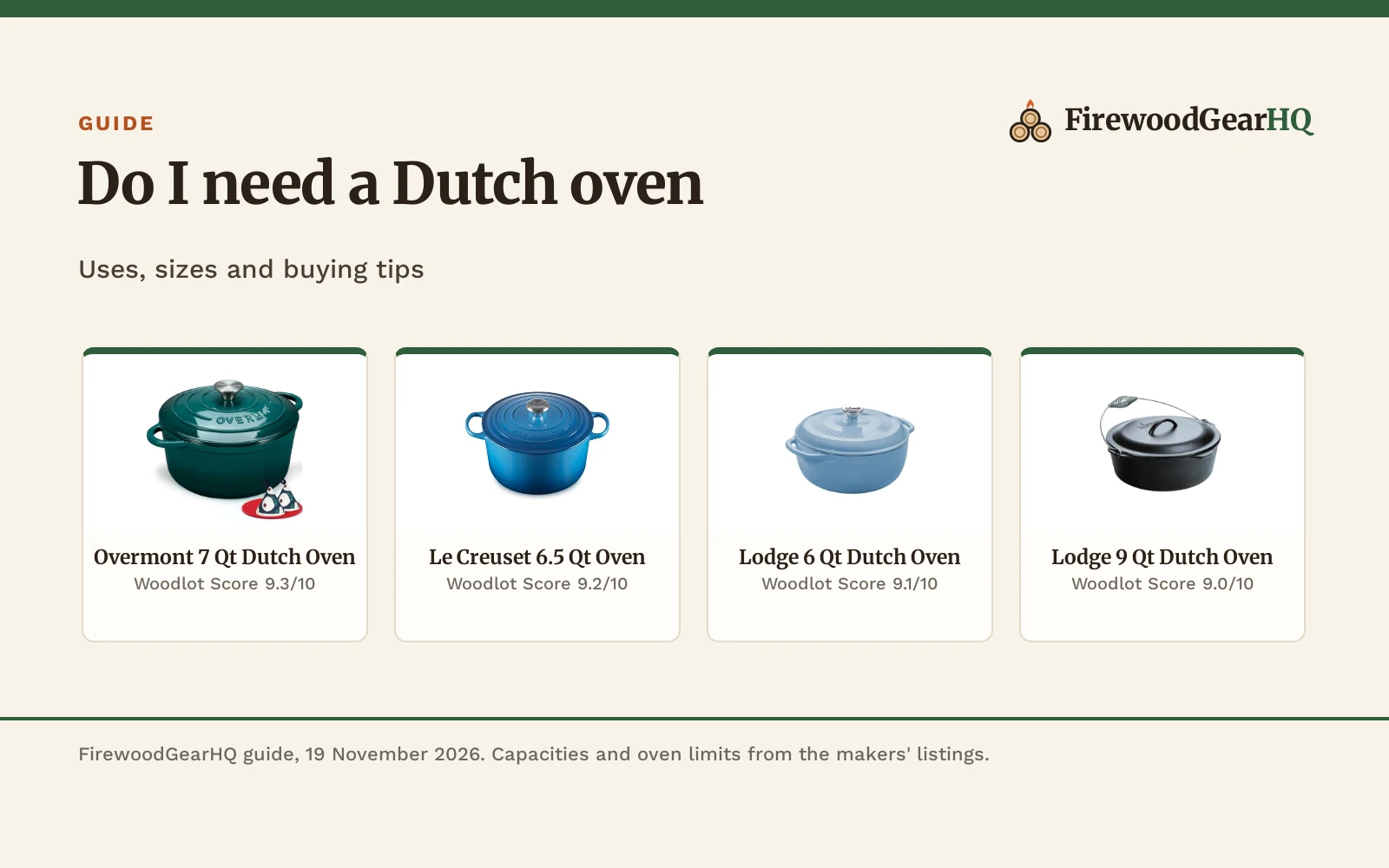
 Overmont Enameled Cast Iron Dutch Oven9.3/10View on Amazon
- 2
 Le Creuset Enameled Cast Iron Signature Deep Round9.2/10View on Amazon
- 3
 Lodge Essential Enamel Cast Iron Dutch Oven9.1/10View on Amazon
- 4
 Lodge Pre-Seasoned Cast Iron Dutch Oven with Bail9.0/10View on Amazon
Fall prep is done, the woodpile is stacked, and the kitchen turns to the slow meals that suit cold evenings. A pot of stew simmers on the stove, bread rises on the counter, and the question comes up: do I need a Dutch oven? A Dutch oven is a heavy lidded pot that braises, bakes, simmers and slow cooks in one vessel, and for many wood-fired cooks the answer is yes, when the meals you cook match what it does best.
FirewoodGearHQ earns a small commission if you buy through links on this page. The price you pay stays the same. Read our affiliate disclosure.
Overmont Enameled Cast Iron Dutch Oven
A 7 quart enameled cast iron Dutch oven with a self-basting lid, oven safe to 500 degrees Fahrenheit, with a cookbook and cotton potholders included.
Pros
- 7 quart capacity, stated to serve 5 to 8 people
- Self-basting lid returns moisture to the food
- Oven safe to 500 degrees Fahrenheit, fits gas, electric, ceramic and induction
- Cookbook and cotton potholders included
Cons
- 7 quart size is a lot of pot for one or two people
- Heavy cast iron build takes effort to lift when full
- Only a 1 year manufacturer warranty is stated
- Big 7 quart body needs generous shelf space
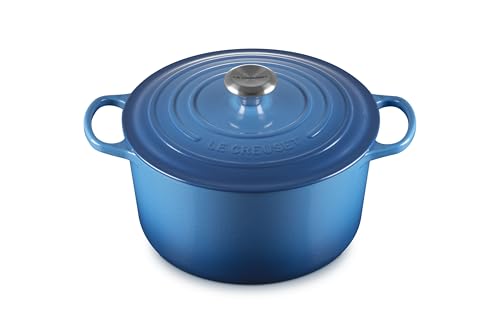
Le Creuset Enameled Cast Iron Signature Deep Round
A 6.5 quart enameled cast iron deep round oven with tall sides, a tight-fitting lid and ergonomic knobs and handles, oven safe to 500 degrees Fahrenheit.
Pros
- 6.5 quart deep round shape with tall sides that contain splatters
- Tight-fitting lid circulates steam and returns moisture
- Light colored interior enamel makes cooking easy to see
- Oven safe to 500 degrees Fahrenheit and fits all cooktops
Cons
- No warranty term is stated
- No cookbook or accessories are stated as included
- 6.5 quart size is more pot than a small household needs
- Stated only in Marseille, so color choice is limited
Lodge Essential Enamel Cast Iron Dutch Oven
A 6 quart enameled cast iron Dutch oven in Storm Blue with a moisture-sealing lid and dual handles, oven safe to 500 degrees Fahrenheit.
Pros
- 6 quart size suits bread baking, braising, marinating and slow cooking
- Moisture-sealing lid and dual handles
- Oven safe to 500 degrees Fahrenheit and stovetop compatible
- Enamel needs no seasoning and cooks without fear of rust
Cons
- No warranty term is stated
- 6 quart size may be small for large family meals
- Hand washing is recommended to keep the pot in top shape
- No cookbook or accessories are stated as included
Lodge Pre-Seasoned Cast Iron Dutch Oven with Bail
A 9 quart pre-seasoned cast iron Dutch oven with a steel bail handle, made for stoves, ovens, grills and campfires.
Pros
- 9 quart capacity, the largest pot here
- Steel bail handle for lifting, carrying and outdoor cooking
- Works on stoves, ovens, grills and campfires
- Pre-seasoned finish made with only iron and vegetable oil, and PFAS free
Cons
- 19.57 pound listed weight is the heaviest here
- 9 quart size is more pot than a small household needs
- Bare cast iron suits outdoor cooking more than everyday stovetop meals
- No cookbook or potholders are stated as included
Do I need a Dutch oven?
You need a Dutch oven when you cook the meals it suits: braises, stews, pot roasts, whole chickens, artisan bread and slow-simmered sauces. When cooking runs mostly to quick stovetop meals, a Dutch oven will sit unused on the shelf. The pot earns its place when slow, moist heat and a tight lid improve the food, and when one pot can move from stovetop to oven to campfire.
What a Dutch oven does
Cast iron holds heat and gives it back slowly, so a Dutch oven suits food that cooks low and long. The heavy lid traps steam and returns moisture to the food, which keeps braises and roasts from drying out. Enameled cast iron gives even heat distribution and retention, and the tight-fitting lids on the Le Creuset and Overmont pots are made to circulate steam and return moisture to the food. The same pot handles bread baking, braising, simmering, marinating and slow cooking.
When a Dutch oven earns its place
Bread is the clearest case. A lidded pot traps steam around the loaf, and the makers list bread baking and sourdough among the main uses. See the best Dutch oven for bread baking and the best Dutch oven for sourdough for pots sized to loaves. Braises, stews and pot roasts are the other home for this pot, with the lid keeping moisture in over hours of cooking. At the fire, a campfire-ready pot with a bail handle cooks soups and meals shared around the fire.
What size Dutch oven to start with
Start from the meals you cook, not from the shelf. A 6 quart pot suits bread baking, braising, marinating and slow cooking for everyday meals. A 6.5 quart deep round oven adds tall sides that contain splatters and reduce boil overs. A 7 quart pot serves 5 to 8 people and handles family-size soups, large-batch stews, pot roasts and whole chickens. A 9 quart pot is the largest here and suits big outdoor meals. See the Dutch oven standard size guide for more on quart sizes.
Enameled or bare cast iron
Enameled cast iron needs no seasoning and cooks without fear of rust, and the Le Creuset enamel resists dulling, staining, chipping and cracking. The Lodge and Le Creuset enameled (on Amazon) pots are listed as dishwasher safe, and hand washing with warm, soapy water and a nylon scrub brush is recommended for the Lodge pot to keep it in top shape. The bare pot here comes pre-seasoned and is made with only iron and vegetable oil, and it is the one listed for campfires. See enameled vs cast iron Dutch oven for a closer look at the two finishes.
Dutch oven picks for wood-fired cooking
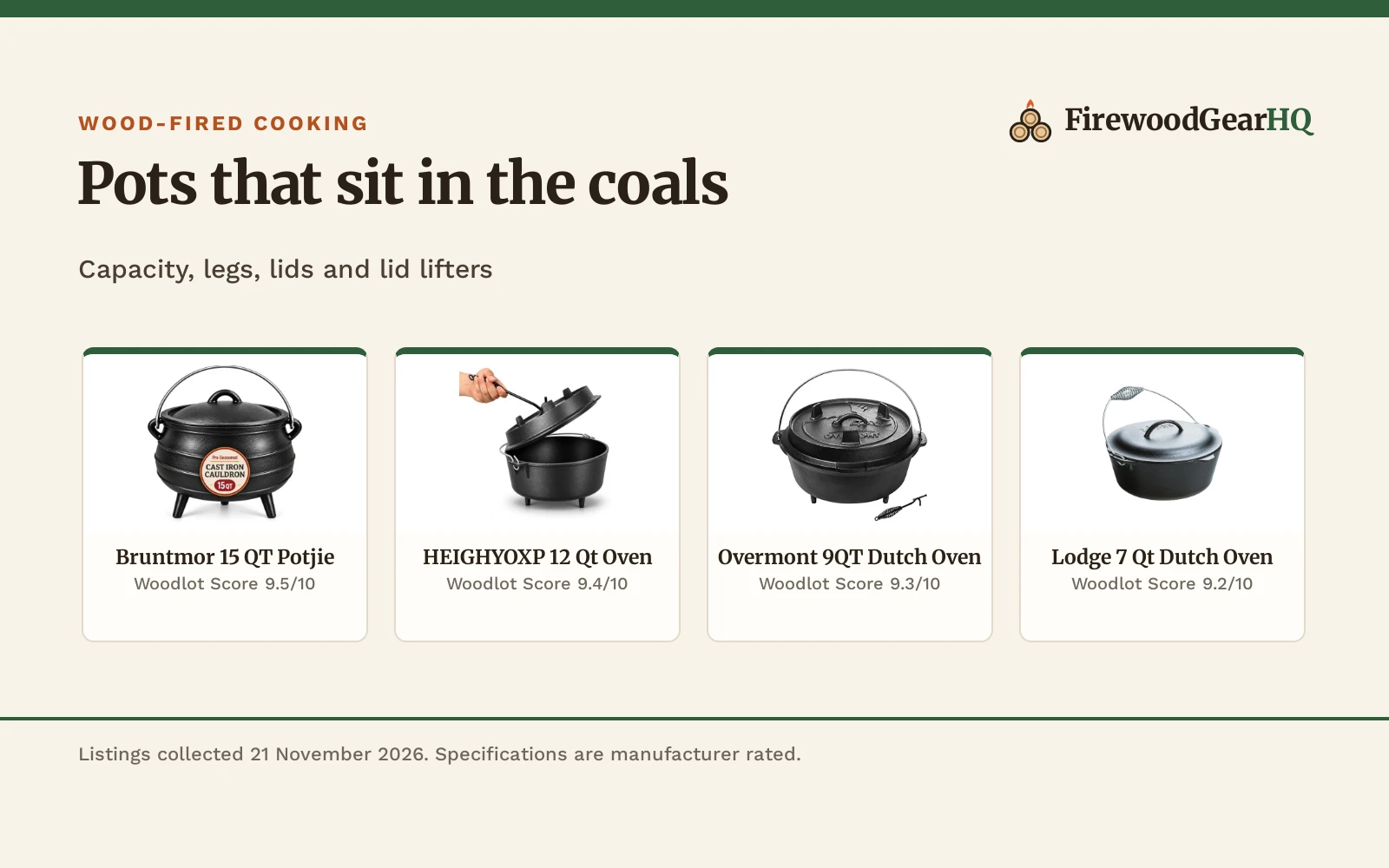
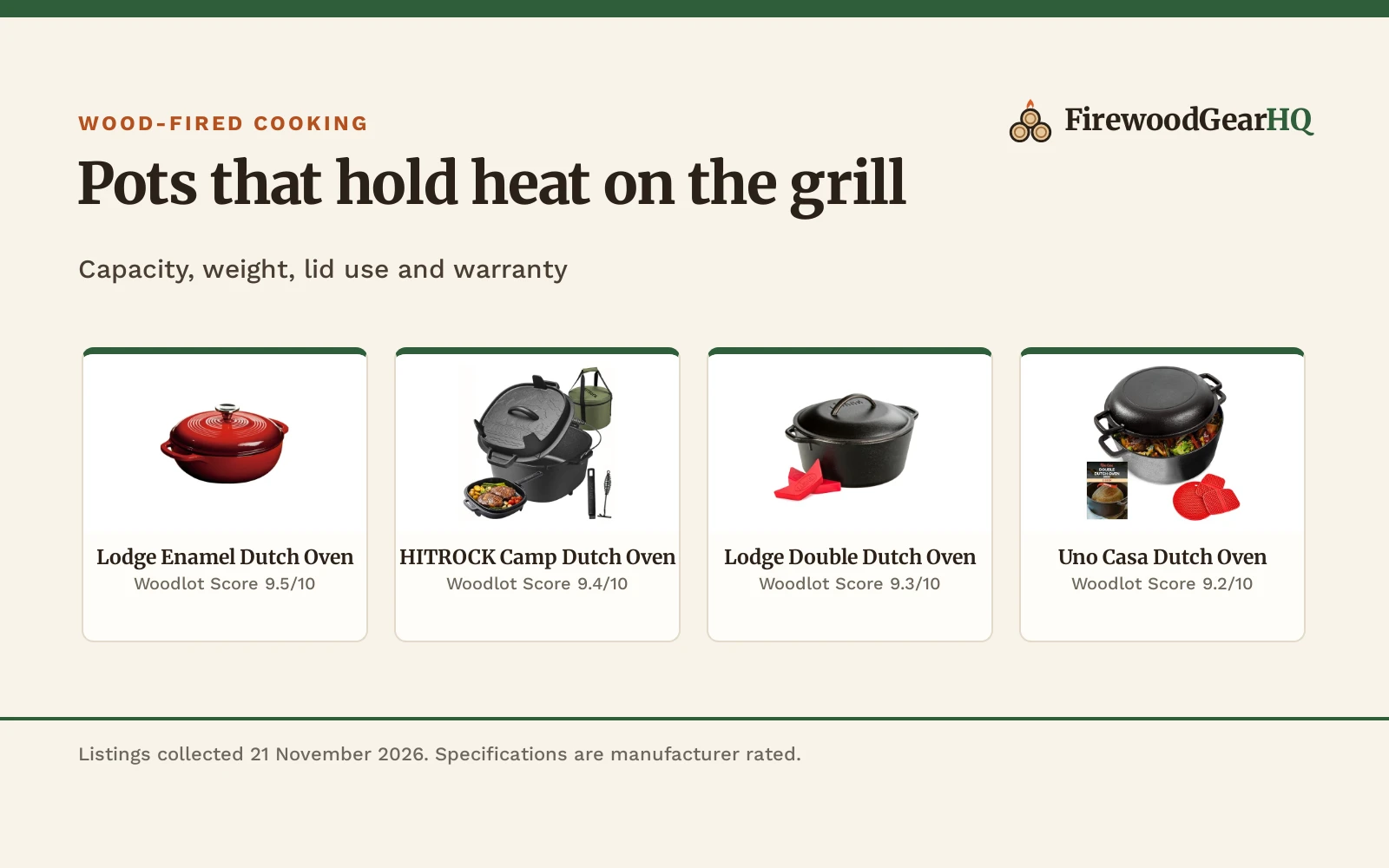
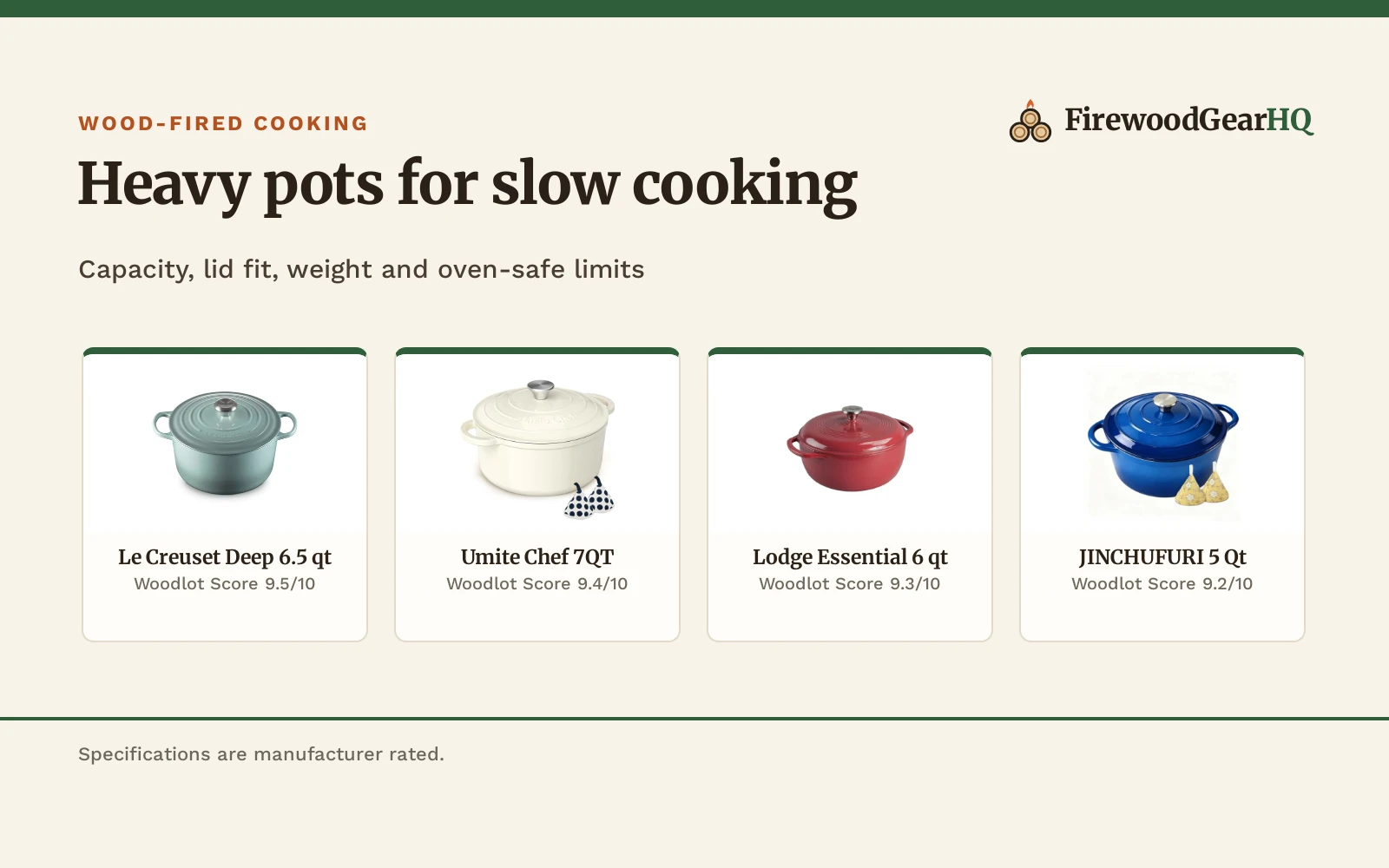
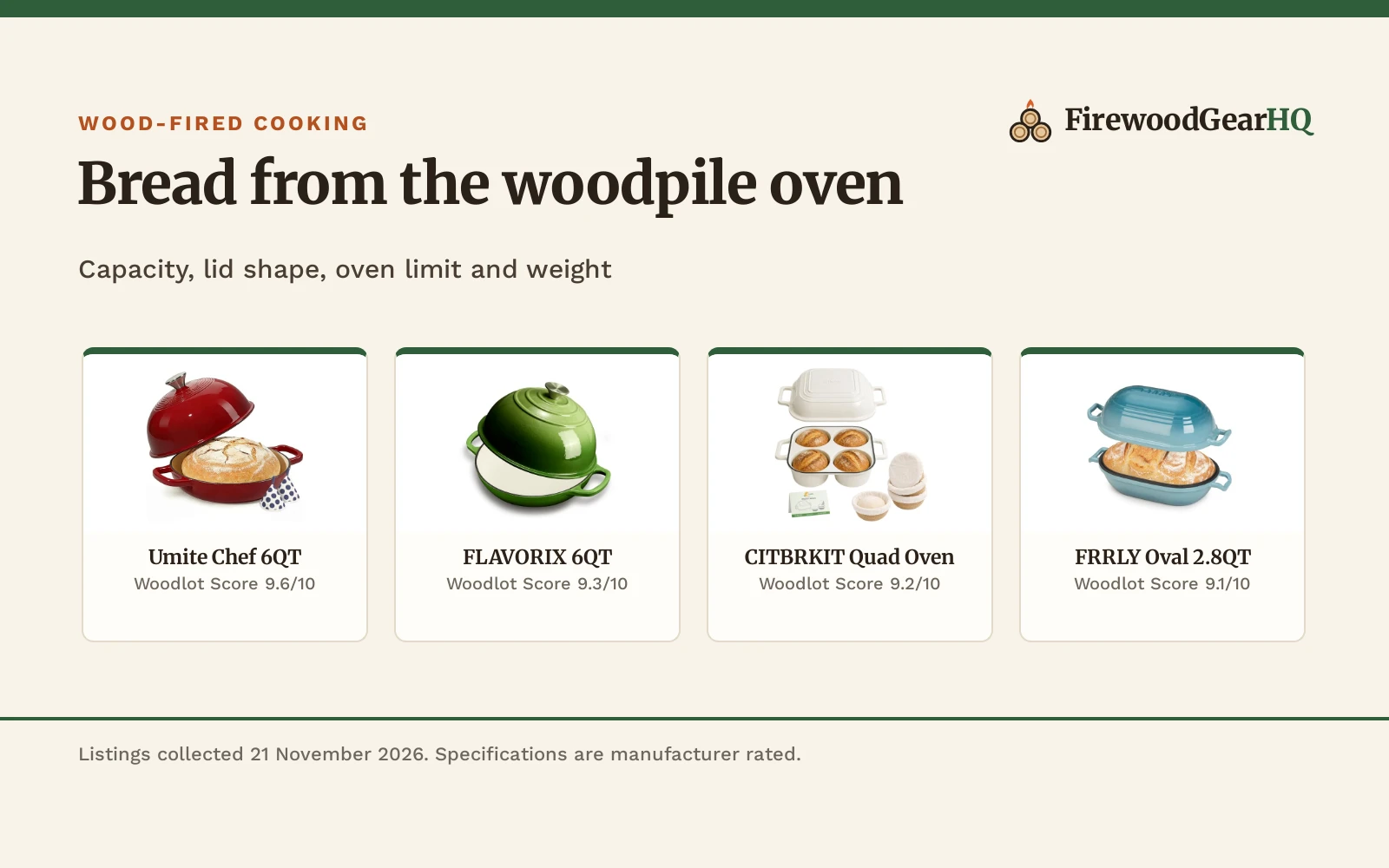
The pots below cover the jobs named above, from bread baking and braising to campfire cooking, with sizes from 6 quarts to 9 quarts.
FAQ: wood, fire and gear
What size Dutch oven do I need?
Match the pot to the largest meal you cook often. A 6 quart pot suits bread, braises and everyday slow cooking, a 7 quart pot serves 5 to 8 people, and a 9 quart pot suits large households and campfire meals.
Can I use a Dutch oven on a campfire?
The bare cast iron Lodge pot here is listed for campfires, with a steel bail handle for lifting and carrying. The enameled pots are listed for stovetop and oven use.
Do I need to season an enameled Dutch oven?
No. The enameled pots here need no seasoning: the Lodge enamel needs no seasoning, the Overmont triple-layer enamel requires no seasoning, and the Le Creuset arrives ready to use and requires no seasoning. The bare cast iron Lodge pot comes pre-seasoned.
Can a Dutch oven go in the oven?
Yes, within the limit the maker states. The Lodge, Overmont and Le Creuset pots are each listed as oven safe to 500 degrees Fahrenheit. The bare cast iron Lodge pot is listed for use in ovens, with no temperature limit stated.
Is a Dutch oven worth it for a small household?
It is, when the size fits the meals. A 6 quart pot suits everyday bread, braises and slow cooking, while a 7 quart pot serves 5 to 8 people and a 9 quart pot suits gatherings and campfire meals.
More firewood guides
See the wood-fired cooking hub, the best Dutch oven for bread baking, the best Dutch oven for sourdough and the best enameled cast iron pot. For care, see how to care for a Dutch oven.