Corded Electric Chainsaw vs Gas Chainsaw: Which One Should You Buy?
A corded electric chainsaw and a gas chainsaw compared on power, bar size, noise, weight, upkeep and safety, with figures taken from current listings.

On this page
Top picks at a glance
As an Amazon Associate we earn from qualifying purchases.
- 1
 CRAFTSMAN Electric Chainsaw9.6/10View on Amazon
- 2
 Husqvarna 460 Rancher Gas Powered Chainsaw9.7/10View on Amazon
- 3
 Oregon 2400W Corded Electric Chainsaw with 16" Guide Bar &9.6/10View on Amazon
- 4
 WEN Electric ChainsawView on Amazon
- 5
 WEN CP1216 Electric ChainsawView on Amazon
- 6
 WORX Electric ChainsawView on Amazon
- 7
 VEVOR 20inch 62CC Gas Powered ChainsawView on Amazon
- 8
 BLACK+DECKER 12 Amp 16 in. Electric ChainsawView on Amazon
- 9
 Husqvarna 450 Rancher 20 Inch Gas ChainsawView on Amazon
Fall is when the woodpile gets honest. The rounds are bucked, the splits are stacked, and the saw that did the bucking earned its keep or showed its limits. If you are weighing a corded electric chainsaw vs gas chainsaw, here is the short answer: a corded electric saw plugs into a 120-volt outlet and cuts as long as the cord reaches, with no fuel to mix and no engine to winterize; a gas saw carries its 2-cycle engine with it, so it works anywhere the wood falls, with bigger bars and more displacement for heavy timber. Cut near the house and a corded saw is the simpler tool; cut on the back forty and gas is the practical one.
More options to compare
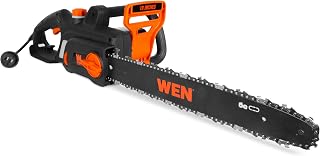 WEN Electric ChainsawCheck price on Amazon
 WEN CP1216 Electric ChainsawCheck price on Amazon
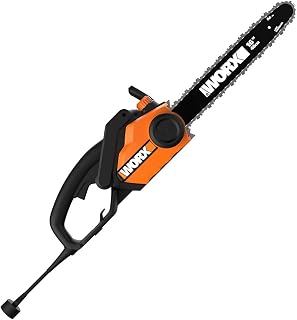 WORX Electric ChainsawCheck price on Amazon
 VEVOR 20inch 62CC Gas Powered ChainsawCheck price on Amazon
 BLACK+DECKER 12 Amp 16 in. Electric ChainsawCheck price on Amazon
 Husqvarna 450 Rancher 20 Inch Gas ChainsawCheck price on Amazon
FirewoodGearHQ may earn a small commission if you buy through links on this page. The price you pay stays the same. Read our affiliate disclosure.
The quick answer
Both types buck firewood; they just live in different working worlds. Corded electric saws trade range for simplicity. The SENIX CSE12-M plugs into any standard 120-volt outlet and runs without stopping for fuel or a battery swap, the EWORK 16-inch runs a 15-amp motor at 50 feet per second and the listing says it cuts logs up to 14 inches, and the WEN 18-inch CP1518 runs a 15-amp motor with chain speed up to 41 feet per second. Gas saws trade simplicity for range. The Baococo 62cc saw pairs a 2-cycle engine with a 20-inch bar, and the PAPABA 58cc saw pairs a 2-cycle engine with its own 20-inch bar, so both work wherever the timber is down. The decision comes down to three questions: where you cut, how big the wood gets, and how much engine care you are willing to do.
corded electric chainsaw vs gas chainsaw: the real differences
Start with the power source, because everything else follows it. A corded saw is an electric motor with a cord. Plug it in and it runs at full strength until you unplug it; there is no battery fading mid-cut and no gas can to keep filled. The trade is the cord itself: your working radius ends where the extension cord ends, and the cord needs managing around brush and logs. A gas saw is a small 2-cycle engine you carry. It runs anywhere, which is why the 20-inch gas listings read like woodlot tools, but the engine brings fuel mixing, pull starts, winter storage care and exhaust.
Noise is the next difference you feel. Corded electric saws run far less noisy than gas saws, which matters when you are cutting near the house early on a Saturday or working close to neighbors. Gas saws are loud enough that hearing protection is essential rather than optional, and their exhaust means you never run one in an enclosed space.
Upkeep splits the same way. A corded saw asks for bar oil, a sharp chain and a dry place to hang. A gas saw asks for all of that plus mixed fuel, air filter attention, spark plug checks and carburetor care; the Baococo listing even mentions a winterized carburetor with pre-heating for cold weather. It is a standing chore list the corded saw simply does not have.
Power, bars and chain speed from the listings
The listings give a clear picture of what each type brings. On the corded side, WEN lists a 10-amp 14-inch saw (CP1014) with chain speed up to 34 feet per second and a 15-amp 18-inch saw (CP1518) up to 41 feet per second, both with two-year warranties. SENIX lists a 12-amp 16-inch saw (CSE12-M) with 13.5 m/s chain speed, a 5.8 oz auto-oiling system and a 3-year limited warranty in its bullets. EWORK lists a 15-amp 16-inch saw at 50 feet per second and 1800 watts, and says it cuts logs up to 14 inches. On the gas side, Baococo lists a 62cc 2-cycle engine with a 20-inch bar, and PAPABA lists a 58cc 2-cycle engine with its own 20-inch bar. Read the pattern: corded bars in these listings run 14 to 18 inches, gas bars run 20 inches, and the gas listings speak in engine displacement where the corded ones speak in amps.
One caution from the listings: the SENIX bullets state a 3-year limited warranty while its spec table says 2-year limited warranty. When a listing disagrees with itself, trust the title and bullets over the spec table, but it is a reminder to read both before you buy.
Weight and working radius
A saw you carry all day should be weighed, not guessed at. The listings state the EWORK 16-inch at 10 pounds, the SENIX 16-inch at 13 pounds and the Baococo 62cc 20-inch at 16.6 pounds. The gas saw weighs more because it carries its engine and fuel; the corded saws weigh less but trail a cord. Think of it as a trade: the gas saw’s weight is in your hands, the corded saw’s limit is on the ground behind you. For bucking at the woodpile next to the garage, the cord is a non-issue. For clearing a fence line far from any outlet, the cord is the whole problem.
Cutting within cord reach of the house or barn favors the corded saw’s lighter weight and endless runtime. Cutting where no outlet exists favors the gas saw, which earns its extra pounds there.
Fuel, oil and upkeep
Every chainsaw needs bar oil; the chain and bar wear fast without it. The corded listings lean on automatic oiling: SENIX lists a 5.8 oz auto-oiling system, EWORK adds an oil window so you can see the level, and WEN lists auto-oiling on both saws. Gas saws oil the bar too; PAPABA lists automatic lubrication with an adjustable oil pump. Check the oil every time you fuel up or plug in, whichever comes first.
Fuel is where the types part ways. Gas saws burn mixed 2-cycle fuel, so you keep a can mixed at the maker’s ratio, use it fresh and store the saw dry or stabilized for winter. Corded saws burn nothing: the WEN listings note no gasoline for emission-free operation, which also means no fuel going stale in the tank and no exhaust in your face. The Baococo gas listing states EPA Phase III and CARB compliance, which are emissions standards the engine meets, not a pass on maintenance. Either way, a sharp chain matters more than the power source: a dull chain makes any saw work harder and cut slower. Keep it sharp with a file or see our electric chainsaw sharpener vs file comparison.
Safety gear is the same either way
The power source does not change what the chain can do to you. Chainsaw chaps, a helmet with face screen and hearing protection, gloves and sturdy boots are the standard kit for either type. The listings back this up with built-in features: WEN lists a kickback brake on both saws, SENIX lists a handle-mounted trigger lockout and an automatic kickback brake, EWORK lists a chain brake, a low kickback chain, a front hand guard and a trigger safety lock, and Baococo lists an anti-kickback chain brake. Those features help; they do not replace gear or habits. Watch for kickback, keep a firm two-handed grip on the saw, keep others clear of the work area, and never cut alone. Felling standing trees is work for someone trained and insured for it; these saws earn their keep on wood already on the ground.
Which saw fits your woodpile
Buy the corded saw if your cutting happens near power: bucking firewood at the house, storm cleanup in the yard, trimming around the barn. You get lighter weight, less noise, no fuel chores and endless runtime inside the cord’s reach.
Buy the gas saw if your cutting happens away from power: a woodlot, a far fence line, storm damage down the road. You get anywhere-you-go runtime, 20-inch bars and 2-cycle engines in the 58cc to 62cc range for bigger timber, at the cost of weight, noise and engine care.
Once you have chosen a type, start with our best chainsaw for firewood roundup and the best chainsaw sharpener picks.
Frequently Asked Questions
Can a corded electric chainsaw handle real firewood duty?
Yes, within its range. The EWORK 16-inch listing says it cuts logs up to 14 inches, and the WEN 15-amp 18-inch saw runs chain speed up to 41 feet per second. For bucking rounds at the woodpile near an outlet, that is genuine firewood work. The limit is the cord, not the cut.
When does a gas chainsaw make more sense?
When the wood is far from an outlet or simply big. The 62cc Baococo and 58cc PAPABA listings both carry 20-inch bars and 2-cycle engines suited to bucking larger timber where no cord reaches. If your woodlot is not wired, gas is the practical answer.
What safety gear do I need with either type?
The same kit: chainsaw chaps, a helmet with face screen and hearing protection, gloves and sturdy boots. Add the habits: watch for kickback, keep a firm two-handed grip, keep others clear of the work area, and never cut alone. Chain brakes and low-kickback chains, which these listings include, are backups, not substitutes.
Do corded saws still need bar oil?
Yes. The bar and chain need oil regardless of power source. These corded listings use automatic oiling, SENIX with a 5.8 oz system and EWORK with an oil window for checking the level. Top it up before each session and check it during long cuts.
What does EPA Phase III and CARB compliant mean?
They are emissions standards the engine is certified to meet, stated on the Baococo gas listing. They describe the engine’s exhaust certification, not its cutting ability, and they do not remove any maintenance or safety practice.
Related guides
See our best chainsaw for firewood roundup and the best chainsaw sharpener picks. Compare power sources further with corded electric vs battery chainsaw, and keep edges keen with electric chainsaw sharpener vs file.