Chainsaw Chain Chisel Types Explained
Chainsaw chain chisel types compared: full chisel, semi-chisel and micro chisel, what each cutter shape suits, and how to choose for firewood work.

On this page
Top picks at a glance
As an Amazon Associate I earn from qualifying purchases.
- 1
 SawWorks 16 Inch Chainsaw Chain 3/8" LP Pitch .050" Gauge 579.7/10View on Amazon
- 2
 3 Pack 20 Inch Chainsaw Chain 3/8" Pitch .050" Gauge 72 Drive9.6/10View on Amazon
- 3
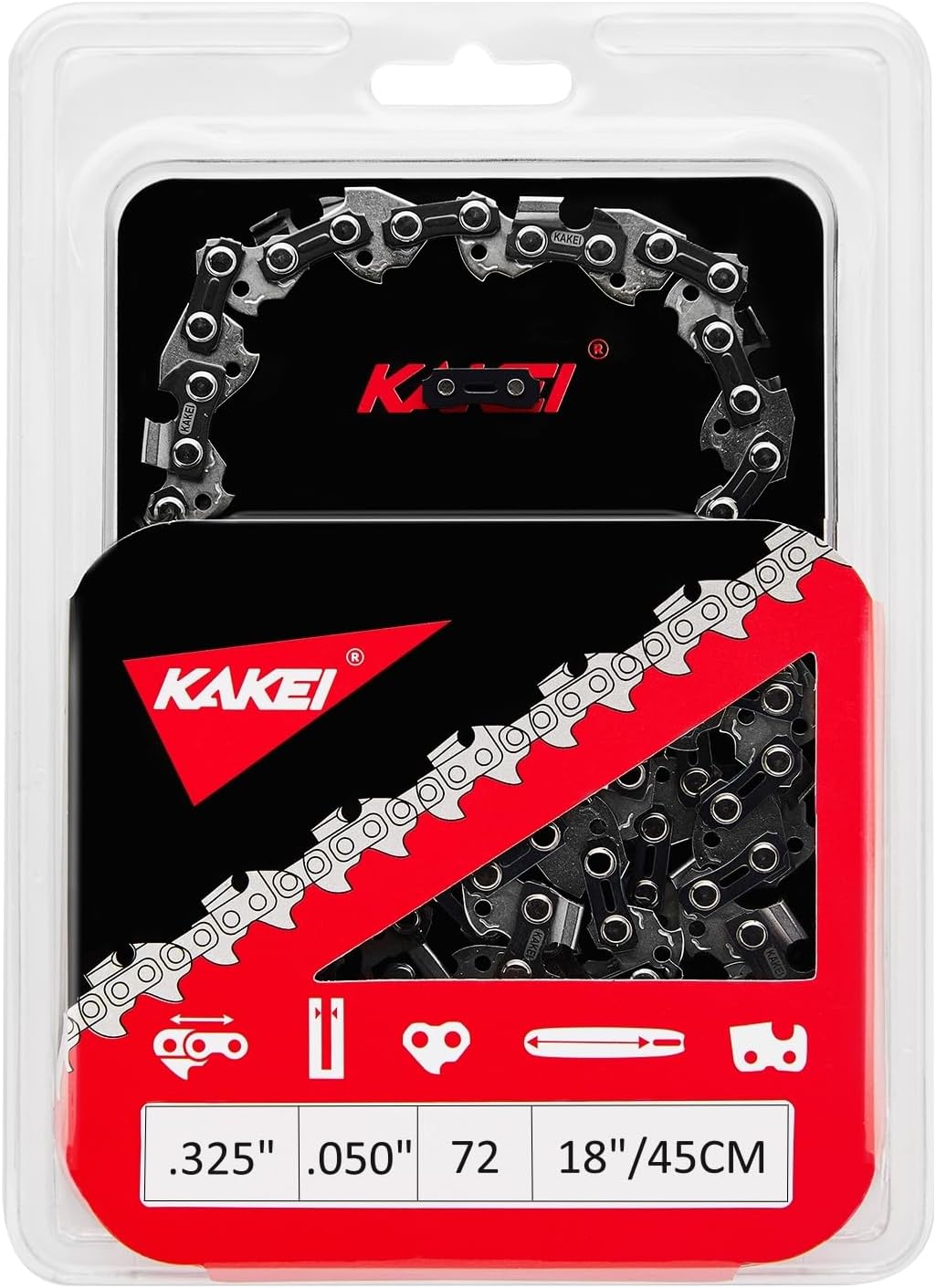 KAKEI Chainsaw Chain 18 Inch .325" Pitch .050" Gauge 72 Drive9.5/10View on Amazon
Fall cutting season puts a dull chain on display fast: the saw makes dust instead of chips, the bar wanders in the cut, and bucking rounds takes longer than it should. Cutter shape is a large part of that story, and chainsaw chain chisel types describe the shape of the cutting tooth, which sets how fast the chain cuts clean wood and how well the edge holds up in bark and dirt.
FirewoodGearHQ earns a small commission if you buy through links on this page. The price you pay stays the same. Read our affiliate disclosure.
The quick answer
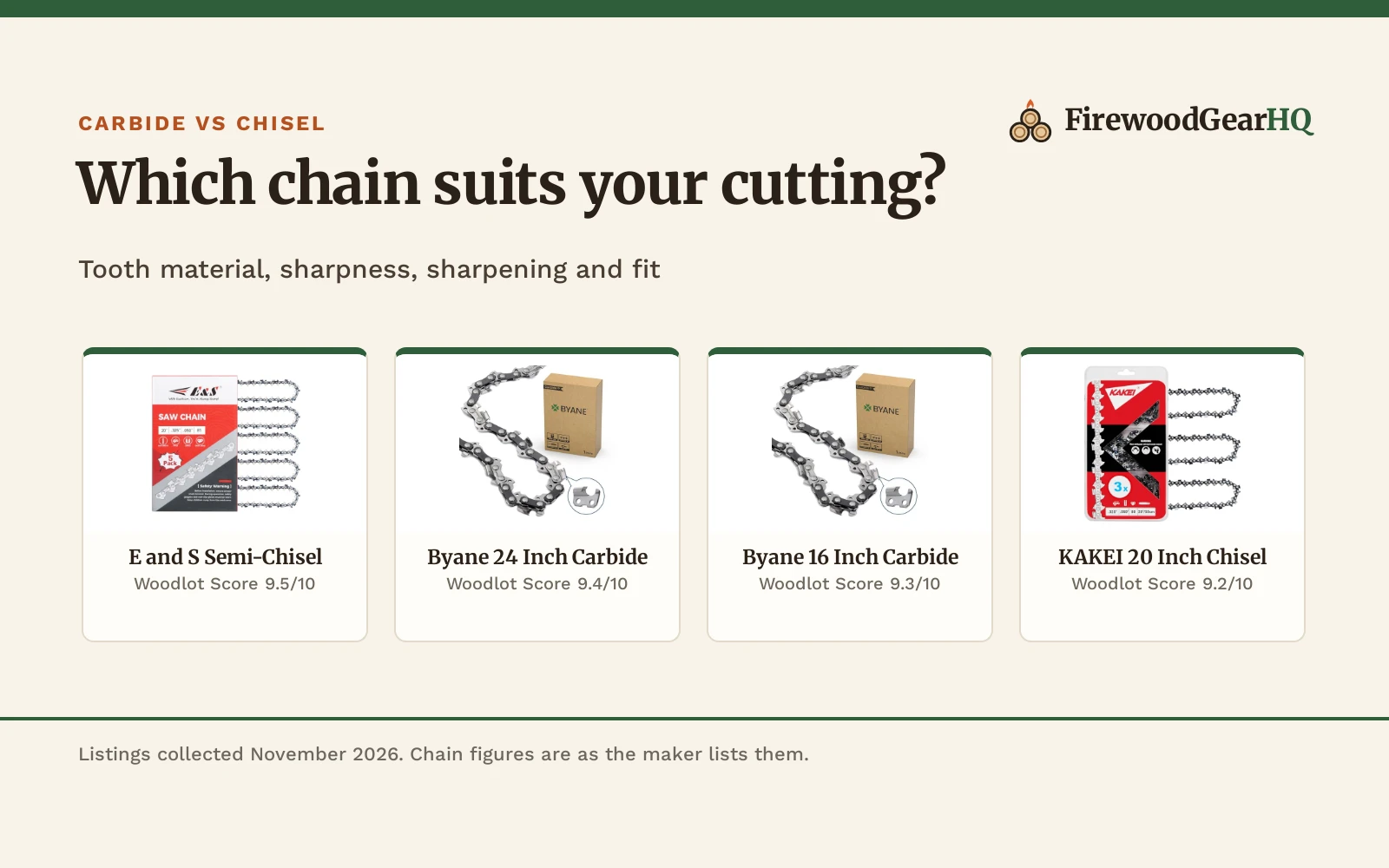
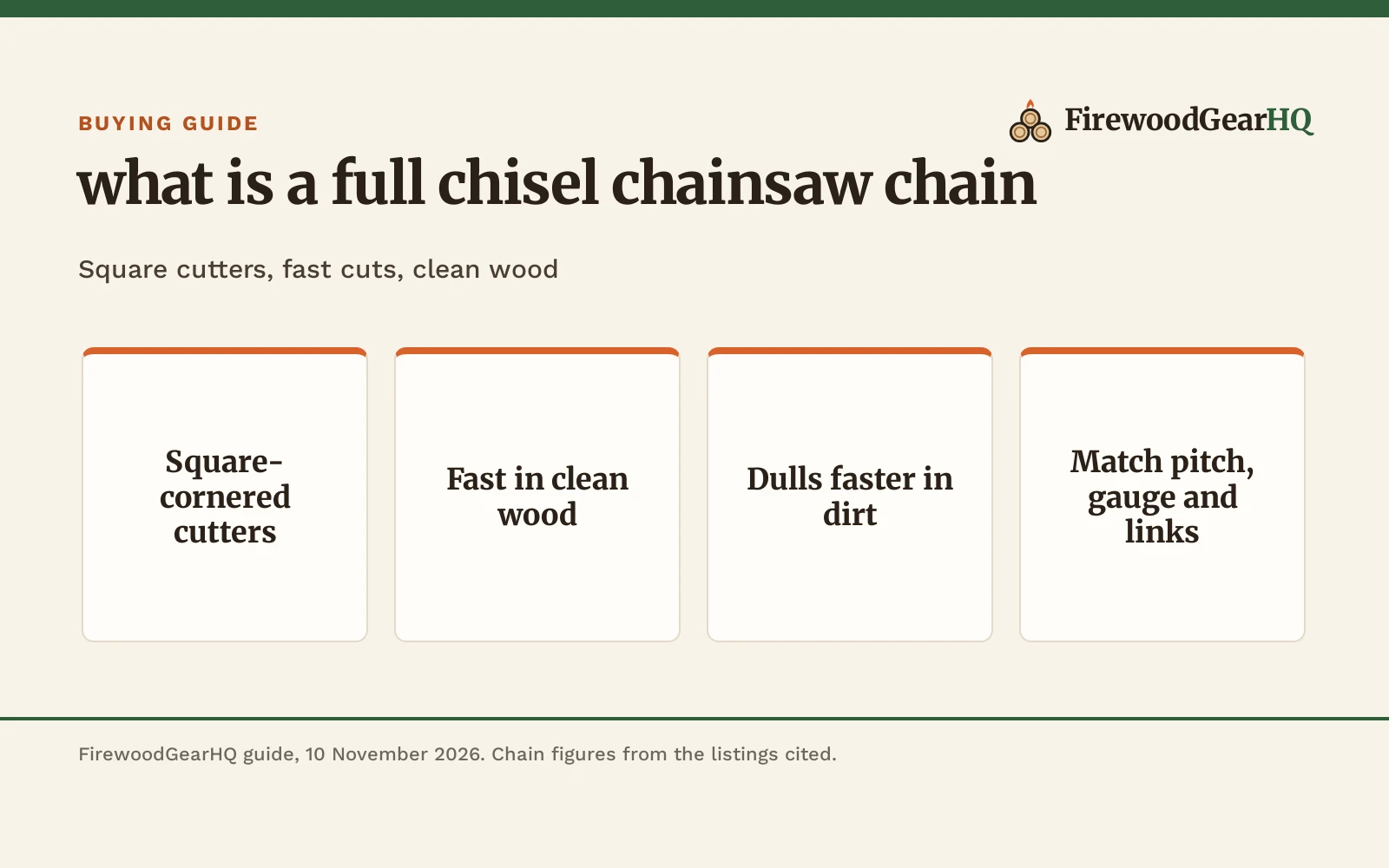
Full chisel cuts fastest in clean wood and dulls soonest when the wood carries dirt, bark or grit. Semi-chisel gives up some speed in clean wood and holds a working edge longer in dirty firewood rounds. Micro chisel, sold on many low-kickback chains, cuts slowest of the group and stays forgiving for new sawyers and small saws. For most firewood work, semi-chisel is the steady middle choice, full chisel suits clean wood and practiced hands, and micro chisel suits learning and rough, dirty cutting.
The chainsaw chain chisel types
| Type | Cutter shape | Suits | Watch out |
|---|---|---|---|
| Full chisel | Square corner on the cutter | Clean wood, fast bucking and felling cuts | Dulls fast in dirt and grit |
| Semi-chisel | Rounded corner on the cutter | Firewood rounds, bark, frozen or dirty wood | Slower than full chisel in clean wood |
| Micro chisel | Rounded cutter with a small radius | Small saws, new sawyers, rough cutting | Slowest cut of the group |
Chisel type names the cutter, not the saw. Any of these chains still has to match the bar and drive sprocket on pitch and gauge, and the maker chart for the saw states that match. Our chainsaw chain pitch chart and chainsaw chain cross reference chart walk through reading those marks before ordering a loop.
What separates the cutter shapes
Full chisel
A full chisel cutter ends in a square corner, and that corner does the work. In clean wood the chain bites hard and clears chips fast, which is why full chisel earns its place on larger saws cutting clean stems and clean rounds. The same thin corner is the weak point: touch soil, grit in bark, a nail or frozen dirt and the edge folds or chips, and cutting speed falls off until the chain is filed again. Full chisel also asks more of the sawyer, since an aggressive cutter grabs harder when the bar tip meets wood. Keep full chisel for clean wood, keep the chain out of the dirt, and expect to file more often.
Semi-chisel
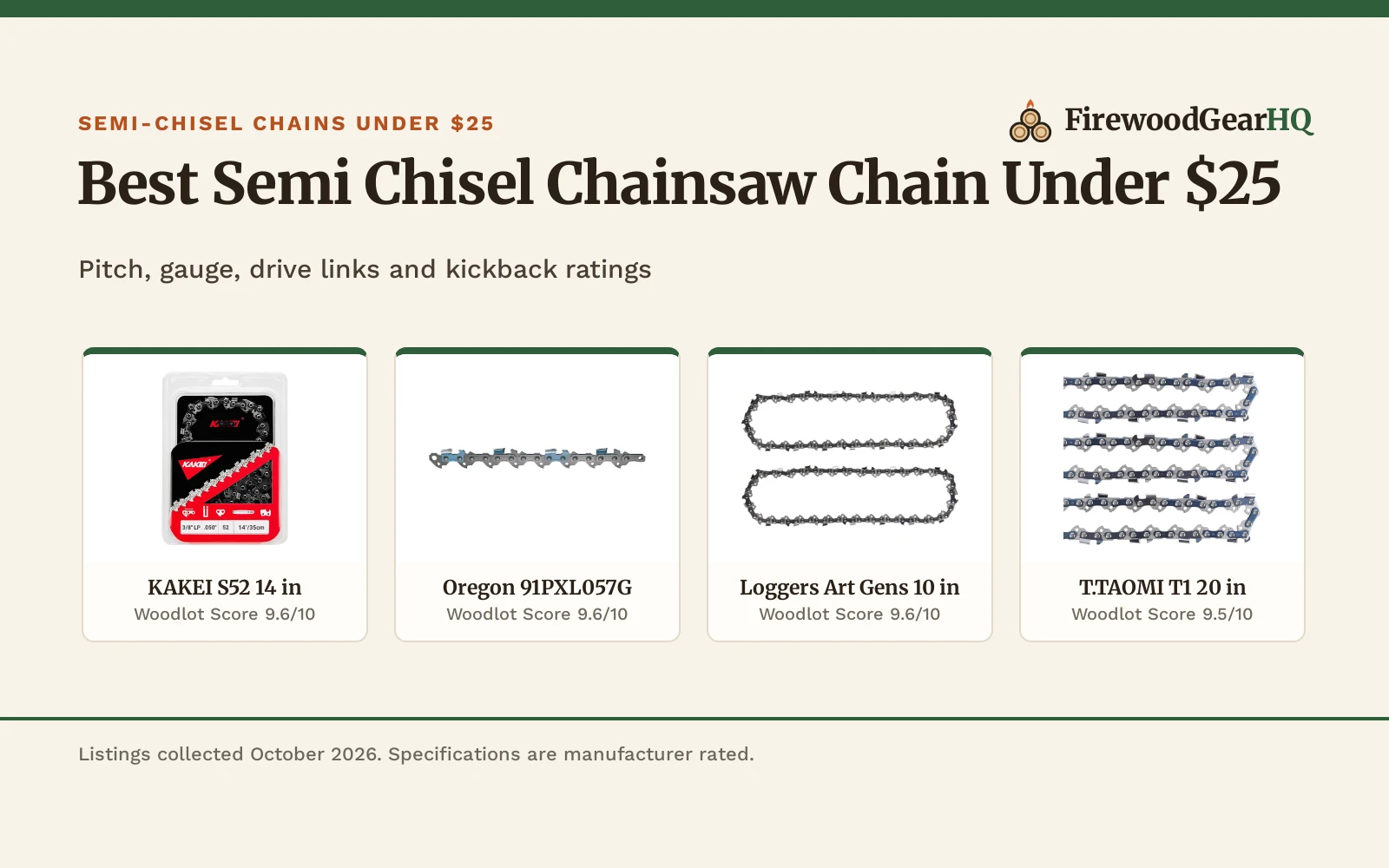
A semi-chisel cutter rounds the corner that full chisel leaves square. The rounded edge cuts a touch slower in clean wood, yet it stands up better to the bark, grit and frozen surfaces that firewood rounds carry in from the woods. That trade suits bucking work, where rounds have been dragged, stacked and left with dirt in the bark. Semi-chisel is also easier to keep cutting with a round file, since the shape forgives small filing errors that would spoil a square corner. For a firewood pile cut through fall and winter, semi-chisel holds a useful edge through more cuts between filings than full chisel does.
Micro chisel and low-kickback chain
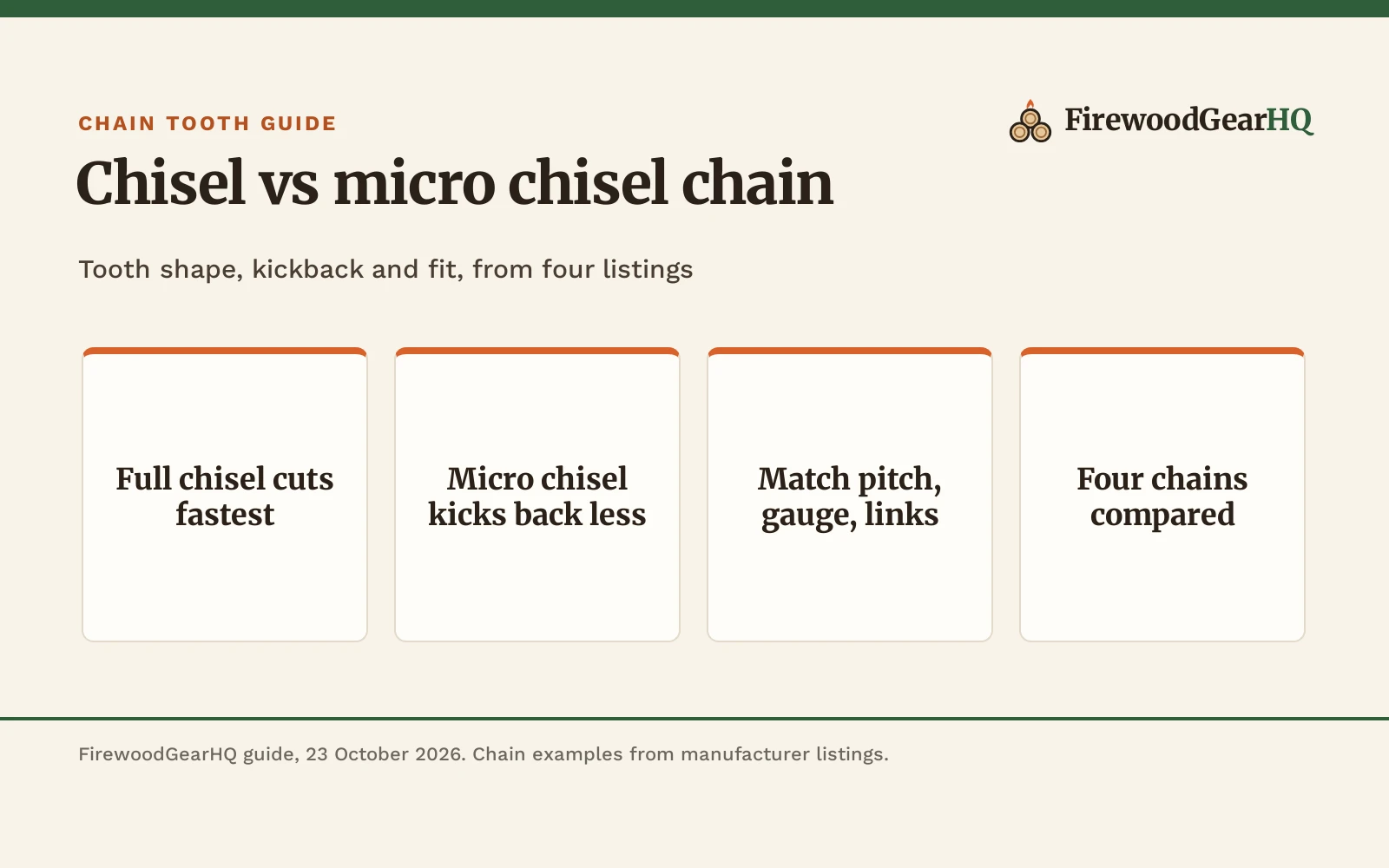
Micro chisel uses a rounded cutter with a small radius. It cuts slower than semi-chisel, and in return it stays smooth and predictable, holds an edge well in rough wood, and pairs with the bumper links and guard links that make a chain low-kickback. Makers fit this style to small saws and homeowner saws, where control matters more than cut speed. Low-kickback describes the whole chain design, not just the cutter, so read the chain box and the saw manual together. If the saw came with a low-kickback chain, replacing it with a more aggressive chain changes how the saw behaves at the bar tip.
How to choose for firewood work
Clean wood and practiced hands
Choose full chisel when the wood is clean, the saw has the power to pull it, and the sawyer files well and often. Clean stems, clean rounds off a deck, and green wood cut before it hits the dirt all favor the square corner. Saw choice matters alongside chain choice, and our best chainsaw for firewood guide compares saws for this work. Whatever the chain, a sharp edge matters more than the label: a sharp semi-chisel outcuts a dull full chisel.
Dirty rounds, bark and frozen wood
Choose semi-chisel when rounds come in dirty, bark carries grit, or winter cutting means frozen wood and soil at the base of the pile. The rounded corner keeps cutting after contact that would dull a square corner, and the chain needs filing less often during a long bucking session. Micro chisel fits here as well when the saw is small or the sawyer is still learning, accepting slower cuts for a calmer chain. Keep every chain out of soil and stones where possible, since no cutter shape survives ground contact for long.
Sharpening and upkeep
File shape follows cutter shape, so match the file and filing guide to the chain as the maker chart states, and keep depth gauges at the height the maker states for that chain. File little and often, at fuel stops and whenever chips turn to dust, rather than waiting until the chain barely cuts. Keep bar oil flowing, keep chain tension as the manual states, and flip the bar as the manual directs so wear stays even. A sharpener guide helps hold angles steady, and our best chainsaw sharpener guide compares options for home filing. Retire a chain when cutters are filed back to the wear marks the maker stamps on the cutter, and replace a stretched loop rather than forcing worn parts to run.
Wear cut-resistant chaps, a helmet with face screen and hearing protection, gloves and sturdy boots. Know where the kickback zone is (the upper tip of the bar), keep the chain brake working and the chain sharp, and never cut alone in the woods. Felling trees is hazardous work: hire a professional for large, leaning or storm-damaged trees, especially near buildings or power lines. See OSHA logging safety for chain saw operators. Read our Safety Disclaimer.
Safety notes for chain work
Wear chainsaw chaps, a helmet with a face screen and hearing protection, gloves and sturdy boots for every cut, and never cut alone. Respect kickback: keep the upper quadrant of the bar tip clear of wood and brush, keep a firm grip with thumbs wrapped, and use the chain brake as the manual directs. Full chisel chains grab harder than micro chisel chains, so match chain aggression to experience as well as to the wood. This guide covers cutter choice only; felling technique belongs with certified training and the saw manual, not with general advice.
FAQ: wood, fire and gear
Which chisel type is best for firewood?
Semi-chisel suits most firewood work, since rounds carry bark and grit that dull a square corner fast. Full chisel cuts faster in clean wood, and micro chisel suits small saws and new sawyers. Match the chain to the bar and sprocket as the maker chart states.
Does full chisel cut faster than semi-chisel?
In clean wood, yes: the square corner bites harder and clears chips faster. In dirty or frozen wood the rounded semi-chisel edge keeps cutting after the square corner dulls, so the faster chain on paper can become the slower chain at the woodpile.
Can I put a full chisel chain on any saw?
The chain must match the bar and drive sprocket on pitch and gauge, and the saw needs enough power to pull it. A saw sold with a low-kickback chain also changes behavior with a more aggressive chain, so follow the saw manual and the chain maker chart.
How do I know which chisel type my chain is?
Read the chain box and the markings stamped on the drive links, then check the maker chart for that chain code. Cutter shape shows at the corner as well: square for full chisel, rounded for semi-chisel and micro chisel. When markings are worn away, replace the loop with a known chain.
Does chisel type change how I sharpen?
Yes. File shape and filing angles follow the cutter, so use the file and guide the maker states for that chain and keep depth gauges at the stated height. File at fuel stops and whenever chips turn to dust, and stop when cutters reach the wear marks.
More firewood guides
See every chainsaw gear guide and all chainsaw guides. Also see our guide to whether all chainsaw chains are the same and our chainsaw chain pitch chart.