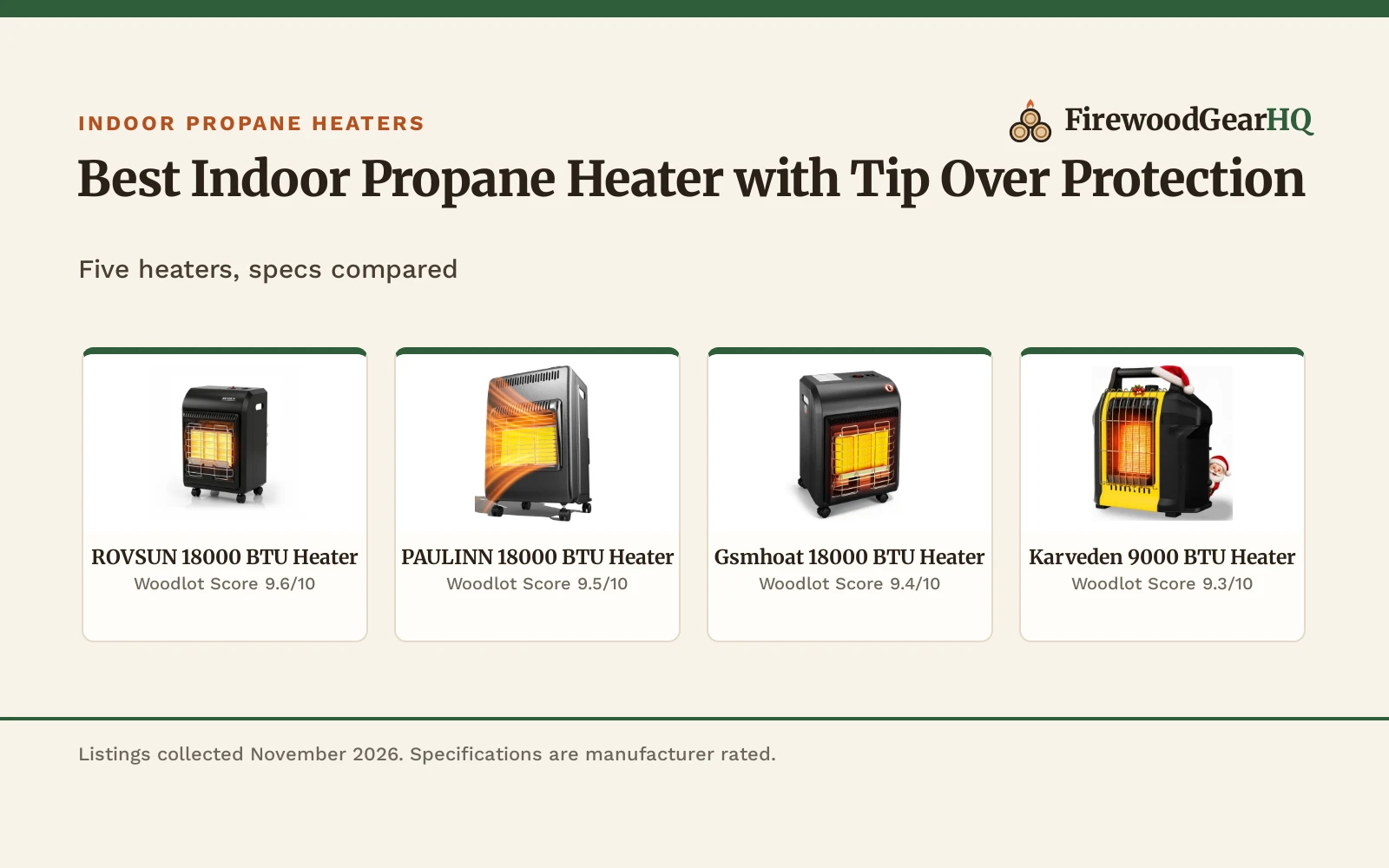
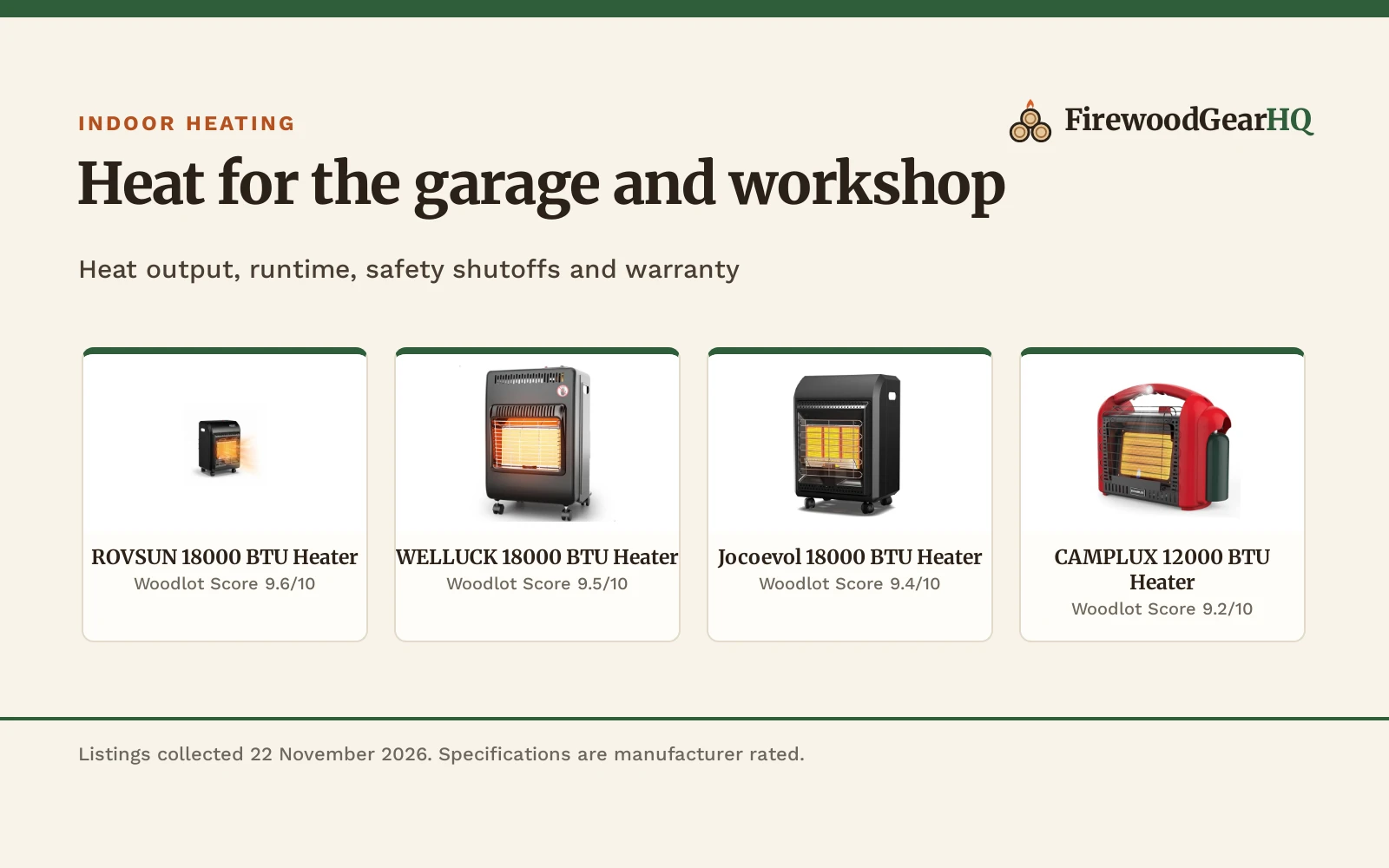
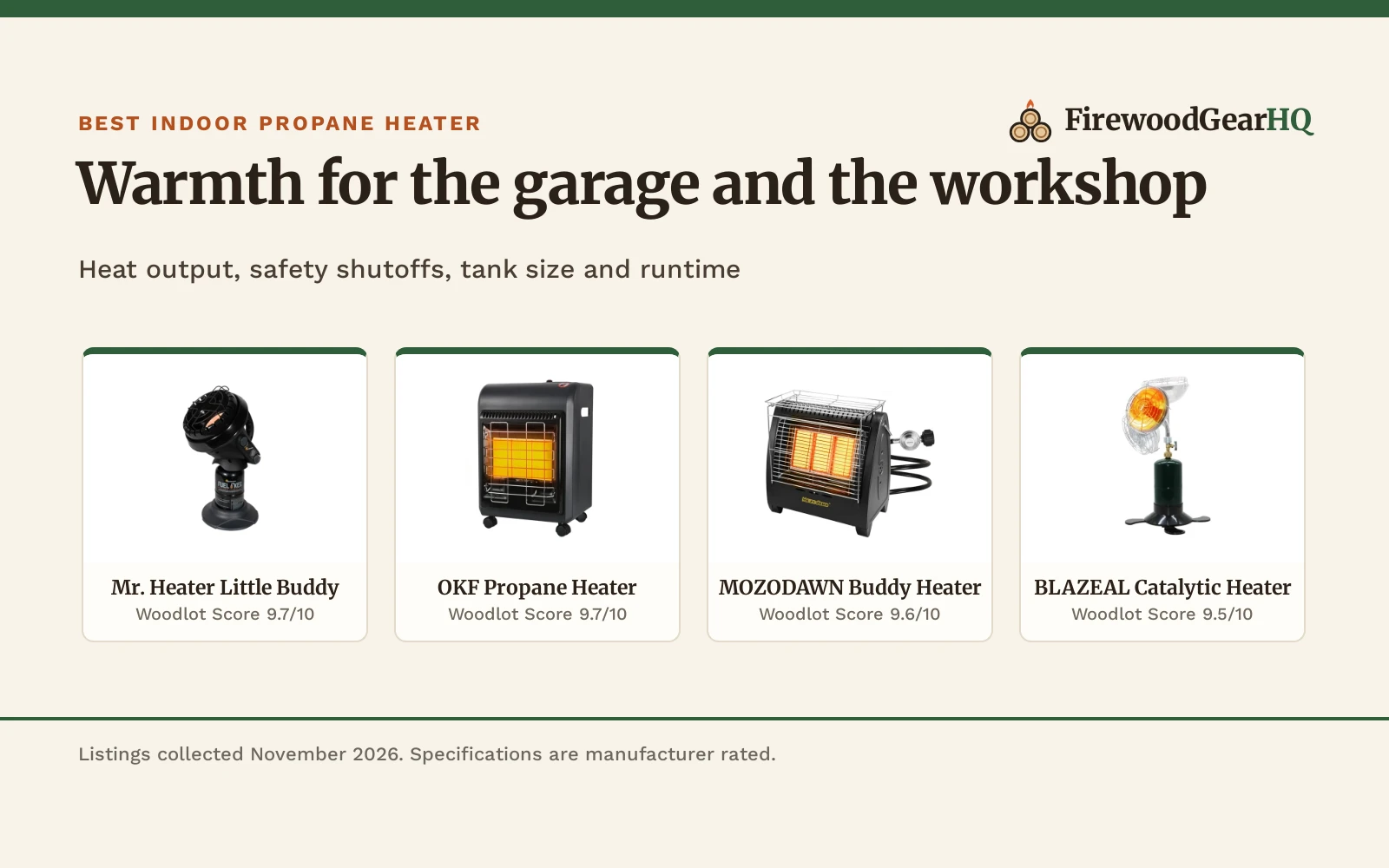
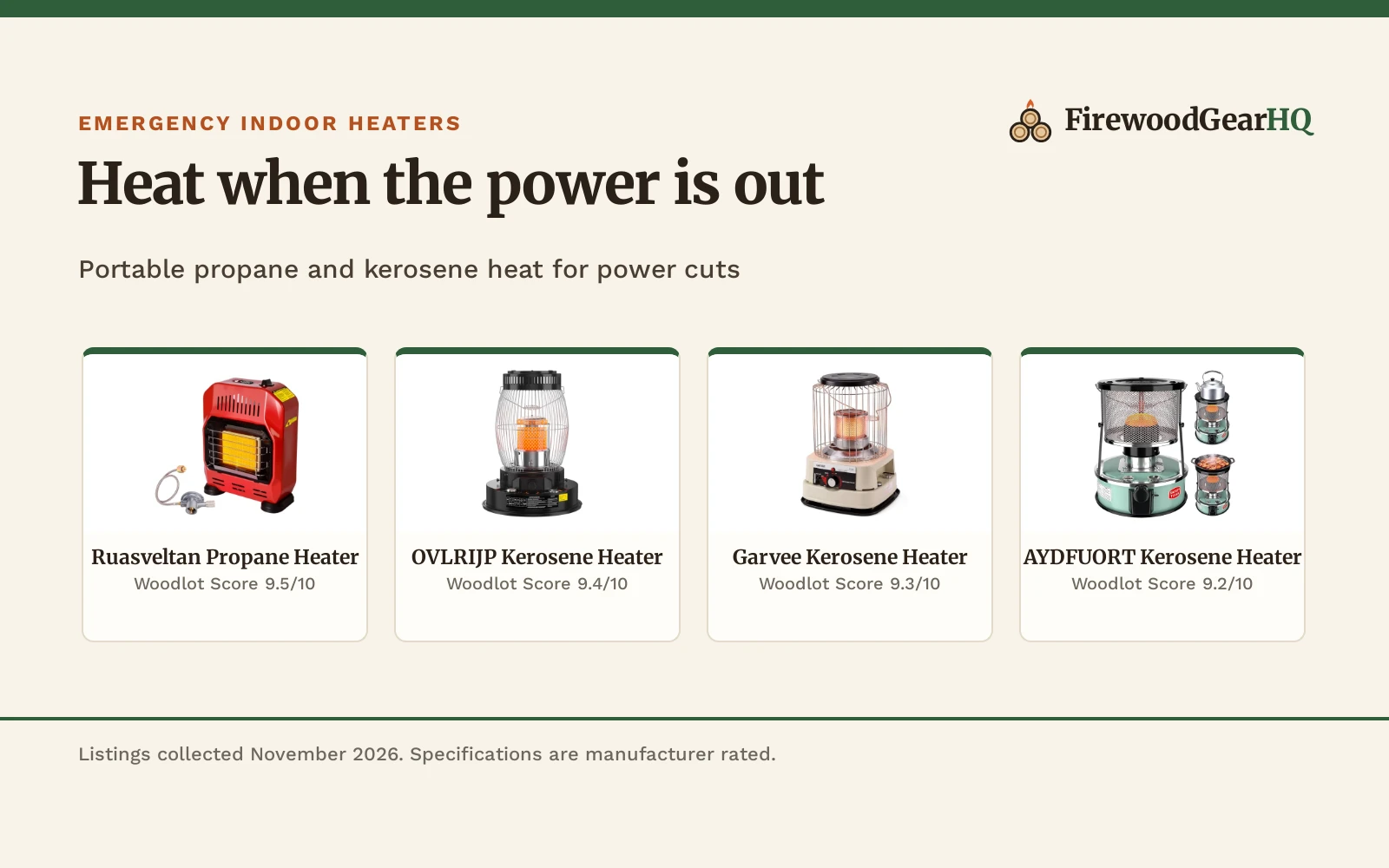
Can I Use a Propane Heater Indoors Safely?
This guide explains when a propane heater can be used indoors, which safety features matter, and how to keep fresh air and clear space around it.

On this page
Top picks at a glance
As an Amazon Associate I earn from qualifying purchases.
- 1
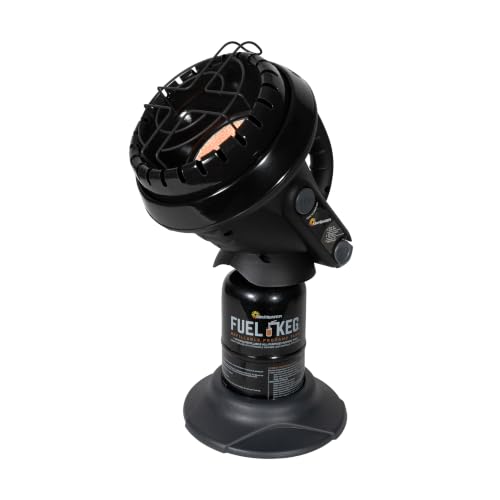 Mr. Heater 39.6/10View on Amazon
- 2
 ProCom Heating Liquid Propane Ventless Blue Flame Heater With9.4/10View on Amazon
Winter arrives, the garage turns cold, and the workshop bench calls for one more evening of work. A propane heater looks like the quick answer, and the question that follows is can I use a propane heater indoors. The short answer is that some propane heaters can be used indoors and many cannot, and the listing tells you which kind you hold. This guide explains how to read that listing, which safety features matter, and how to set a heater up so the room stays warm without filling with carbon monoxide.
FirewoodGearHQ earns a small commission if you buy through links on this page. The price you pay stays the same. Read our affiliate disclosure.
Can I Use a Propane Heater Indoors? The Short Answer
Yes, but only with a heater the maker lists as designed and approved for indoor use. The Mr. Heater Big Buddy lists indoor and outdoor use with heat settings of 4,000, 9,000 or 18,000 BTU, and the Mr. Heater Little Buddy (on Amazon) lists indoor and outdoor use at 3,800 BTU. A heater that lists outdoor use only stays outside. Indoor use also needs fresh air, a working smoke and CO alarm, and clear space around the heater, because a propane flame burns oxygen and can give off carbon monoxide when it burns badly.
What Makes a Propane Heater Safe to Use Indoors
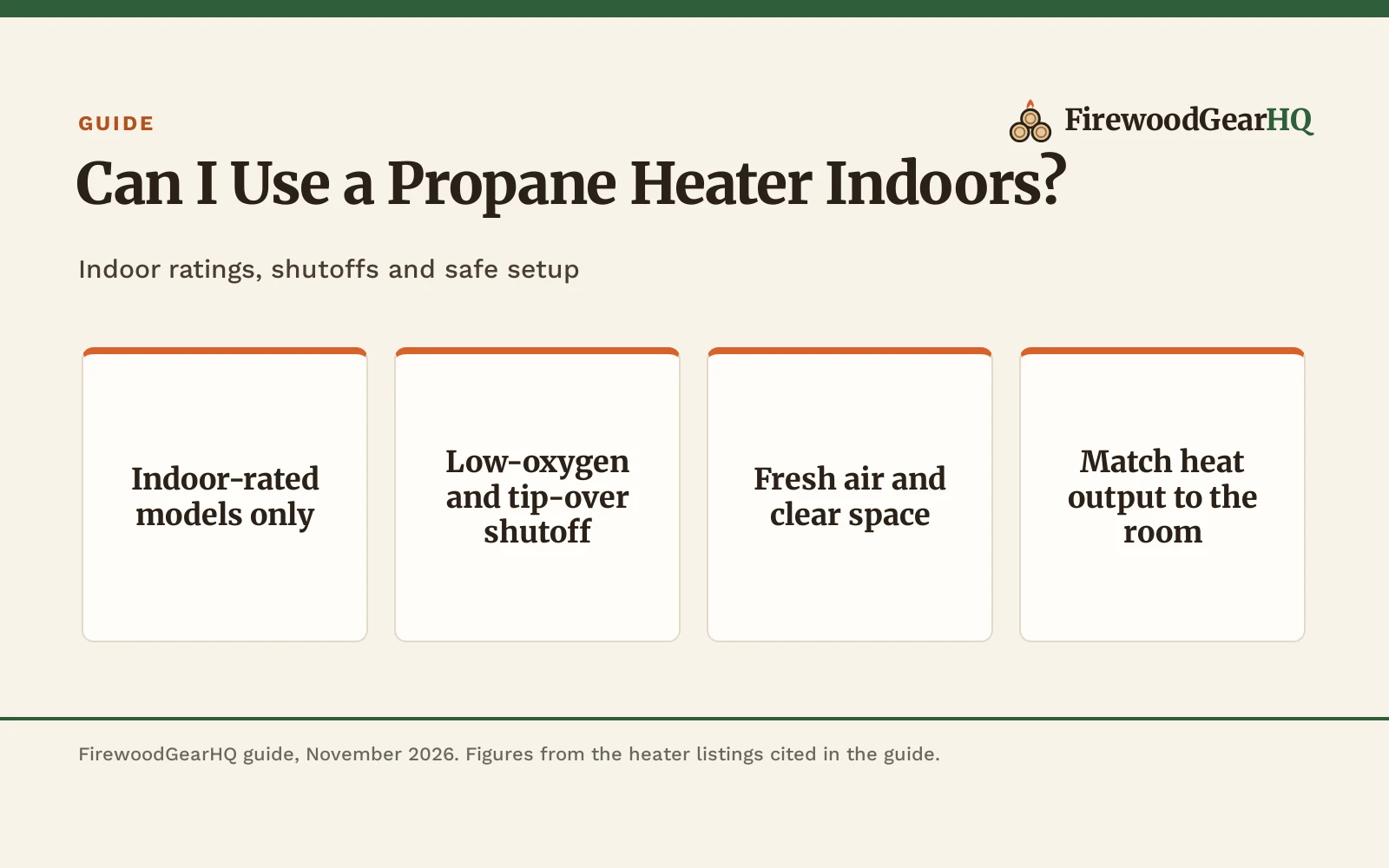
Indoor rating on the listing
The indoor rating is the check to make before anything else, and it sits in the listing title or bullets. The Big Buddy states that it is designed and approved for indoor and outdoor use, and the Little Buddy states the same, with a note that indoor use is not approved in Canada or Massachusetts. The ProCom blue flame heater (on Amazon) lists residential use in an office, bedroom or living room, with a thermostat and a pilot oxygen depletion sensor. When a listing says outdoor only, or names only patios, campsites and yards, the heater belongs outside even on a cold night.
Low-oxygen shutoff
A low-oxygen shutoff, often called ODS, cuts the gas supply when oxygen in the room falls. The Big Buddy lists an automatic low oxygen shut-off system, the OKF lists an automatic shutoff on low oxygen, and the SANAUVULCAN lists an oxygen depletion sensor that turns the heater off when oxygen falls below 18%. The ProCom lists a built-in pilot oxygen depletion sensor that shuts the heater down when carbon monoxide or a lack of oxygen is detected, and the maker states ANSI certification for safety. A heater without a stated low-oxygen shutoff has no such protection, so check the listing before you buy.
Tip-over shutoff
A tip-over shutoff cuts the gas when the heater falls over. The LAANPOLE lists tip-over protection that halts fuel flow when the heater tips, the OKF lists tip-over protection beside its low-oxygen shutoff, and the VEVOR lists low-oxygen, tip-over and flameout protection as three layers of defence. The DECOKTOOL lists a tip-over safety switch and flame-out protection that cuts the gas supply when the flame goes out. A heater that stands where people and pets pass needs this shutoff.
Heat output matched to the room
Heat output is listed in BTU, and the listings match each output with a room size. The table below uses only figures the listings state.
| Heater | Heat output | Heats up to |
|---|---|---|
| Mr. Heater Big Buddy | 4,000, 9,000 or 18,000 BTU | 450 square feet |
| Mr. Heater Little Buddy | 3,800 BTU | 95 square feet |
| ProCom blue flame heater | 20,000 BTU | 950 square feet |
| BLAZEAL catalytic heater | 6200 BTU | 200 square feet |
| DECOKTOOL portable heater | 4,000 or 9,000 BTU | 225 square feet |
A small heater in a large room runs flat out and still leaves cold corners, while a large heater in a small room gives more heat than the room needs and wastes fuel. Match the listed room size to the room you heat, and remember that a garage with an open door or a tent is not the enclosed space the listing describes.
Heaters That Belong Outdoors
Several listings carry outdoor in the title and name patios, campsites and yards as the place of use. The MOZODAWN lists outdoor use with 5000, 10000 or 15000 BTU, and the LAANPOLE lists patio, fishing, camping and garage use with 15,000 BTU and three heat settings. The BLAZEAL lists camping, picnicking, hiking and patio use with 6200 BTU. A listing can mix indoor and outdoor words in the same breath, so look for a plain statement that the heater is designed and approved for indoor use, not a passing mention of a garage or a tent. Charcoal, gas and pellet grills, smokers and propane burners are outdoor-only, away from walls and overhangs, and never in a garage or a tent.
How to Use a Propane Heater Indoors Safely
Keep clear space around it
Keep 3 feet clear of anything that burns around a heater in use. Curtains, bedding, paper, firewood and fuel cans stay out of that space, and the heater stands on a flat, stable surface where it cannot be knocked over. The VEVOR lists 5 smooth-rolling wheels with two front wheels that lock, and the OKF lists 4 durable casters with brakes, so lock the wheels before you light the heater.
Ventilation and fresh air
A propane flame needs fresh air, and a room with the windows shut and the door closed gives it none. Crack a window or a door to the outside so fresh air can enter while the heater runs, and never run a heater in a room with no way for air to move. A heater that lists a low-oxygen shutoff still needs that fresh air, because the shutoff is a guard against a fault, not a substitute for ventilation.
Smoke and CO alarms
A working smoke alarm and a working CO alarm belong in any room where a fuel-burning heater runs. Fit the alarms before the heater goes in, and check them when the heating season starts. Carbon monoxide has no smell and no colour, so an alarm warns you when a flame burns badly.
Check the shutoffs before each use
Before lighting the heater, check that the tip-over switch and the low-oxygen shutoff are part of the listing, that the gas hose and regulator are sound, and that the tank connection is tight. The VEVOR lists a pressure regulator in the box, the OKF lists a gas regulator and hose, and the SANAUVULCAN lists a gas regulator and hose too. A hose that smells of gas, a regulator that hisses, or a heater that will not light cleanly should stay off until the fault is found.
FAQ: wood, fire and gear
Can I use a propane heater in a garage?
A garage is a large space with a door that opens, and some indoor-rated heaters list garage use. The OKF lists well-ventilated garages among its uses, and the VEVOR lists indoor spaces, patios and garages. Keep the door open for fresh air, keep 3 feet clear, and never run an outdoor-only heater in a shut garage.
Can I use a propane heater in a tent?
Not in a sealed tent. A tent is a small, enclosed space with fabric walls, and the heaters that list tent use are camping heaters meant for a ventilated tent with the flaps open, not a sealed tent. A heater in a sealed tent can use up the oxygen and fill the tent with carbon monoxide while everyone sleeps. Heat the tent before bed, then switch the heater off.
What is a low-oxygen shutoff?
A low-oxygen shutoff, or ODS, is a sensor that cuts the gas supply when oxygen in the room falls. The SANAUVULCAN lists a sensor that turns the heater off when oxygen falls below 18%, and the Big Buddy, OKF and ProCom list the same kind of protection under different names. It is a guard, not a substitute for fresh air.
How long will a propane heater run on a tank?
Runtime depends on the heat setting and the tank. The OKF lists up to 69 hours on the low setting of 6,000 BTU from a 20 lb propane tank, the SANAUVULCAN lists the same 69 hours on low from a 20 lb tank, and the VEVOR lists up to 73 hours. The Little Buddy lists up to 5.6 hours on a 1 lb propane tank.
Do propane heaters need electricity?
Most of the heaters in the listings need no electricity at all. The ProCom states that no electricity is required, the Little Buddy lists no electricity required, and the VEVOR lists piezoelectric ignition with no need for a power point.
Can I leave a propane heater running while I sleep?
No. A heater should not run while everyone in the room is asleep, because no one is awake to notice a fault, a fall, or the signs of carbon monoxide. Warm the room before bed, switch the heater off, and rely on bedding and blankets through the night.
More firewood guides
See the wood stove vs propane heater guide, the propane heater vs electric space heater comparison, and how to use a propane heater. Also see the wood stove vs space heater guide, the best propane patio heater for a balcony picks, and can you bring firewood indoors.