Best Meat Cleaver for Chopping Bbq Pork (2026): 5 Picks Compared
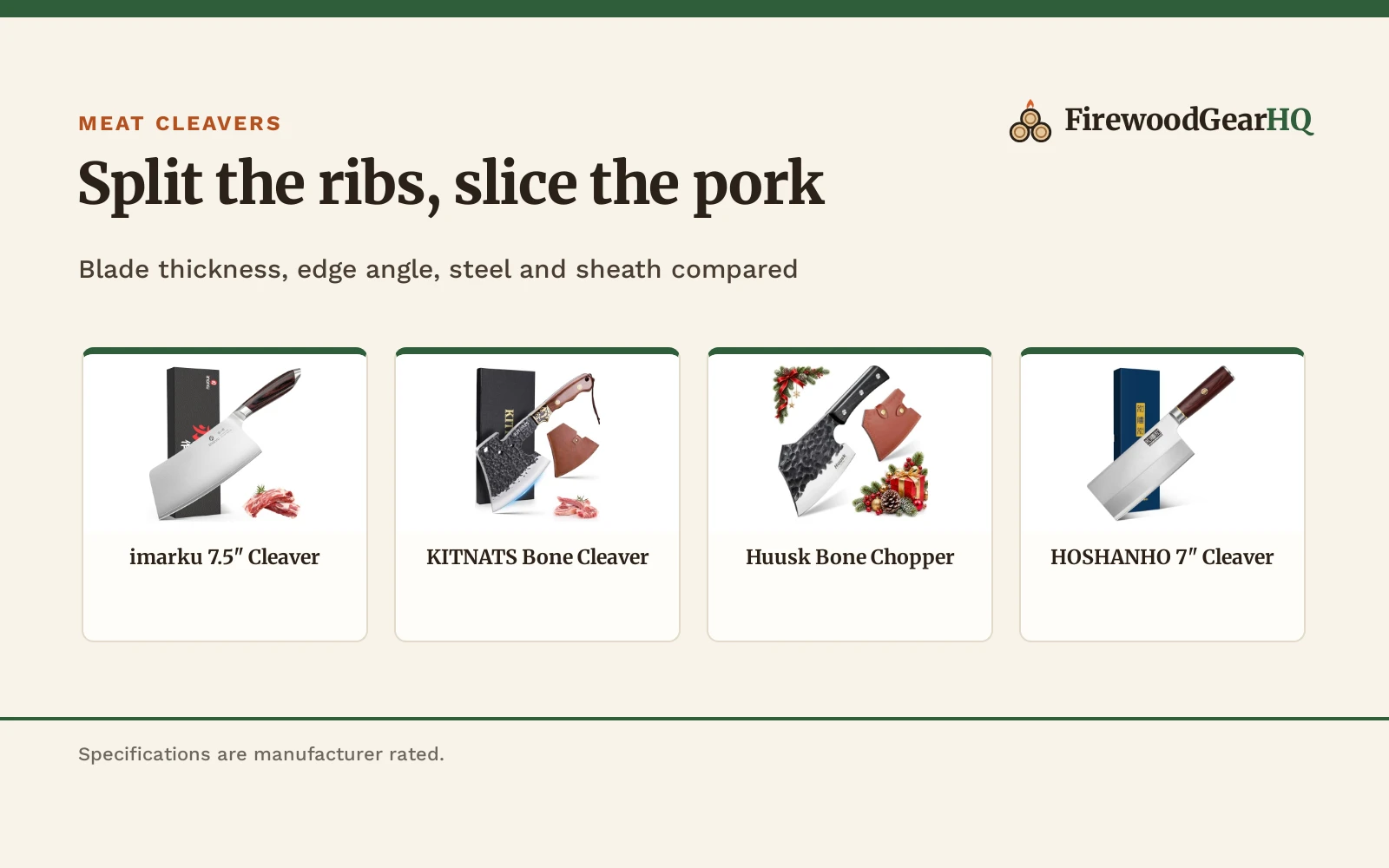
Five meat cleavers for chopping BBQ pork compared by blade thickness, edge angle, steel hardness, handle and sheath.

On this page
Top picks at a glance
As an Amazon Associate I earn from qualifying purchases.
- 1
 Best Overallimarku 7.5″ Cleaver9.7/10View on Amazon
- 2
 Best Bone ChopperKITNATS Bone Cleaver9.6/10View on Amazon
- 3
 Heaviest DutyHuusk Bone Chopper9.5/10View on Amazon
- 4
 Hardest SteelHOSHANHO 7″ Cleaver9.4/10View on Amazon
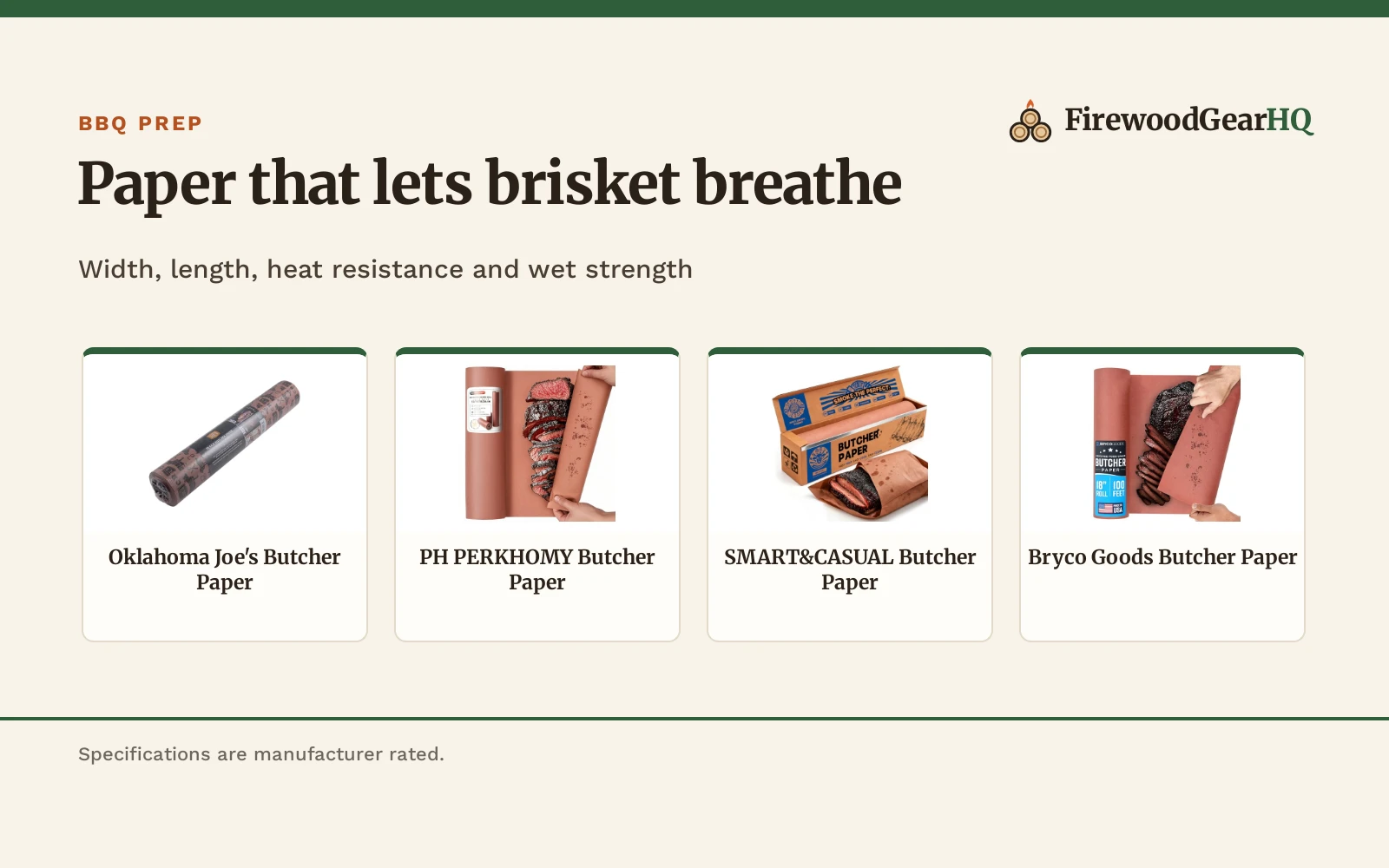
The pork is off the grill, rested and ready for the board, and the job now is to break it down into serving pieces. A regular kitchen knife skates on the bone and crushes the meat, so the right tool is a heavy cleaver with a sharp edge and a handle that stays put. The best meat cleaver for chopping bbq pork in this roundup pairs a thick, front-heavy blade with a full tang handle, so ribs and pork bones split cleanly. For more BBQ prep gear, see the meat cleaver for chopping bbq pork picks in the BBQ prep section.
FirewoodGearHQ earns a small commission if you buy through links on this page. The price you pay stays the same. Affiliate disclosure.
Quick picks
- Best Overall imarku 7.5″ Cleaver: 7.5 in cleaver in Japanese high carbon stainless steel at 59±2 HRC, 0.77 lb, with lifetime coverage. Check price on Amazon
- Best Bone Chopper KITNATS Bone Cleaver: 4mm thick blade with a 25° edge, full tang rosewood handle, leather sheath and 1-year warranty. Check price on Amazon
- Heaviest Duty Huusk Bone Chopper: Front-heavy bone chopper at 60-62 HRC with a 25-degree edge, ebony handle and leather sheath. Check price on Amazon
- Hardest Steel HOSHANHO 7″ Cleaver: 62 HRC powder steel with a 15° edge and pakkawood handle, at 1.0 lb. Check price on Amazon
The gear we chose
imarku 7.5" Cleaver Knife
A 7.5 in cleaver in Japanese high carbon stainless steel at 59±2 HRC, with a 15° double-side edge, a 2.3mm±0.1 blade and a Pakkawood handle, at 0.77 lb.
Pros
- 59±2 HRC Japanese high carbon stainless steel
- 15° double-side edge, hand-sharpened
- Lightest here at 0.77 lb
- Lifetime coverage with free exchange for any defects
Cons
- Thin 2.3mm±0.1 blade suits slicing better than heavy bone work
- No sheath in the box
- Hand wash only, with wiping dry after each wash
- Pakkawood handle, not the rosewood or ebony of the bone choppers
Meat Cleaver Knife, Hand Forged Bone Chopper
A hand forged bone chopper with a 4mm thick blade, a 25° V-shaped edge, a full tang rosewood handle and a leather sheath, at 1.54 lb.
Pros
- 4mm thick blade with a front-heavy butcher axe profile
- 25° V-shaped edge for heavy meat prep
- Full tang rosewood handle with 2 mosaic pins
- Leather sheath and gift box included, with a 1-year warranty
Cons
- Heavier than the imarku at 1.54 lb
- Shortest blade here at 5.4 in
- Red color only
- No hanging ring for storage
Huusk Meat Cleaver Knife Heavy Duty Bone Chopper
A hand forged bone chopper with a front-heavy blade at 60-62 HRC, a 25-degree V-shaped edge, a 6.3-inch ebony handle and a leather sheath.
Pros
- 60-62 HRC after 1050°C quenching and -190°C cryogenic treatment
- Double-sided: front cuts meat, back cracks bones
- Full tang with 3 rivets and a 6.3-inch ebony handle
- Leather sheath and black gift box included
Cons
- Heaviest here at 2.56 lb
- No warranty term is stated
- Front-heavy design suits bone work better than fine slicing
- Back side is blunt, so it cannot slice
HOSHANHO Cleaver Knife 7 Inch
A 7 in cleaver in Japanese high-carbon powder steel at 62 HRC, with a 15° edge on each side and an ergonomic pakkawood handle, at 1.0 lb.
Pros
- Hardest steel here at 62 HRC
- 15° edge on each side, hand-finished
- Brushed texture helps reduce cutting resistance and food sticking
- Elegant gift box included
Cons
- Not designed for chopping through bone
- No warranty term is stated
- No sheath in the box
- Hand-wash only, dry immediately with a soft cloth

Huusk Meat Cleaver Knife with Sheath
A hand forged 6.3 in cleaver in premium Japanese steel at 58±2 HRC, with an ergonomic oak wood handle and a sheath.
Pros
- Hand forged with a 138-step design
- 58±2 HRC premium Japanese steel
- Ergonomic oak wood handle with a firm grasp
- Sheath included, with a gift box
Cons
- Lowest hardness here at 58±2 HRC
- Second-shortest blade here at 6.3 in
- Thick blade suits chopping better than fine slicing
- Gift box and sheath add pieces to store
Compared side by side
| Model | Woodlot Score | Size | Edge | Steel | Handle | Weight | Warranty |
|---|---|---|---|---|---|---|---|
| imarku 7.5″ Cleaver | 9.7/10 | 7.5 in | 15° double-side | Japanese high carbon, 59±2 HRC | Pakkawood | 0.77 lb | Lifetime coverage |
| KITNATS Bone Cleaver | 9.6/10 | 5.4 in | 25° V-shaped | Hand forged | Rosewood, full tang | 1.54 lb | 1-year warranty |
| Huusk Bone Chopper | 9.5/10 | 6.69 in | 25-degree V-shaped | Japanese steel, 60-62 HRC | Ebony, full tang | 2.56 lb | Not stated |
| HOSHANHO 7″ Cleaver | 9.4/10 | 7 in | 15° each side | Powder steel, 62 HRC | Pakkawood | 1.0 lb | Not stated |
| Huusk 6.3″ Cleaver | 9.3/10 | 6.3 in | Not stated | Japanese steel, 58±2 HRC | Oak, full tang | 0.8 lb | Not stated |
All ratings here are the manufacturers’ own, as printed on their listings as of 24 November 2026. Two of these listings state a warranty term.
How the picks were scored
Each cleaver is scored on performance, build, value, safety and warranty, using only what the listing publishes. The weights are on the How We Pick page. None states a UL, ETL or CSA listing, so all score zero on safety, and two give a warranty term.
| Product | Woodlot Score | Perf. /35 | Build /25 | Value /25 | Safety /10 | Warranty /5 |
|---|---|---|---|---|---|---|
| imarku 7.5″ Cleaver | 9.7 | 30 | 21 | 21 | n/a | 4 |
| KITNATS Bone Cleaver | 9.6 | 32 | 21 | 20 | n/a | 2 |
| Huusk Bone Chopper | 9.5 | 32 | 22 | 19 | n/a | 0 |
| HOSHANHO 7″ Cleaver | 9.4 | 28 | 21 | 20 | n/a | 0 |
| Huusk 6.3″ Cleaver | 9.3 | 28 | 20 | 20 | n/a | 0 |
The 8.8 and 9.8 limits frame every score. Scores follow the ranking in each guide, dropping by at least 0.1 per place, so each pick has its own number. If a pick has no motor or battery and lists no safety features, safety is skipped and we score it out of 90.
Buying guide: best meat cleaver for chopping bbq pork
Blade thickness and weight
Blade thickness decides what the cleaver can chop. The KITNATS blade is 4mm thick with a front-heavy butcher axe profile, made to split ribs and chop pork bones. The imarku blade is 2.3mm±0.1 thin, made to slice through tough foods with less effort. The Huusk bone chopper is front-heavy too, with a 25-degree V-shaped blade for breaking large bones. The imarku is the lightest at 0.77 lb, and the Huusk bone chopper is the heaviest here, so check the weight against your wrist before ordering.
Edge angle and steel hardness
Edge angles run from 15° to 25° across the picks. The imarku and the HOSHANHO are hand-sharpened to 15°, while the KITNATS and the Huusk bone chopper use a 25° V-shaped edge that balances sharpness and durability for heavy meat prep. Steel hardness runs from 58±2 HRC to 62 HRC: the Huusk 6.3 in pick is rated at 58±2 HRC, the imarku at 59±2 HRC, the Huusk bone chopper at 60-62 HRC, and the HOSHANHO at 62 HRC.
Handle and tang
Three picks state full tang construction: the KITNATS with a rosewood handle and 2 mosaic pins, the Huusk bone chopper with a 6.3-inch ebony handle and 3 rivets, and the Huusk 6.3 in pick with an oak handle. The imarku handle is FSC-certified Pakkawood, and the HOSHANHO handle is premium pakkawood, both shaped for a comfortable grip.
Sheath and storage
Three picks include a sheath: the KITNATS with a genuine leather sheath, the Huusk 6.3 in pick with a sheath, and the Huusk bone chopper with a portable leather sheath. The sheath protects the blade when not in use and makes the cleaver easy to carry to the backyard grill or pack for camping cookouts. The imarku and HOSHANHO come in a gift box with no sheath stated.
Care
Two picks state hand washing: the imarku asks for hand washing with clean water, then wiping completely dry, with occasional sharpening on a whetstone, and the HOSHANHO asks for hand-washing only and drying immediately with a soft cloth. Keep the blade dry between uses, and store it in its sheath where one is included.
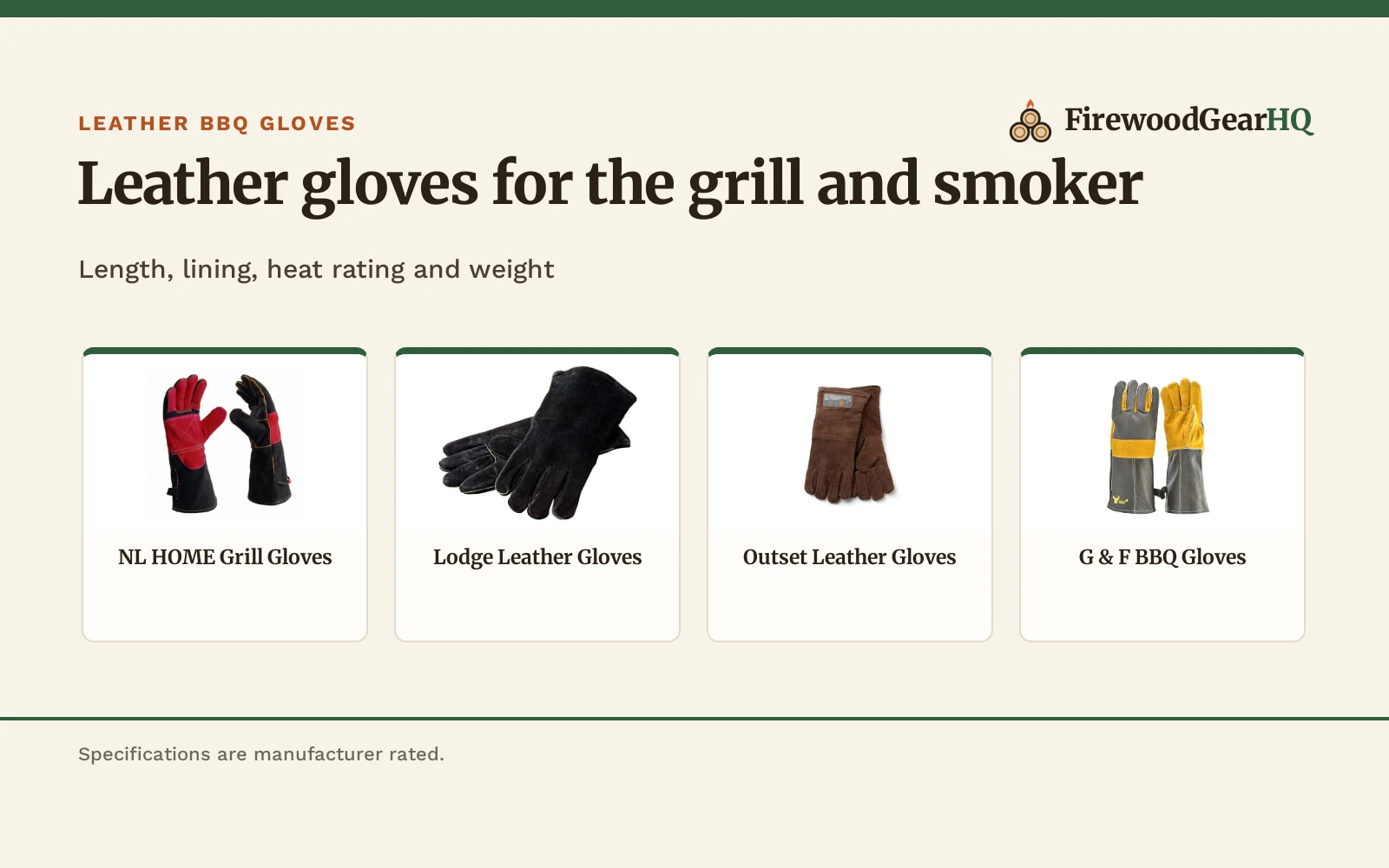
Cook outdoors only, on a level surface well clear of siding, deck railings and overhanging branches, and never run a grill, smoker or outdoor oven in a garage, tent or enclosed porch, where carbon monoxide builds up. Keep children and pets back from the heat, use long-handled tools and heat-rated gloves, and check doneness with a food thermometer rather than by color. See NFPA grilling safety. Read our Safety Disclaimer.
Around the Woodpile
- Store the cleaver in its leather sheath when not in use, to protect the blade.
- Hand wash with clean water and wipe completely dry, then dry immediately with a soft cloth.
- Use the wide blade to keep fingers away from the cutting surface.
- Check the edge angle before heavy bone work: the HOSHANHO is not designed for chopping through bone.
FAQ: wood, fire and gear
Why use a meat cleaver?
A cleaver brings weight and a wide blade to the job, so ribs split and pork bones chop with less wrist effort than a regular kitchen knife. The KITNATS is built for splitting ribs, sectioning poultry and chopping pork bones, and the Huusk bone chopper is made for breaking large bones. A thin cleaver like the imarku suits slicing and chopping boneless meat.
Can a meat cleaver chop through bone?
Two of the picks are made for it: the KITNATS splits ribs and chops pork bones, and the Huusk bone chopper breaks large bones with a 25-degree V-shaped blade and a blunt back side for cracking bones. The HOSHANHO is not designed for chopping through bone, so use it for meat and vegetables instead.
What edge angle is best for a meat cleaver?
The picks use 15° or 25° edges. The 15° edges on the imarku and HOSHANHO are hand-sharpened for slicing, while the 25° V-shaped edges on the KITNATS and Huusk bone chopper balance sharpness and durability for heavy meat prep.
How do you care for a meat cleaver?
Hand wash with clean water and wipe completely dry, then dry immediately with a soft cloth. Sharpen occasionally with a whetstone, and store the blade in its leather sheath where one is included.
What is the difference between a meat cleaver and a regular knife?
A meat cleaver is front-heavy with a wide blade, so the weight does the chopping work on ribs and bones. The KITNATS has a front-heavy butcher axe profile and a 4mm thick blade, while a regular kitchen knife has a thinner blade made for slicing. The imarku at 2.3mm±0.1 sits between the two, thin for slicing with a cleaver shape.
More firewood guides
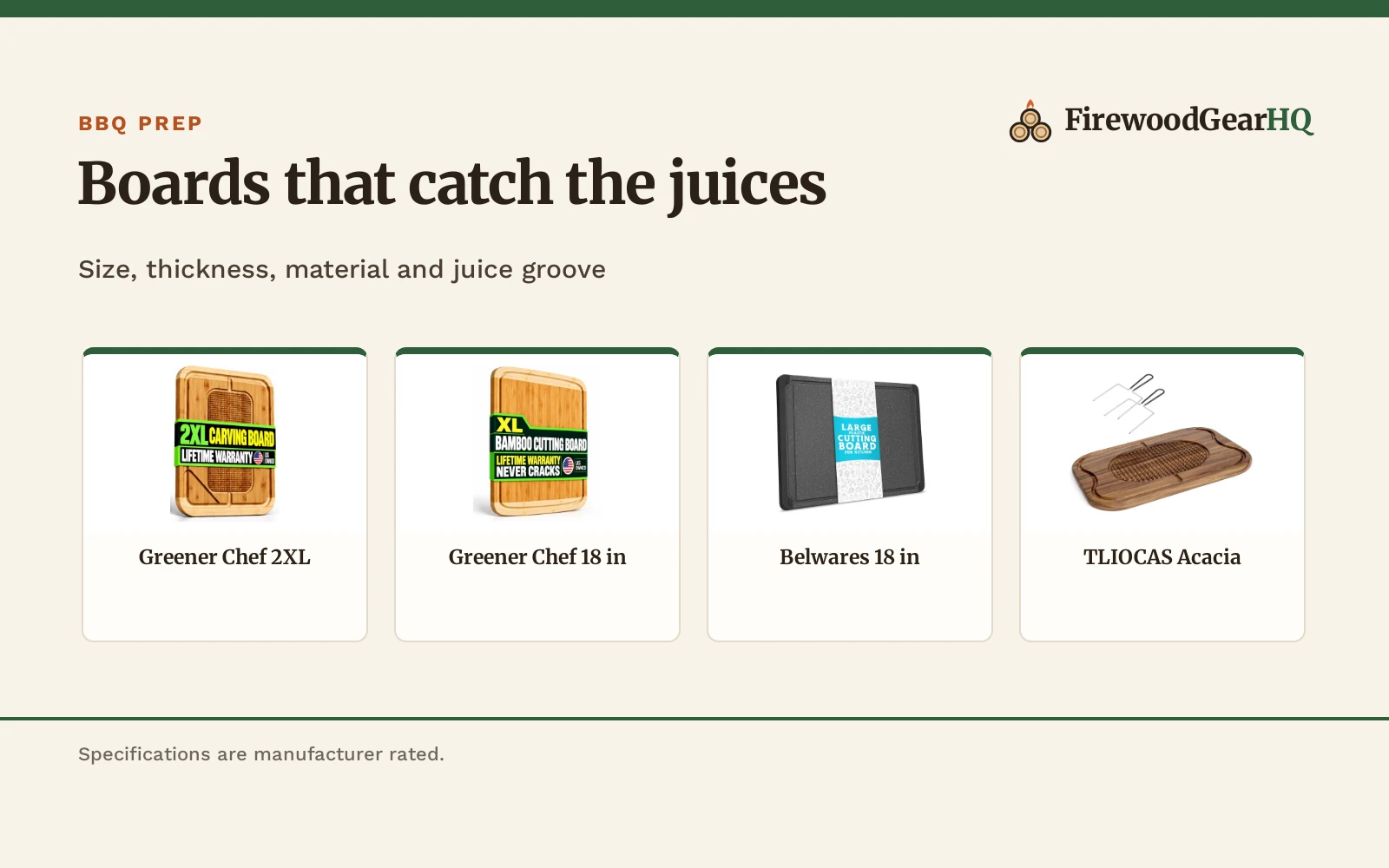
See the BBQ prep hub and BBQ knives and boards section, then compare the best meat cleaver large or the best mini meat cleaver. For the rest of the cook, see the best knife for slicing brisket, the best boning knife for trimming brisket and the best meat cutting knife. Also see the best butcher paper for BBQ and the best cutting board for electric knife.