Best Cast Iron Seasoning Oil (2026)
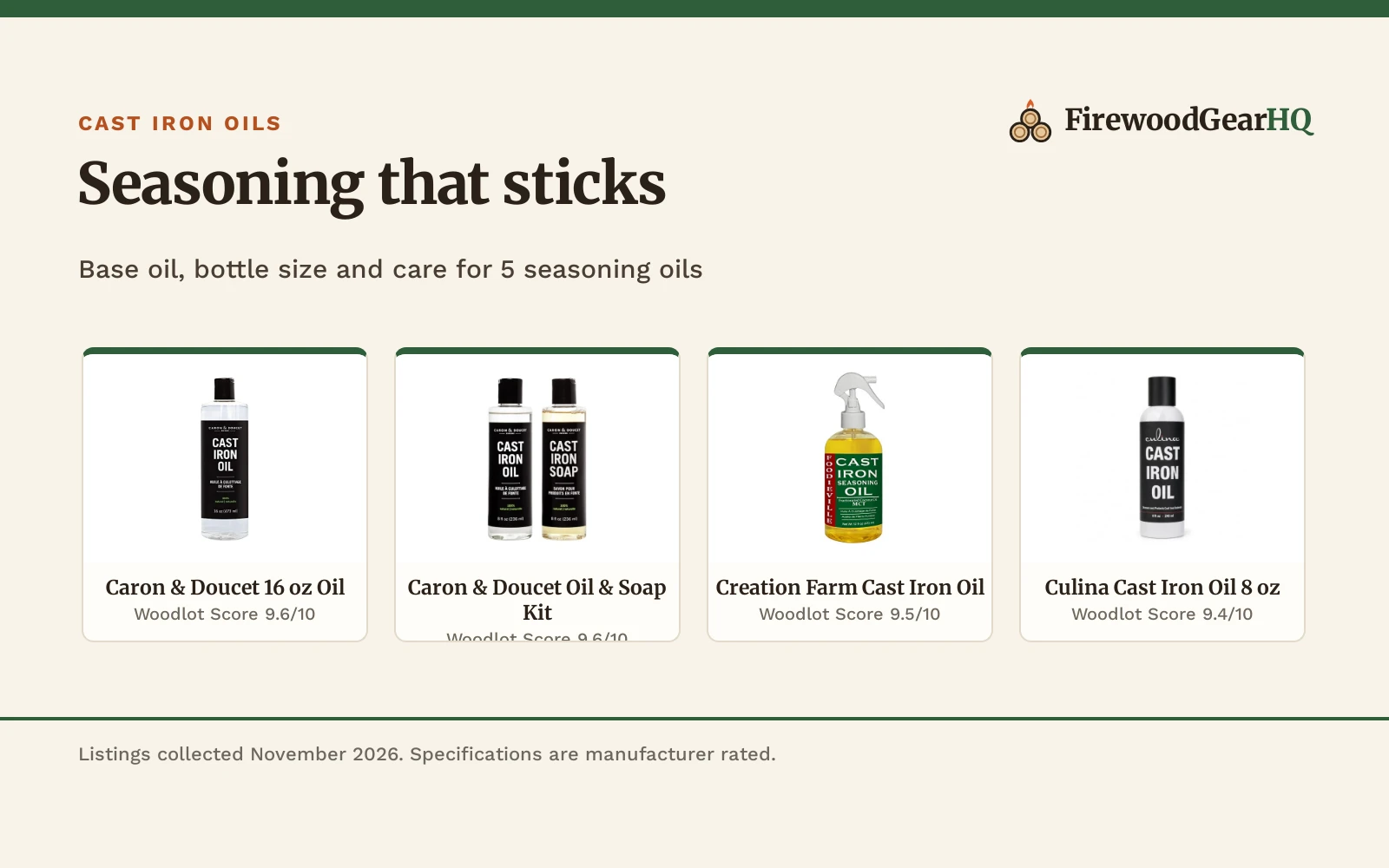
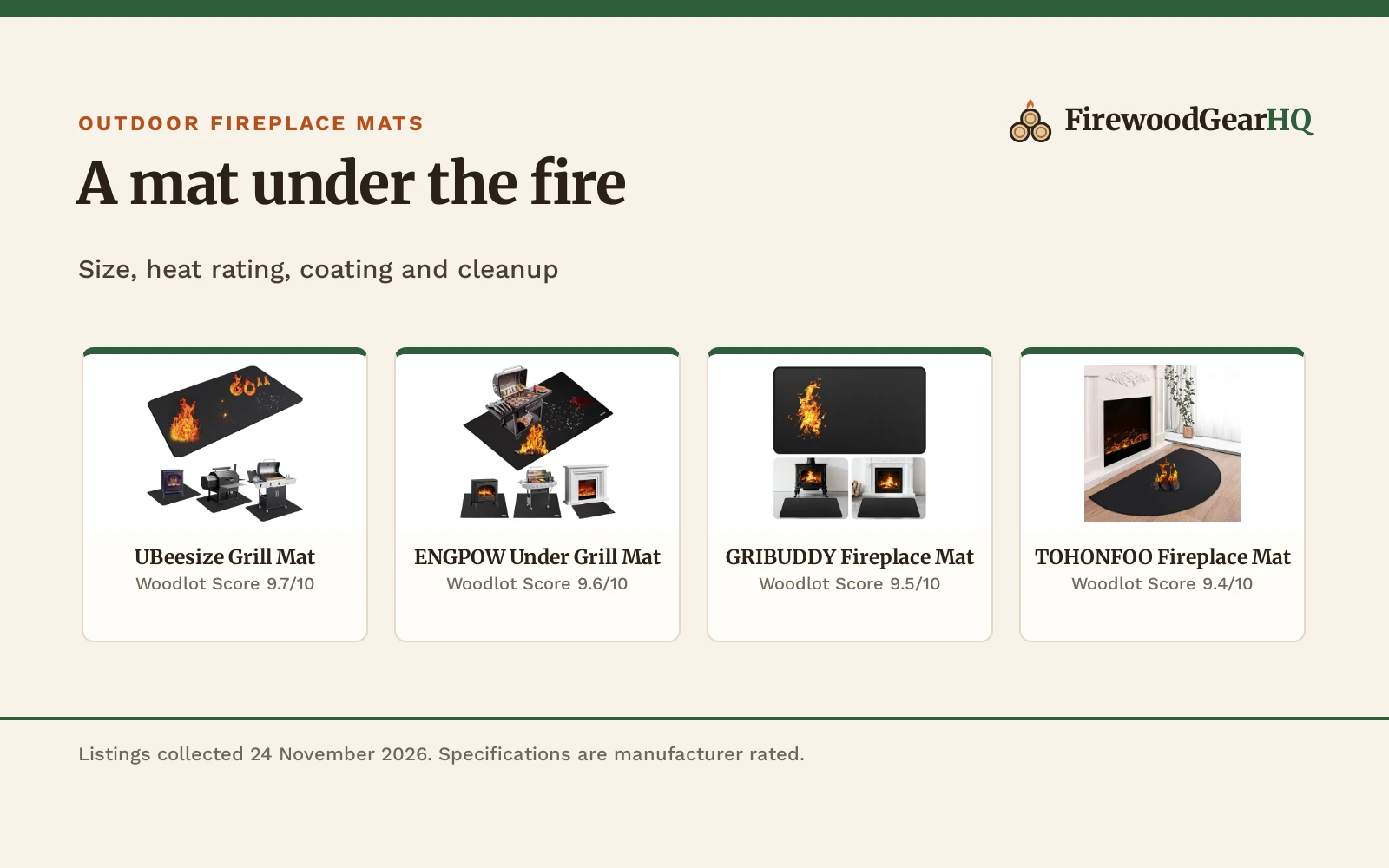
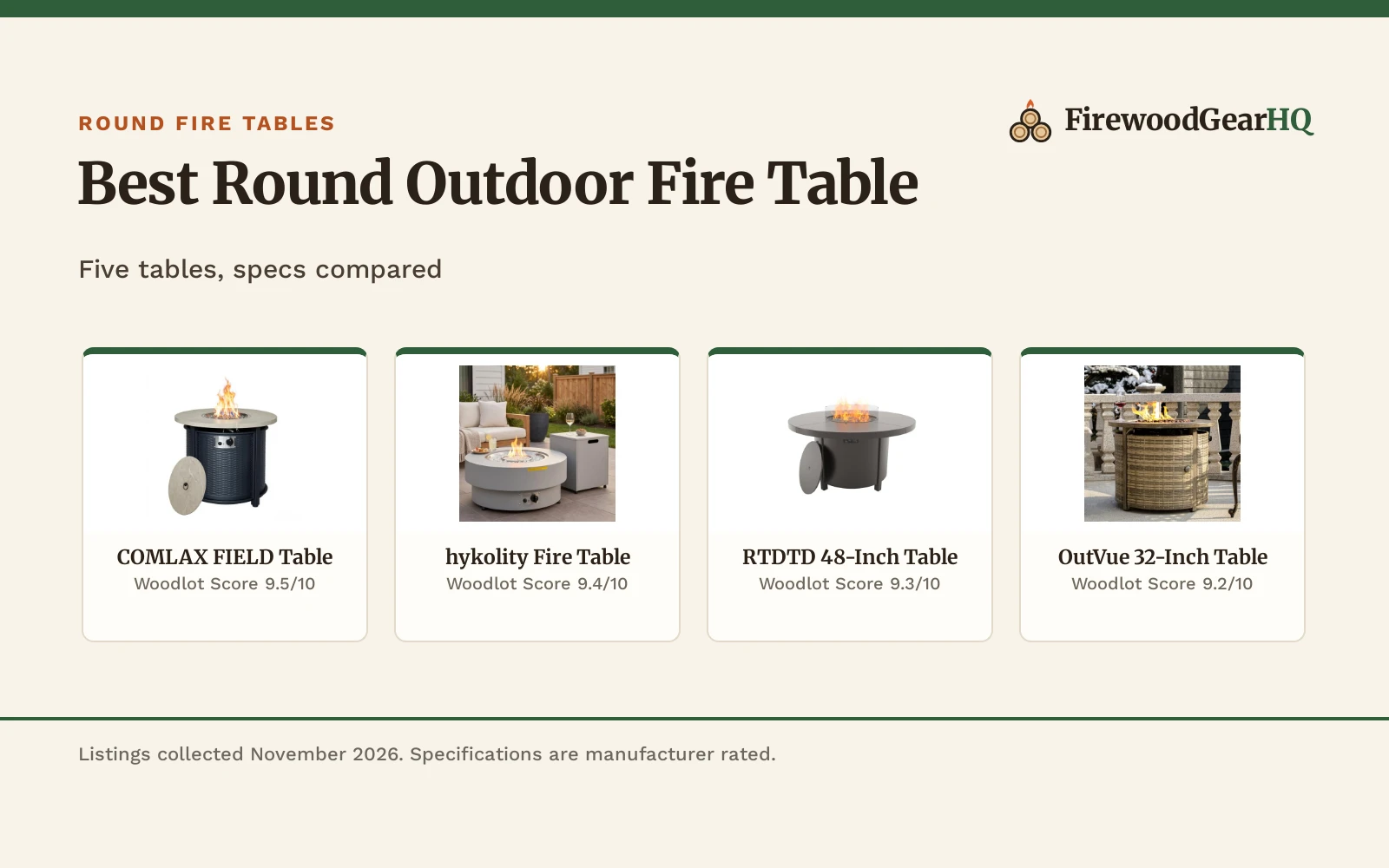
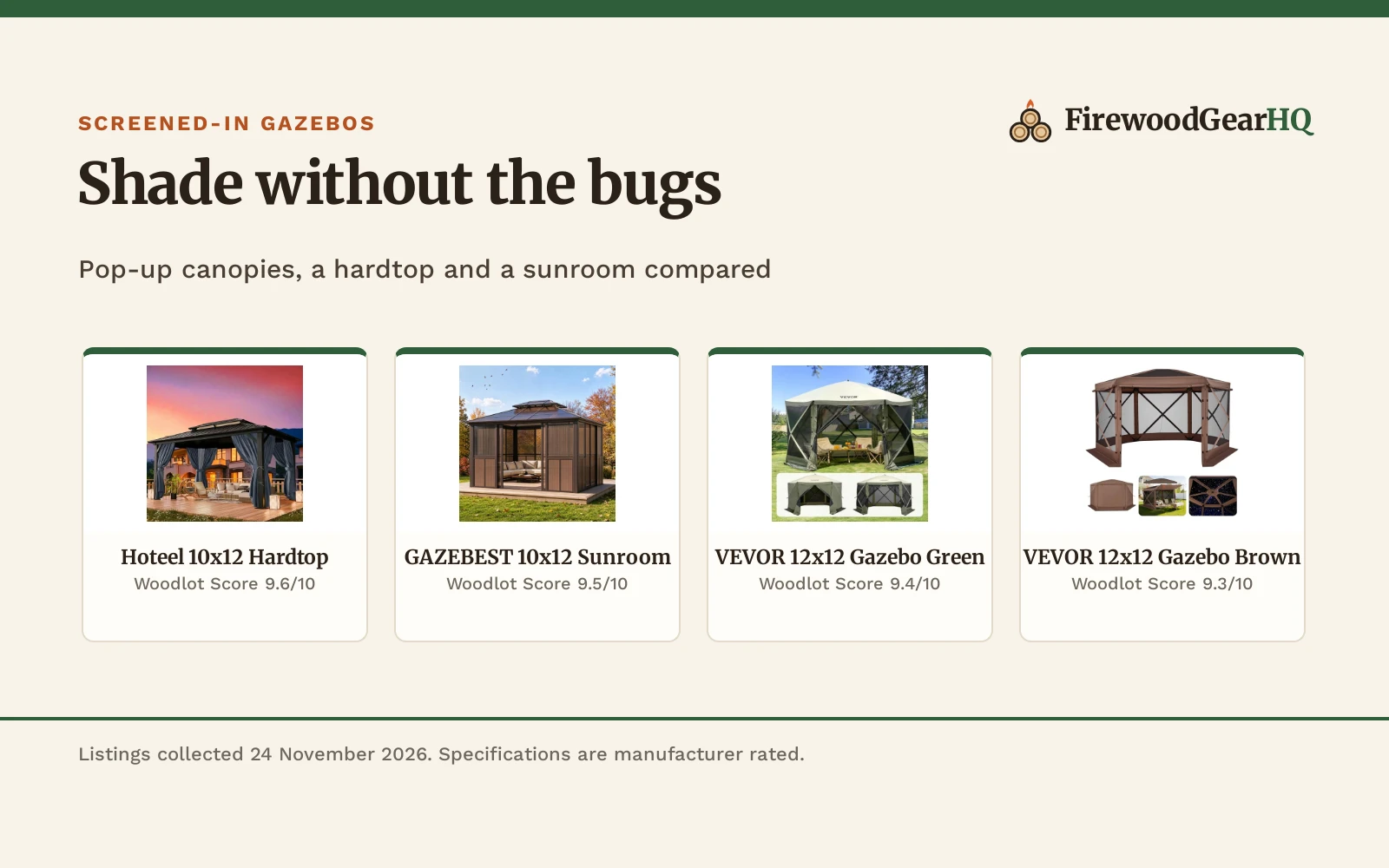
4 seasoning oils compared by base oil, smoke point, bottle size and food-contact certification, for cast iron skillets and camp cookware.

On this page
Top picks at a glance
As an Amazon Associate I earn from qualifying purchases.
- 1
 Best OverallWalrus Cast Iron Oil9.6/10View on Amazon
- 2
 Best for Seasoning and CleaningCaron & Doucet Oil9.3/10View on Amazon
- 3
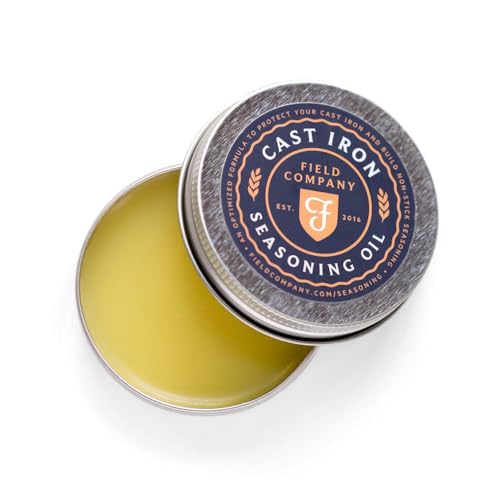 Best Small TinField Seasoning Oil9.2/10View on Amazon
- 4
 Best Large BottleLa Tourangelle Oil9.1/10View on Amazon
By the time the woodpile is stacked and the stove is lit most evenings, the cast iron skillet has earned its place beside the fire. It fries, bakes and sears over coals and on the stove top, and it asks for little in return beyond a thin coat of oil now and then. A good seasoning layer keeps food from sticking and keeps rust off the iron, and the oil you use decides how that layer builds. This guide to the best cast iron seasoning oil compares the oils the listings describe for that job, by base oil, smoke point, bottle size and food-contact certification, so you can pick one that suits your skillet and your camp kit.
FirewoodGearHQ earns a small commission if you buy through links on this page. The price you pay stays the same. Affiliate disclosure.
Quick picks
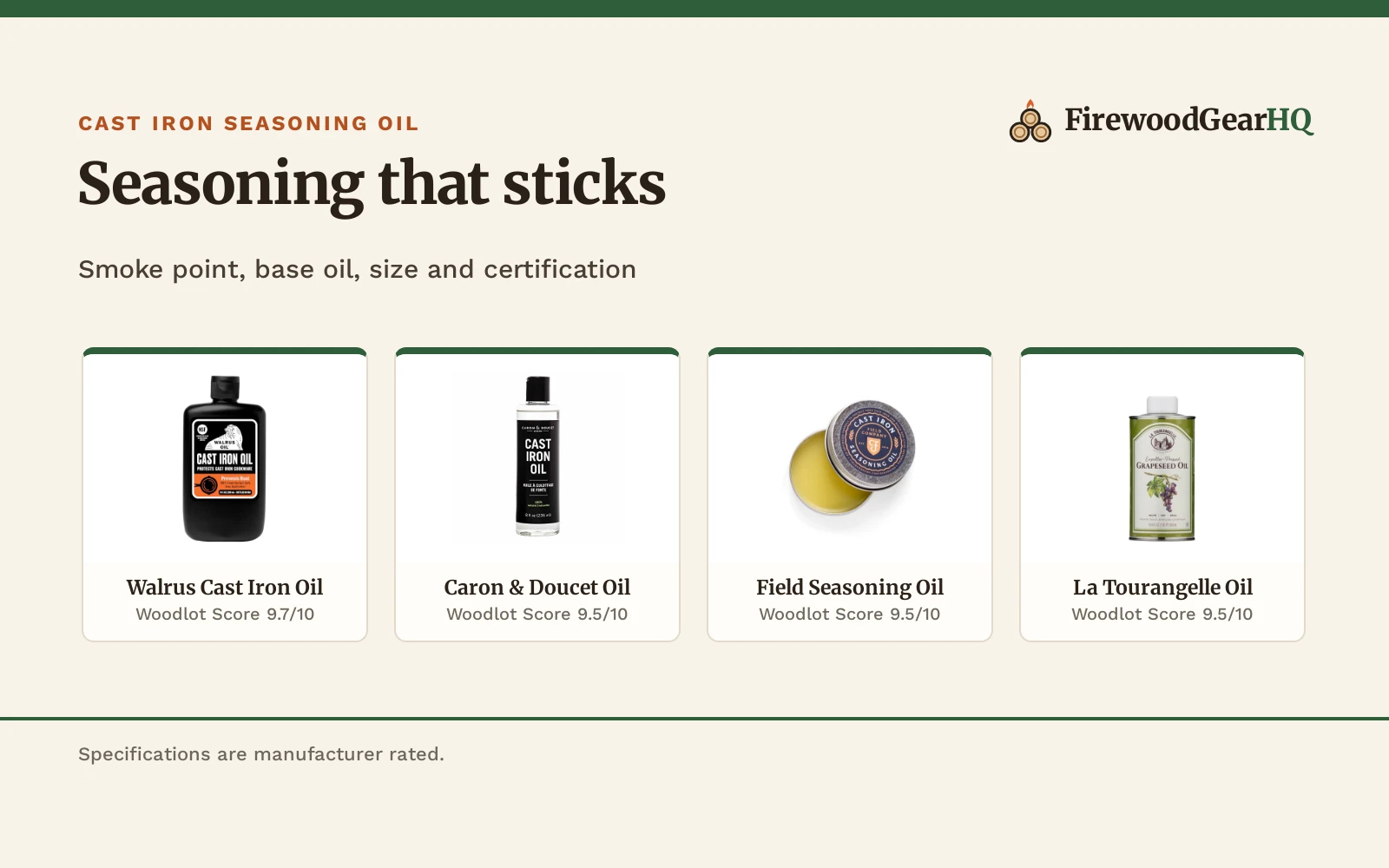
- Best Overall Walrus Cast Iron Oil: Stated 450-500F smoke point and NSF Certified food-contact safety in an 8oz bottle. Check price on Amazon
- Best for Seasoning and Cleaning Caron & Doucet Oil: Coconut-oil base that the listing says never goes rancid, in an 8oz bottle. Check price on Amazon
- Best Small Tin Field Seasoning Oil: Purpose-built grapeseed, sunflower and beeswax blend in a 2oz tin. Check price on Amazon
- Best Large Bottle La Tourangelle Oil: Expeller-pressed grapeseed oil in a 16.9 fl oz bottle for seasoning and cooking. Check price on Amazon
The gear we chose
WALRUS OIL Cast Iron Oil
A 100% natural safflower oil in an 8oz bottle, with a stated smoke point of 450-500F and NSF Certified food-contact safety, made for seasoning and maintaining cast iron cookware.
Pros
- Stated smoke point of 450-500F for high-temperature seasoning
- NSF Certified for food-contact safety
- 100% natural and plant-based, with plant-derived Vitamin E
- Bottled in the United States in an 8oz container
Cons
- No warranty term is stated
- 8oz bottle is smaller than the La Tourangelle bottle
- Safflower oil only, with no beeswax or blended oils
- Listing gives no guidance on how often to apply it
Caron & Doucet - Cast Iron Seasoning & Cleaning
A 100% plant-based, food grade seasoning and cleaning oil in an 8oz bottle, built on solvent-less refined coconut oil that the listing says does not go rancid.
Pros
- Refined coconut oil base that the listing says never goes rancid
- Seasons, conditions and cleans in a single oil
- Food grade and solvent-less, safe for food contact
- Essential-oil blend leaves a light scent that the listing says will not transfer onto food
Cons
- Refund promise carries no warranty length
- No smoke point is stated in figures
- Essential-oil scent may not suit cooks who want an unscented oil
- Coconut oil base only, with no grapeseed or beeswax in the blend
Cast Iron Seasoning Oil – Organic Grapeseed
A purpose-built blend of organic grapeseed oil, organic sunflower oil and beeswax in a 2oz tin, with clear guidance on applying it thinly after every cleaning.
Pros
- Purpose-built blend of organic grapeseed, sunflower oil and beeswax
- Clear how-to: apply thinly after cleaning and wipe away excess
- Oils high in polyunsaturated fats that the listing says polymerize easily
- Builds a hard, durable, nonstick layer that improves with every use
Cons
- 2oz tin is the smallest size here
- Use within one year or refrigerate, per the listing
- No smoke point is stated in figures
- No warranty term is stated
La Tourangelle Expeller-Pressed Grapeseed Oil
An expeller-pressed grapeseed oil in a 16.9 fl oz bottle, from a family-owned maker since 1867, listed for cast iron seasoning as well as everyday cooking.
Pros
- Largest bottle here at 16.9 fl oz
- Expeller-pressed grapeseed oil with a high smoke point
- Family-owned since 1867
- Kosher, gluten free and non-GMO, per the listing
Cons
- A general cooking oil, not a purpose-built seasoning blend
- No smoke point is stated in figures
- No warranty term is stated
- No seasoning how-to is stated on the listing
More options to weigh up
 Heritage Products Cast Iron Seasoning OilCheck price on Amazon
 Cast Iron Oil Non-stick Conditioner for Seasoning SkilletsCheck price on Amazon
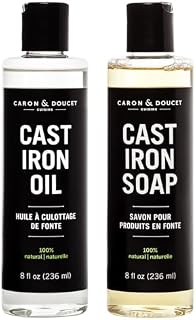 Caron & DoucetCheck price on Amazon
Compared side by side
| Model | Woodlot Score | Type | Size | Smoke point | Certification | Weight |
|---|---|---|---|---|---|---|
| Walrus Cast Iron Oil | 9.6/10 | Safflower oil | 8oz | 450-500F | NSF Certified | 0.5 lb |
| Caron & Doucet Oil | 9.3/10 | Coconut oil blend | 8oz | Not stated | Not stated | 0.45 lb |
| Field Seasoning Oil | 9.2/10 | Grapeseed, sunflower, beeswax | 2oz tin | Not stated | Not stated | Not stated |
| La Tourangelle Oil | 9.1/10 | Grapeseed oil | 16.9 fl oz | Not stated | Not stated | 1.1 lb |
Those numbers are what each brand claims on its listing, not shop measurements. None of the listings states a warranty term with a length, so every pick scores zero for warranty. Only the Walrus Oil listing names a food-contact certification, so it is the one pick with a safety score above zero.
Scoring the woodpile
Each oil is scored on performance, build, value, safety and warranty, using only what the listing publishes. The weights are on our How We Pick page.
| Product | Woodlot Score | Perf. /35 | Build /25 | Value /25 | Safety /10 | Warranty /5 |
|---|---|---|---|---|---|---|
| Walrus Cast Iron Oil | 9.6 | 32 | 22 | 21 | 7 | 0 |
| Caron & Doucet Oil | 9.3 | 30 | 21 | 21 | 0 | 0 |
| Field Seasoning Oil | 9.2 | 32 | 22 | 18 | 0 | 0 |
| La Tourangelle Oil | 9.1 | 28 | 21 | 21 | 0 | 0 |
A tool’s weighted point total is placed between the 8.8 bottom and the 9.8 top of our scale; within a guide each rank shows at least 0.1 less than the one above it.
Buying guide: choosing the best cast iron seasoning oil
Base oil and blend
The 4 oils start from different bases. Walrus Oil uses safflower oil with plant-derived Vitamin E, La Tourangelle uses expeller-pressed grapeseed oil, and Caron & Doucet builds on solvent-less refined coconut oil. Field Company blends organic grapeseed oil, organic sunflower oil and beeswax. A purpose-built blend, like the Field Company tin, is made only for seasoning, while a general cooking oil, like the La Tourangelle bottle, also serves the pantry. Pick the base that matches how you cook: a blend for seasoning alone, or a single oil that also fries and sautes.
Smoke point
Only the Walrus Oil listing states a smoke point in figures, at 450-500F, which suits high-temperature seasoning. La Tourangelle calls out a high smoke point without giving a figure, and the Caron & Doucet and Field Company listings state no smoke point at all. If you season at high heat, a stated figure is worth more than a vague claim, because it tells you where the oil starts to smoke. Treat an unstated smoke point as unknown, not as high.
Bottle size
Sizes run from the 2oz Field Company tin to the 8oz Walrus Oil and Caron & Doucet bottles, up to the 16.9 fl oz La Tourangelle bottle. A small tin suits a cook who seasons one skillet now and then, while a larger bottle suits a household that seasons several pieces of cookware. The Field Company listing says to use its blend within one year or refrigerate it, so a small tin also means less oil sitting on the shelf.
Food-contact certification
Only the Walrus Oil listing names a food-contact certification: NSF Certified, which the listing says ensures food-contact safety on cooking surfaces. Caron & Doucet calls its oil food grade and safe for food contact, without naming a certifying body. The other listings make no food-contact claim of that kind. For an oil that coats a cooking surface, a named certification is the strongest statement a listing can make.
Seasoning how-to
Field Company gives the clearest guidance: clean the iron with soap and a brush, smooth the seasoning with a chain mail scrubber, apply a dab of oil thinly with a paper towel or clean rag, then wipe away excess to leave a dry, matte finish. The Walrus Oil listing says its oil penetrates the surface and builds a durable protective layer with continued use. The Caron & Doucet and La Tourangelle listings give no application steps, so new owners should follow the Field Company method with whichever oil they buy.
Cook outdoors only, on a level surface well clear of siding, deck railings and overhanging branches, and never run a grill, smoker or outdoor oven in a garage, tent or enclosed porch, where carbon monoxide builds up. Keep children and pets back from the heat, use long-handled tools and heat-rated gloves, and check doneness with a food thermometer rather than by color. See NFPA grilling safety. Read our Safety Disclaimer.
Around the Woodpile
- Apply seasoning oil thinly after cleaning and wipe away the excess, as the Field Company listing describes, to leave a dry, matte finish.
- Use the Field Company blend within one year or refrigerate it to extend shelf life.
- The Caron & Doucet listing says its oil protects cookware from moisture that leads to damage and rust, so a thin coat after cleaning does double duty.
- The Walrus Oil listing says its oil builds a durable protective layer with continued use, so keep the coats light and regular.
FAQ: wood, fire and gear
Do I need cast iron for steak?
You do not need cast iron for steak, but a skillet suits the job because it holds heat and sears well over coals or on the stove top. Season it first with a thin coat of one of the oils above, so food releases and the iron stays protected.
Why are cast iron pans good?
They hold heat, move from stove top to campfire, and last for decades when seasoned and kept dry. The Field Company listing says its blend helps cast iron perform beautifully for decades, and that seasoning builds with every use.
Why is cast iron better?
Compared with thin pans, cast iron holds heat steadily, and its seasoning improves with every use, as the Field Company listing describes. A seasoned skillet also resists rust when kept oiled, which is why the Caron & Doucet listing stresses protection from moisture.
How much is cast iron worth?
It depends on the piece, its size and its condition, and on whether it is a plain skillet or a collectible brand. A well-seasoned skillet that cooks well is worth keeping in regular use, whatever its age.
How do I use a cast iron skillet for the first time?
Wash it with soap and a brush, dry it, then apply a thin coat of seasoning oil with a paper towel or clean rag and wipe away the excess, as the Field Company listing describes. Heat the skillet so the oil bonds to the surface, and cook with it often: the seasoning improves with every use.
More firewood guides
See our best for seasoning cast iron hub, the best cast iron skillet for campfire cooking, the best camp griddle cast iron, the best cast iron pie iron, the best dutch oven for campfire cooking and the best campfire cooking grate for camping. Also see our dutch oven cast iron. Also see our best outdoor string lights.