Chainsaw Earmuffs vs Earplugs: Which One Should You Buy?
Chainsaw earmuffs vs earplugs answered: why earmuffs suit saw work, four earmuff listings by stated NRR, and where earplugs still make sense.

On this page
Top picks at a glance
As an Amazon Associate we earn from qualifying purchases.
- 1
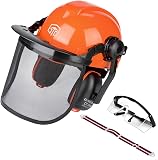 Forestry Safety Helmet System with Mesh Visor9.5/10View on Amazon
- 2
 Walker’s XCEL Digital Electronic Hearing Protection Earmuffs9.6/10View on Amazon
- 3
 LYSIAN 31dB Hearing Protection Earmuffs9.5/10View on Amazon
Chainsaw earmuffs vs earplugs is a short debate: earmuffs are the hearing protection chainsaw users reach for most. They seal around the whole ear, they come off and go on in a second, and they work with a helmet and glasses. Earplugs suit quick, light jobs, but all four of these listings are earmuffs, so the earmuff side below is described from the listings and the earplug side as a use case.
FirewoodGearHQ may earn a small commission if you buy through links on this page. The price you pay stays the same. Read our affiliate disclosure.
The short answer: chainsaw earmuffs vs earplugs
Pick earmuffs for chainsaw work. The four listings state NRR figures from 21 to 37 dB, they cover the whole ear for a consistent seal, and the electronic model lets you hear conversation while blocking the saw. Pick earplugs for quick jobs where you want something pocket sized, or as a second layer under earmuffs. No earplug listing was among these four, so the earplug side below is described as a use case, not a product.
The gear: four earmuff listings
1. DECIBEL DEFENSE 37 dB earmuffs
The quietest on paper: 37 dB NRR, passive with no batteries, ANSI S3.19 and CE EN 352-1 stated, 12.8 ounces, foldable, in regular and XL sizes. The listing describes a padded headband and soft foam for long wear. It is the pick for the highest stated rating here.
2. Walker’s Razor Slim Electronic Muff
The smart pick: 23 dB NRR with sound-activated compression, two AAA batteries included, two hi-gain omnidirectional microphones and a 3.5mm audio input jack. It lets speech through and clamps down on the saw. The listing states a 1 year limited warranty, the only stated term here.
3. 3M PELTOR X5A earmuffs
The simple pick: 21 dB NRR, 250 grams, one size fits most, over-the-head style. The listing is thin, with no bullets, so every fact comes from the spec table. It is the lightest stated weight here at 250 grams.
4. Walker’s Razor Slim Passive Earmuff
The spare pick: a passive slim earmuff with a folding design, PVC earpads and a comfort headband. The listing states almost nothing else, so it reads as a basic spare for the truck or the second saw.
NRR: what the listings state
The listings state 37, 23 and 21 dB NRR for the DECIBEL DEFENSE, the Walker’s electronic and the 3M PELTOR. The Walker’s passive listing states no NRR figure. A higher stated NRR means more stated reduction, but NRR is measured in a lab, so treat it as a way to rank listings, not a promise of what your ears get at the woodpile. Check your saw’s manual for its noise output and pick protection to match.
Electronic vs passive
The Walker’s electronic model uses sound-activated compression: microphones let low sounds through and block loud ones, powered by two included AAA batteries. The other three are passive, with no batteries to die. Electronic suits a workday where you talk between cuts; passive suits a spare that always works.
Fit, weight and comfort
Stated weights run 12.48 ounces on the Walker’s electronic, 12.8 ounces on the DECIBEL DEFENSE and 250 grams on the 3M PELTOR, with the passive Walker’s stating nothing. The DECIBEL DEFENSE comes in regular and XL and folds for storage; the Walker’s electronic is one size in a slim profile; the 3M is one size fits most. The DECIBEL DEFENSE listing says a snug fit is intentional for the seal, and suggests stretching the band over the box overnight if it feels tight.
Where earplugs still make sense
Earplugs win on pocketability: a pair lives in a jacket pocket for a quick trim, and some cutters wear them under earmuffs for a second layer. None of these four listings is an earplug, so buy earplugs by their own stated NRR and fit, not by this guide. For a full day of bucking, the earmuff listings here are the stronger answer.
Wearing protection with a helmet
Three of the four listings state an over-the-head style, while the electronic listing states an on-ear fit. The over-the-head style rides under or over a hard hat depending on the mount. The Walker’s electronic is slim, which helps under a helmet brim. None of the listings states a helmet-mount version, so check the fit with your own helmet before a long cutting day.
Wear eye protection and gloves for cutting, splitting and handling, follow every tool's manual, install stoves to code, and have the chimney inspected and cleaned every year. See EPA Burn Wise and NFPA heating safety. Read our Safety Disclaimer.
Certifications and warranties in writing
Only one listing names a certification. The DECIBEL DEFENSE states ANSI S3.19 and CE EN 352-1, and no other listing here names any standard. Only one listing states a warranty term: the Walker’s electronic at 1 year limited. The 3M listing says “As Labeled,” which is not a concrete term, and the others state nothing. When two listings look equal on NRR, the one with a standard and a term in writing is the one you can hold to.
Thin listings: what to do when the listing says little
The 3M listing has no bullets at all, so its NRR, weight and materials come only from the spec table. The passive Walker’s listing states almost nothing beyond a folding design, PVC earpads and a comfort headband, not even an NRR. Rank thin listings only on what they state, and read the gaps as gaps: no stated NRR means you cannot compare protection, and no stated weight means you cannot compare comfort.
Frequently Asked Questions
What NRR do I need for a chainsaw?
The listings here state 21 to 37 dB NRR. Check your saw’s manual for its stated noise output, then pick protection with a stated rating that matches. Higher stated NRR ranks higher for reduction, but it is a lab figure, not a field promise.
Are electronic earmuffs worth it?
The Walker’s electronic listing states sound-activated compression with two microphones, so you hear conversation between cuts while the saw gets blocked. It needs two AAA batteries, included. For a workday of stop-and-start cutting, that is the use case the listing describes.
Do any of these state a warranty?
Only the Walker’s electronic listing states a term: 1 year limited. The other three listings state no warranty term.
Can I wear earplugs under earmuffs?
Some cutters do, for a second layer. None of these four listings addresses it, since all four are earmuffs. If you try it, make sure both still seal, because a broken seal is what lets noise in.
How do I keep earmuffs working?
The DECIBEL DEFENSE listing describes a foldable design for storage in a bag, which keeps the seals clean. Replace cracked earpads and flatten cushions before they go, since the seal does the work.
Related guides
See the best chainsaw hearing protection and the best hearing protection for splitting wood, the best safety glasses for yard work and safety glasses vs face shield for chainsaws, plus the chainsaw gear hub.