Splitting Wedge vs Diamond Wedge: Which Splits Better
Splitting wedge vs diamond wedge: how each wedge splits wood, with three diamond wedges featured.

On this page
Top picks at a glance
As an Amazon Associate we earn from qualifying purchases.
- 1
 PROYAMA 7T Electric Log Splitter9.6/10View on Amazon
- 2
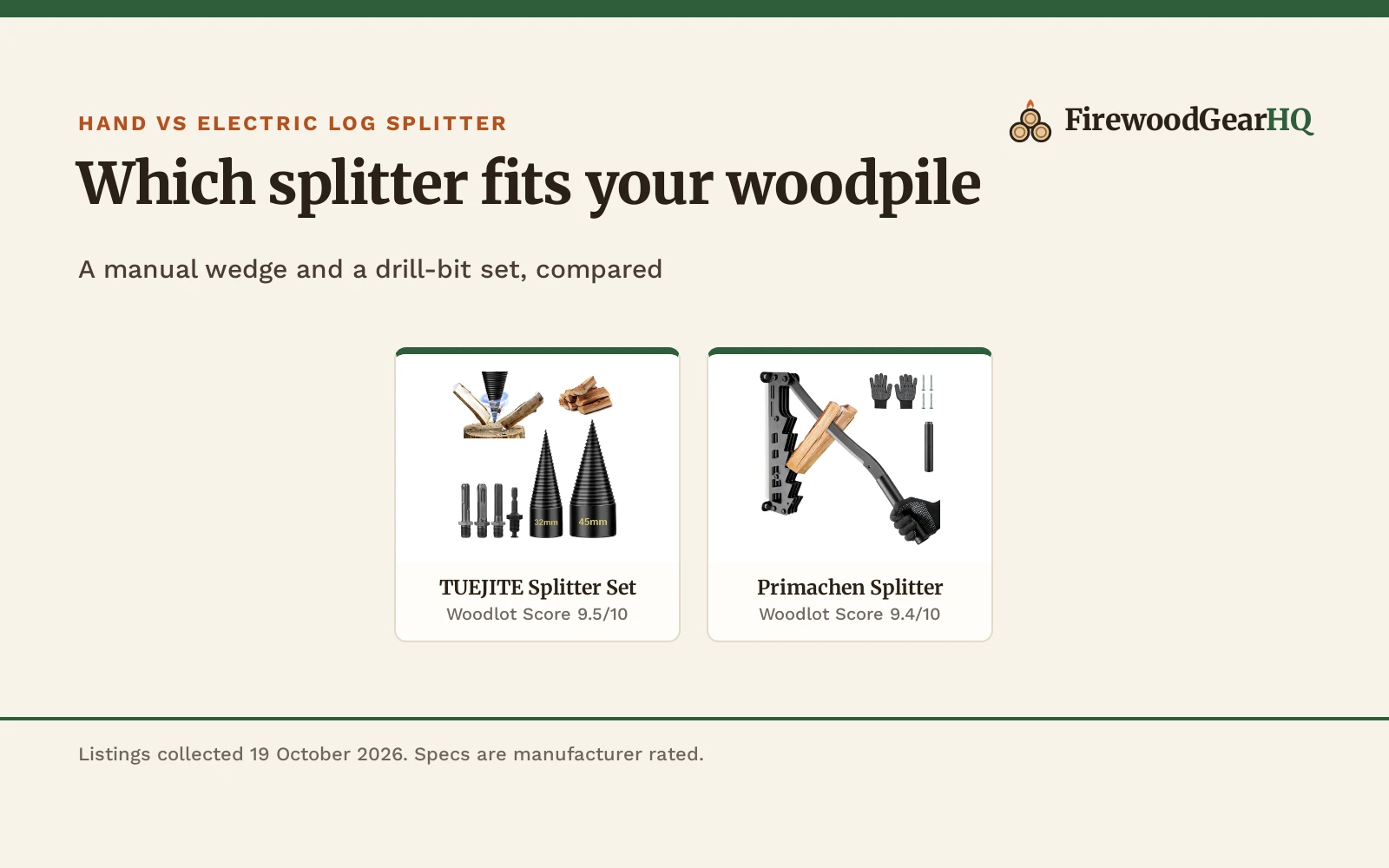
 45+32mm Firewood Log Splitter9.5/10View on Amazon
- 3
 VEVOR Electric Log Splitter9.5/10View on Amazon
- 4
 Collins 4 lb. Forged Steel Diamond Splitting Wedge 7-inView on Amazon
- 5
 Fiskars 9.5" HelixPlus Splitting Wedge for Large LogsView on Amazon
- 6
 2 PCS 2 Sizes Diamond Wood Splitting WedgeView on Amazon
- 7
 Diamond Wood Splitting Wedge Wood Grenade Splitting WedgeView on Amazon
- 8
 ESTWING Sure Split WedgeView on Amazon
- 9
 Truper 33040 Super Splitter Wood Splitting WedgeView on Amazon
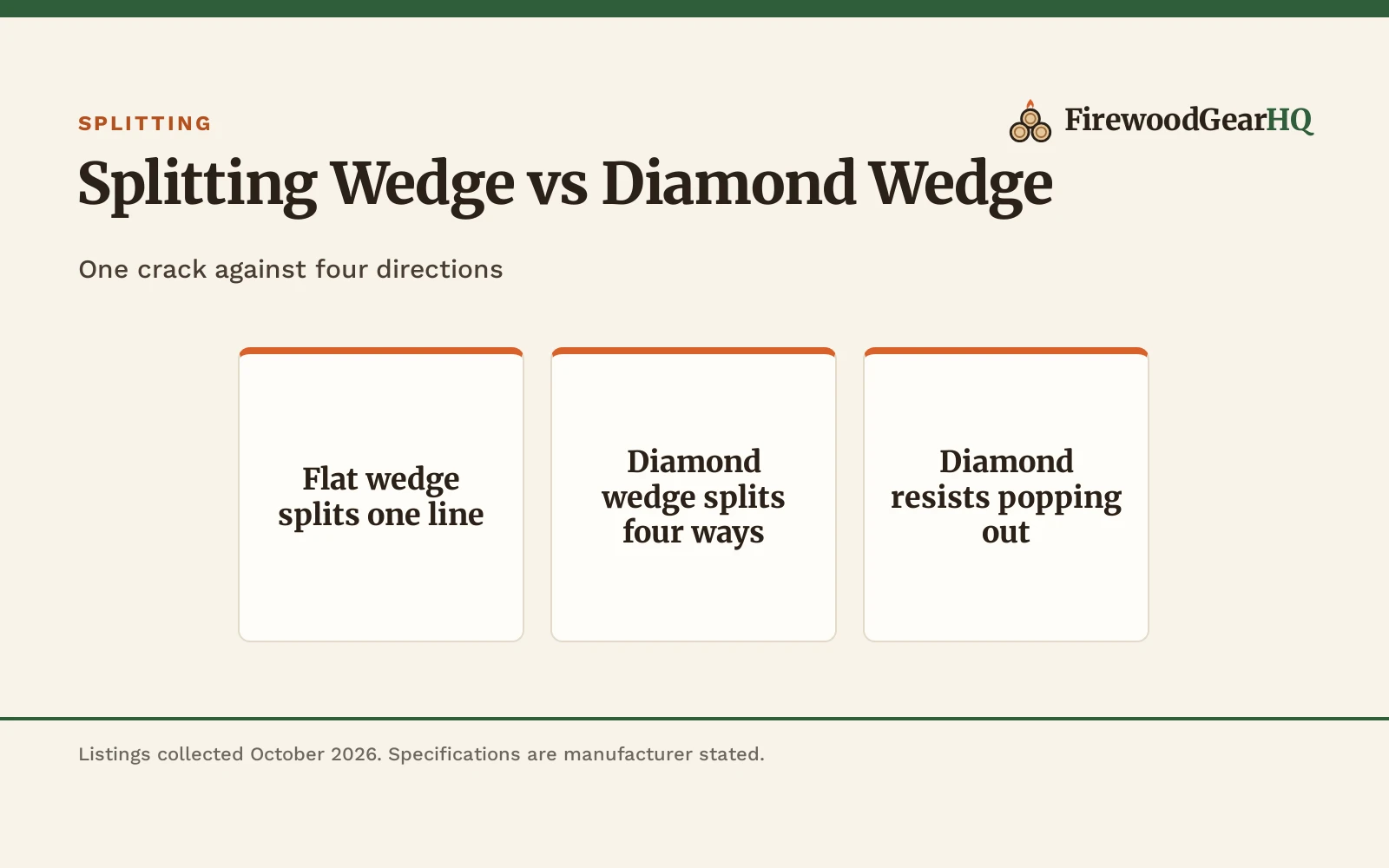
Splitting wedge vs diamond wedge is a choice between the classic flat wedge and the cross-shaped wedge that splits in four directions. A traditional splitting wedge drives a single crack down the log; a diamond wedge pushes the wood apart at four angles at once, which splits stubborn rounds faster. For tough oak and hickory, the diamond wedge is the upgrade; for straight-grained softwood, the traditional wedge does fine.
More options to compare
 Collins 4 lb. Forged Steel Diamond Splitting Wedge 7-inCheck price on Amazon
 Fiskars 9.5" HelixPlus Splitting Wedge for Large LogsCheck price on Amazon
 2 PCS 2 Sizes Diamond Wood Splitting WedgeCheck price on Amazon
 Diamond Wood Splitting Wedge Wood Grenade Splitting WedgeCheck price on Amazon
 ESTWING Sure Split WedgeCheck price on Amazon
 Truper 33040 Super Splitter Wood Splitting WedgeCheck price on Amazon
FirewoodGearHQ may earn a small commission if you buy through links on this page. The price you pay stays the same. Read our affiliate disclosure.
Splitting wedge vs diamond wedge: the short answer
A traditional splitting wedge is a flat steel chisel: drive it in and the log splits along one line. A diamond wedge has a cross-shaped cross section: it weakens the log at multiple angles and splits it in up to four directions, per the Felled listing. The diamond shape also resists twisting out of the cut, which is the classic frustration with flat wedges. If you split knotty hardwood by hand, the diamond wedge earns its place; if you split straight pine, a flat wedge is enough.
How a traditional splitting wedge works
The traditional wedge is the older tool: a flat, tapered piece of steel driven with a sledge or splitting maul. It opens one crack and follows it down. It is simple, cheap and effective on straight-grained wood. Its weakness is sideways escape: on twisted grain, a flat wedge can twist or pop out of the cut, which costs time and patience. It also splits one piece at a time: each log needs the wedge driven, pulled and driven again for each split.
How a diamond wedge works
A diamond wedge, also called a torpedo or grenade wedge, has four angled faces instead of two. The Felled listing states its diamond-shaped cross section splits the log in up to four directions, and the Edward Tools listing states its torpedo design splits logs into four pieces. The four faces push outward at angles, which weakens the wood in several directions at once. Side grooves, stated on the Edward Tools listing, keep the wedge seated until the split finishes. The result is fewer stuck wedges and fewer swings per log.
Three diamond wedges to try
The Felled diamond wedge is the detailed pick: 7 inches long, 3 inches wide and 4.1 lb, with a sharp pointed tip, a spherical striking face and notches that keep the log from popping out. The listing states heat-treated railway steel with an orange painted finish, and recommends an 8-pound hammer for tough oak, hickory, walnut and sycamore. It also states the wedge is not recommended for knotty woods or large diameter hardwoods: an honest limit.
The Edward Tools diamond wedge is the warranty pick: 4 lb, 7 by 3 in, drop-forged steel with side grooves, and a stated lifetime warranty. The listing states it splits logs into four pieces for firewood sizes. A lifetime warranty on a striking tool is a strong statement: it says the maker trusts the forging.
The Collins diamond wedge is the plain pick: 4.5 lb, 7 in, drop-forged and heat-treated high carbon steel in the classic wood grenade shape. The listing states it splits wood in multiple directions. It is the simplest of the three: no grooves stated, no warranty stated, just the wedge shape doing the work.
Which wood suits which wedge
Straight-grained softwood like pine and poplar splits easily with either wedge: the traditional wedge is plenty. Oak, hickory, walnut and sycamore are the Felled listing’s stated use case for the diamond wedge: dense hardwoods where a flat wedge stalls. Knotty wood defeats both: the Felled listing states its wedge is not recommended for knotty woods, which is the sign to reach for a hydraulic splitter instead. Match the tool to the woodpile, not the other way round.
Hammer and technique
The Felled listing recommends an 8-pound hammer: a heavy hammer drives the wedge in fewer swings. Strike the spherical striking face squarely; glancing blows mushroom the head and chip the hammer face. The Felled listing states a spherical striking face for centered, efficient blows. Drive the wedge, listen for the crack, and let the wood do the work: a wedge splits by pressure, not by speed. Never strike a wedge with the poll of an axe: use a sledge or a splitting maul.
Safety around wedges
Wedges are struck steel: wear eye protection, because chips fly. The Felled listing states heat-treated steel, which resists mushrooming, but inspect the striking face before each session and file down any mushrooming. Keep hands clear of the log: a missed swing lands where the hand was. Split on a chopping block at a comfortable height, not on the ground, and keep bystanders back.
Wear eye protection and gloves for cutting, splitting and handling, follow every tool's manual, install stoves to code, and have the chimney inspected and cleaned every year. See EPA Burn Wise and NFPA heating safety. Read our Safety Disclaimer.
Around the Woodpile
A wedge is the hand tool between the maul and the hydraulic splitter: it finishes the rounds the maul bounces off. Keep the wedge oiled and dry between sessions: even painted steel rusts at the striking face. Store it head-down in a bucket of sand or on a shelf, not loose in the truck bed. And sharpen the point lightly when it rounds: a sharp wedge starts easier and splits cleaner.
Splitting technique: step by step
Set the round on a chopping block so the top is near waist height: swinging down at the wood is safer and stronger than swinging across. Place the wedge on the end grain near the edge, not dead center: the crack starts at the rim and runs inward. The Felled listing states a sharp pointed tip for easier starting, which is what bites into the end grain on the first swing. Strike firmly and squarely; the wedge should stand on its own after two or three blows.
Once the wedge is seated, swing with full commitment. Half swings bounce; full swings split. Listen: the crack announces itself before the wood opens. When the crack runs, drive a second wedge into the far end of the crack if the first stalls. Two wedges working opposite ends of a crack will finish rounds that one wedge cannot. The notches stated on the Felled wedge keep the log from popping out during this dance.
Maintaining a wedge
A wedge’s worst enemy is its own striking face. Repeated blows mushroom the head, and a mushroomed head chips: chips fly, and flying steel is the reason for eye protection. The Felled listing states heat-treated steel, which resists mushrooming longer, but inspect the face before each session. File mushrooming flat with a mill file; it takes minutes and adds years.
The point dulls with use: touch it up with a file so it starts easily on end grain. Oil the wedge after use, especially the unpainted striking face: the Felled listing states an orange painted finish that resists rust, but paint wears where the hammer lands. A wipedown with an oily rag is the whole maintenance routine.
When to stop using a wedge
A wedge has limits, and the Felled listing states one plainly: not recommended for knotty woods or large diameter hardwoods. A knotty round will swallow wedges all afternoon and split nothing. Large rounds beyond arm’s reach defeat the swing. When the woodpile is mostly knots and crotches, a hydraulic splitter is the tool: the wedge stays for the straight rounds it splits well. Forcing a wedge into wood it cannot split is how handles break and backs give out.
Work in sessions, not marathons. Splitting is heavy labor: take breaks, drink water and stop when the swings get sloppy. A tired splitter misses, and a missed swing with an 8-pound hammer is the accident the safety section exists to prevent.
Traditional wedge: what to look for
None of the three listings here is a traditional flat wedge, but the comparison needs one. A good traditional wedge is drop-forged steel with a flat taper and a clean striking face, at roughly the weight of the diamond wedges here. It splits straight-grained wood just as well. Buy one for the easy wood and keep the diamond wedge for the stubborn rounds: the two tools complement each other instead of competing.
Storing wedges for winter
Wedges work hardest in autumn, when the woodpile gets serious. Before the season, inspect all three: file the faces, oil the steel and check the paint. During the season, keep the wedge in a bucket by the chopping block so it is always to hand. After the season, oil and store indoors: a wedge left in the weather rusts at the striking face first, which is exactly where rust causes chips. The Edward Tools listing states a lifetime warranty, but no warranty covers neglect: maintenance is still the owner’s job.
Frequently Asked Questions
Which splits faster, a splitting wedge or a diamond wedge?
The diamond wedge: the Felled and Edward Tools listings both state it splits in up to four directions, which means fewer swings per log on stubborn wood.
Can a diamond wedge handle knotty wood?
The Felled listing states its wedge is not recommended for knotty woods: use a hydraulic splitter for those rounds.
What hammer should I use?
The Felled listing recommends an 8-pound hammer. Use a sledge or splitting maul, never an axe poll.
Which of these has a warranty?
The Edward Tools wedge states a lifetime warranty. The Felled and Collins state none.