Splitting Axe vs Felling Axe: Which One Should You Buy?
Splitting axe vs felling axe compared on head design, weight and handle: wedge heads for splitting rounds, slim felling bits for cutting trees, with three examples.

On this page
Top picks at a glance
As an Amazon Associate we earn from qualifying purchases.
- 1
 Fiskars X27 Super Splitting Axe 36"9.8/10View on Amazon
- 2
 Fiskars 28" Chopping Axe9.7/10View on Amazon
- 3
 COUNCIL TOOL 5 lb Single Bit Faller's Axe9.7/10View on Amazon
- 4
 Chopping Axe: 33.5” Hatchet Axe with Shock AbsorbingView on Amazon
- 5
 Crescent 6 lb. HEADLOCK™ Fiberglass Splitting AxeView on Amazon
- 6
 32.6 Inch Professional Wood Splitting AxeView on Amazon
- 7
 27.8 Inch Professional Wood Splitting AxeView on Amazon
- 8
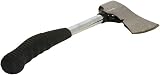 Coleman Axe with Durable Steel Head & Non-Slip Grip HandleView on Amazon
- 9
 ESTWING Fireside Friend Splitting MaulView on Amazon
Verdict: Splitting axe vs felling axe comes down to the job. Choose a splitting axe if your job is turning rounds into firewood: the wedge-shaped head drives in and pops wood apart along the grain. Choose a felling axe if you cut standing trees or do cutting work across the grain: the slim, wide bit is made for severing fibers, not splitting them.
Both are axes, but they are different tools for different jobs. A splitting axe is a wedge on a handle; a felling axe is a cutting edge on a handle. This comparison covers the head design, weight, handle and use of each side, with three listing examples: two splitting axes and one felling axe.
FirewoodGearHQ may earn a small commission if you buy through links on this page. The price you pay stays the same. Affiliate disclosure.
| # | Product | Woodlot Score | Buy |
|---|---|---|---|
| 1 |  1844 Helko Werk Germany Traditional Hessen | 9.6/10 | Buy on Amazon |
| 2 |  KSEIBI 274178 Splitting Axe 36-Inch Wood Splitter | 9.6/10 | Buy on Amazon |
| 3 |  Splitting Axe, 2kg Wedge Head, 6.8lb | 9.6/10 | Buy on Amazon |

1844 Helko Werk Germany Traditional Hessen
A hand-forged German felling axe with a 2-3/4 lb Rheinland pattern head, 28-inch hickory handle, leather sheath and protective oil.
Pros
- Hand-forged C50 steel at 53-56 HRC per the listing
- Slim, wide-bit Rheinland pattern made for cutting work
- Grade A American hickory handle with linseed oil finish
- Leather sheath and 1 oz Axe Guard oil included
Cons
- Spec table contradicts the bullets on head and total weight
- Premium build means less value per dollar than the splitting axes
- 28 in handle gives less leverage for splitting
- Convex edge needs more skill to sharpen than a flat splitting edge

KSEIBI 274178 Splitting Axe 36-Inch Wood Splitter
A 36-inch splitting axe with a forged carbon steel head, 4.5 lb head weight, fiberglass handle and a protective blade cover.
Pros
- Forged carbon steel blade for strength
- 36-inch handle gives good splitting leverage
- 4.5 lb head, 5 lb total, a handy splitting weight
- Protective blade cover included
Cons
- No warranty term stated
- 5 lb total is the lighter of the two splitting axes
- No weight given for the blade cover
- Orange color is the only option

Splitting Axe, 2kg Wedge Head, 6.8lb
A 36-inch splitting axe with a wedge head, high-manganese steel blade, shock-absorbing fiberglass handle and a 6.8 lb total weight.
Pros
- Wedge-shaped head designed to separate logs
- High-manganese steel blade with heat treatment
- 36-inch shock-absorbing fiberglass handle
- Arrives sharpened and ready to use
Cons
- Listing mixes up head and total weight figures
- No warranty term stated
- Rust-resistant coating still needs dry storage
- Bright handle color is a matter of taste
More options to compare
 Chopping Axe: 33.5” Hatchet Axe with Shock AbsorbingCheck price on Amazon
 Crescent 6 lb. HEADLOCK™ Fiberglass Splitting AxeCheck price on Amazon
 32.6 Inch Professional Wood Splitting AxeCheck price on Amazon
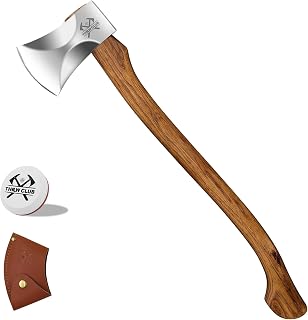 27.8 Inch Professional Wood Splitting AxeCheck price on Amazon
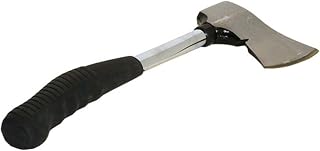 Coleman Axe with Durable Steel Head & Non-Slip Grip HandleCheck price on Amazon
 ESTWING Fireside Friend Splitting MaulCheck price on Amazon
Splitting axe vs felling axe head to head
Side by side
| Factor | Splitting axe | Felling axe |
|---|---|---|
| Head design | Wedge head, splitting maul type | Slim, wide-bit felling blade, convex edge |
| Head weight | 4.5 lb (both listings) | 2-3/4 lb (bullets) |
| Handle | 36 in fiberglass | 28 in hickory |
| Total weight | 5 to 6.8 lb | 4 lb |
| Steel | High-manganese / forged carbon steel | C50 carbon steel, 53-56 HRC |
| Extras | Blade cover (KSEIBI) | Leather sheath, 1 oz protective oil (Helko) |
| Best for | Splitting rounds and kindling | Felling, limbing, cutting across grain |
| Example: KSEIBI 36-Inch (splitting) | 4.5 lb head, 36 in handle, 5 lb total | Not applicable |
| Example: Helko Werk Hessen (felling) | Not applicable | 2-3/4 lb head, 28 in handle, 4 lb total |
Ranges are typical of the listings we reviewed; example figures are manufacturer rated, collected 19 October 2026.
Head design: wedge vs slim bit
The splitting axe head is a wedge. The glorousamc listing calls it a wedge-shaped head that penetrates and separates logs, and both splitting listings name the head type as a splitting maul. The wedge does the work after the edge bites: it forces the wood apart along the grain. The felling axe head is the opposite: the Helko Werk Hessen has a sharp, slim, wide-bit blade in a Rheinland pattern, made to cut across fibers. Its edge is convex, and the listing rates the C50 steel at 53 to 56 HRC.
Weight and handle length
The splitting examples run heavy with long handles for leverage. The KSEIBI has a 4.5 lb head on a 36-inch fiberglass handle for a 5 lb total, and the glorousamc lists a 6.8 lb total on a 36-inch handle. The felling example is lighter and shorter: the Helko Werk bullets list a 2-3/4 lb head, a 28-inch hickory handle and a 4 lb total, built for controlled cutting strokes rather than maximum splitting force. See our maul and axe head types guide for how head shapes and weights map to uses.
What each axe is for
Reach for the splitting axe at the woodpile: rounds, kindling, branches and anything you want in smaller pieces. Reach for the felling axe at the tree: felling, limbing and bucking, where the slim bit severs fibers cleanly. Using a felling axe to split is slow and hard on the edge; using a splitting axe to fell is the wrong geometry for the job. If your wood comes pre-cut and you only split, the felling axe adds nothing. If you harvest your own trees, you likely want both, which is why our axe vs wood splitter comparison starts with what the wood looks like when it arrives.
Buying advice: match the axe to the wood
Start with the wood you actually handle. If your fuel arrives as rounds from a supplier, a splitting axe is the whole kit: the KSEIBI lists a 4.5 lb maul-type head on a 36 in fiberglass handle at 5 lb total, and the glorousamc lists a 4.5 lb wedge head on a 36 in fiberglass handle at 6.8 lb total. The glorousamc lists 6.8 lb total against the KSEIBI’s 5 lb, so its wedge drives harder into tough rounds but tires you faster over a big pile, and bigger is not automatically better.
Handle length is leverage. Both splitting listings run 36-inch handles, which give full two-hand swing power for rounds. The Helko lists a 28 in grade A American hickory handle, shorter and lighter at 4 lb total, which suits kindling and smaller splits where control beats power. Fiberglass handles with anti-slip or rubber grips, as on the KSEIBI and glorousamc, shrug off overstrikes; hickory, as on the Helko, absorbs shock but needs the included protective oil to stay sound.
Look at the edge and the steel. The Helko lists C50 carbon steel at 53-56 HRC with a convex Rheinland edge, a harder, keener bit for cutting work. The KSEIBI lists an 8 in forged carbon steel blade with a straight edge, and the glorousamc a 3.5 in high-manganese steel blade. Slim, hard bits suit felling and limbing; wedge heads suit splitting. Whatever you buy, confirm what comes in the box: the Helko includes a leather sheath and 1 oz of protective oil, the KSEIBI a blade cover, and the glorousamc no cover at all, per the listings.
Three examples
How we scored them
Each example is scored on performance, build, value, safety and warranty, using only what the listing publishes.
| Product | Woodlot Score | Perf. /35 | Build /25 | Value /25 | Safety /10 | Warranty /5 |
|---|---|---|---|---|---|---|
| Helko Werk Hessen | 9.6 | 30 | 22 | 20 | n/a | 0 |
| KSEIBI 36-Inch | 9.6 | 29 | 21 | 21 | n/a | 0 |
| glorousamc Splitting Axe | 9.6 | 28 | 20 | 20 | n/a | 0 |
Scores run from 9.2 to 9.8: each product’s point total is placed on that range, so more points always means a higher score. Safety counts only for powered gear or where the listing states safety features; where it does not apply, the score is taken over the remaining 90 points.
Clear the swing area (overhead too), split on a solid chopping block at a comfortable height, keep your feet apart with the block in front of you, and wear eye protection and sturdy boots. Replace a cracked or loose handle before you swing again. Read our Safety Disclaimer.
Frequently Asked Questions
Can I split wood with a felling axe?
You can split kindling, but the slim felling bit is made to cut across fibers, not to wedge wood apart, so splitting rounds with it is slow and dulls the edge fast. A splitting axe or maul does the job with far less effort.
Can I fell a tree with a splitting axe?
Not well. The wedge head is the wrong geometry for cutting across the grain and will bind in the cut. Felling needs the slim, sharp bit of a felling axe, plus wedges and safe felling practice.
What weight splitting axe should I get?
The two splitting listings here run 5 lb and 6.8 lb total on 36-inch handles, which suits most adults for firewood rounds. Heavier heads split tougher wood but tire you faster; if you mostly split kindling, a lighter maul is easier to swing accurately.
Do I need both a splitting axe and a felling axe?
Only if you do both jobs. If your wood arrives cut to length, the splitting axe is enough. If you fell and limb your own trees, the felling axe earns its place, and the splitting axe still handles the rounds afterward.
How do I keep a splitting axe sharp?
Splitting edges need a working edge, not a razor. Our guide to sharpening a splitting axe covers the file and stone routine; the glorousamc listing itself suggests touching the edge up lightly with a sharpening stone.
Related guides
See the axes and mauls hub, the best splitting maul for large logs picks, the kindling cracker vs splitting axe comparison and the maul axe types guide.