Kevlar vs Nylon Chainsaw Chaps: Which One Should You Buy?
Kevlar vs nylon chainsaw chaps: aramid fiber against nylon and polyester stacks, and why layers and certifications matter more than the fiber name.

On this page
Top picks at a glance
As an Amazon Associate we earn from qualifying purchases.
- 1
 Chainsaw Chaps 8-layer Protective Apron Wrap Adjustable9.7/10View on Amazon
- 2
 Chainsaw Chaps Apron 8-Layer Wrap for Men/Women Loggers9.7/10View on Amazon
- 3
 Chainsaw Chaps Apron 8-Layer Wrap for Men/Women Loggers9.7/10View on Amazon
- 4
 Technical Wrap Chainsaw Chaps by UL CLASS AView on Amazon
- 5
 G & F PRODUCTS 100% Kevlar fiber by DuPont Cut Resistant KnitView on Amazon
Kevlar vs nylon chainsaw chaps comes down to the fiber in the protective layers. Kevlar is an aramid fiber: very strong for its weight, resistant to heat, and widely used in cut-resistant gear. Nylon is a tough, abrasion-resistant synthetic that is lighter and cheaper, and it appears in plenty of certified chaps. But here is the honest twist: most of the chaps listings we reviewed describe a 1000-denier polyester or polyester-polypropylene outer with multiple inner protective layers, and the real protection comes from how many layers there are and which standards they meet, not from the fiber brand name on the label. Shop by layers and certifications first, fiber second.
More options to compare
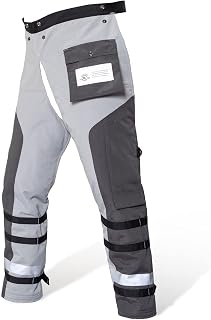 Technical Wrap Chainsaw Chaps by UL CLASS ACheck price on Amazon
 G & F PRODUCTS 100% Kevlar fiber by DuPont Cut Resistant KnitCheck price on Amazon
FirewoodGearHQ may earn a small commission if you buy through links on this page. The price you pay stays the same. Read our affiliate disclosure.
Kevlar vs nylon chainsaw chaps: the short answer
Kevlar chaps lean on aramid fiber for cut resistance with less heat damage. Nylon chaps lean on nylon’s toughness and low cost, with enough layers to meet the same cut standards. Either material can be safe when the chaps carry real certifications; neither is safe when they do not. The listings we reviewed show the modern pattern: an 8-layer or 9-layer stack inside a tough outer shell, with the outer usually listed as polyester rather than either Kevlar or nylon.
What Kevlar chaps are
Kevlar is an aramid fiber, built for strength and heat resistance. In chaps it appears as cut-resistant layers that resist being severed by a chain and do not melt the way some thermoplastics can. The tradeoffs are price and weight: aramid costs more, so Kevlar chaps sit at the premium end. When you see Kevlar marketed in chaps, it is the fiber of the protective inner layers doing the advertised work, with a separate outer shell taking the abrasion from brush and bark.
What nylon chaps are
Nylon is a polyamide fiber that is tough, flexible and abrasion-resistant, and it is one of the most common synthetics in protective clothing. In chaps, nylon-family fibers appear in the outer shell and sometimes in the protective stack. The advantage is cost and weight: nylon chaps are usually cheaper and lighter than aramid ones. The limitation is heat: nylon softens and melts at lower temperatures than aramid, so it relies on layer count and construction to earn the same certifications. Many value chaps skip both names and simply list a polyester outer, as most of the listings here do.
How chaps actually stop a chain
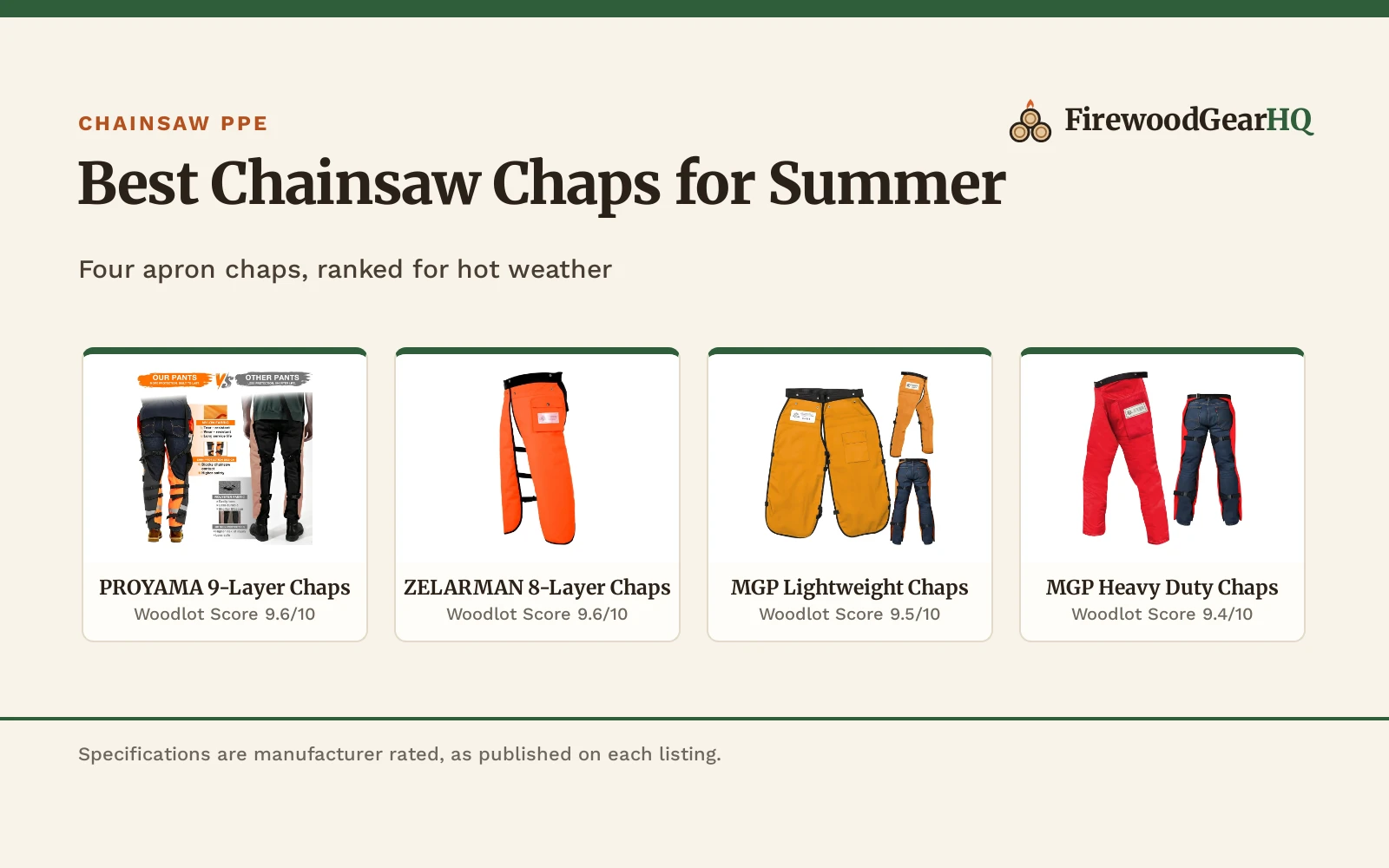
The fiber name is only part of the story. Chainsaw chaps work by feeding loose fibers into the chain’s drive sprocket, clogging it so the chain stops before it reaches the leg. That means the number of layers and how they are arranged matter more than whether the label says Kevlar or nylon. The ZELARMAN listings describe an 8-layer protective stack and say it delivers the cut resistance to slow and stop a running chain; the PROYAMA listing goes further with a 9 layer stack. The outer is the wear layer: Husqvarna lists 1000 Denier Polyester and ZELARMAN lists 1000-denier Oxford polyester, both heavyweight shells built to survive forestry work while the inner layers wait for the one moment they are needed.
What the listings actually show
The ten listings we reviewed are all polyester-family chaps, which says something about the market: 1000-denier polyester outers dominate, and nobody’s headline fiber is Kevlar or nylon anymore. What the listings do state is useful. ZELARMAN’s two listings are UL certified and cite ASTM F3325-20, ASTM F1897-20, OSHA Regulation 1910.266 and ANSI Z133.1, with waists fitting up to 51″ and 46″ and lengths of 42 inches and 35″, and the waistband folds down to shorten the length by 2 inches. CRISERT lists its fabric as polyester-polypropylene, states protection against chain speeds up to 20 m/s, and weighs 2.31 pounds against Husqvarna’s 4 pounds. PROYAMA’s 9-layer chaps in 40-42 inches come with a one year warranty in the bullets, plus felling wedges and a tool bag. Waist ranges run from 25 to 57.5 inches on the MYDAYS listing to 27 to 51 inches on YARDMARIS, so fit is a real shopping variable. For care, Husqvarna and CRISERT call for hand washing while the ZELARMAN and others list machine wash.
Which should you buy: Kevlar or nylon?
Buy Kevlar if you want the premium aramid fiber with the best heat and cut resistance per layer, and you accept the higher price. Buy nylon or polyester-stack chaps if you want certified protection at a lower price and lighter weight. Either way, check for the standards: the ZELARMAN listings’ UL certification with ASTM F3325-20 and F1897-20 is the kind of third-party backing that matters more than the fiber name. Then check fit: a 42-inch length on a short operator drags and snags, which is why the ZELARMAN line offers a 35-inch option and a 2-inch fold-down adjustment. And remember that chaps are the front line, not the whole defense: they protect the legs from contact, and safe cutting technique protects everything else.
Frequently Asked Questions
Are Kevlar chainsaw chaps safer than nylon ones?
Not automatically. Kevlar’s aramid fiber has excellent cut and heat resistance, but a certified 8-layer or 9 layer nylon or polyester chaps can meet the same standards. Safety comes from layers plus certification, not the fiber name alone.
What do ASTM F1897 and F3325 mean?
They are US standards for chainsaw protective leg wear that the ZELARMAN listings cite alongside UL certification, OSHA 1910.266 and ANSI Z133.1. A chaps listing that names these standards is making a testable claim.
How many protective layers do chaps need?
The listings here show 8 layers as the common spec, with PROYAMA offering 9 layers. More layers add bulk and weight, so the right count is the one that carries certification and still lets you move.
How should chainsaw chaps fit?
Snug at the waist with the hem near the boot top. Listed waists run from 25 to 57.5 inches and lengths come in 35 and 42 inches, with some designs folding down 2 inches for adjustment. Chaps that drag are a snag hazard.
Can I machine wash chainsaw chaps?
It depends on the listing. Husqvarna and CRISERT call for hand washing, while several ZELARMAN listings state machine wash. Follow the listing’s care line: harsh washing can degrade the protective fibers.
Related guides
Related: our best chainsaw chaps and chainsaw chaps class A vs class B guides.