20 Inch Chainsaw Chain Stihl: Which Chains Fit
Which 20 inch chainsaw chain fits a Stihl saw, how to read the bar for pitch, gauge and drive links, and how to fit the chain.

On this page
Top picks at a glance
As an Amazon Associate I earn from qualifying purchases.
- 1
 KAKEI Chainsaw Chain 18 Inch .325" Pitch .063" Gauge 74 Drive9.6/10View on Amazon
- 2
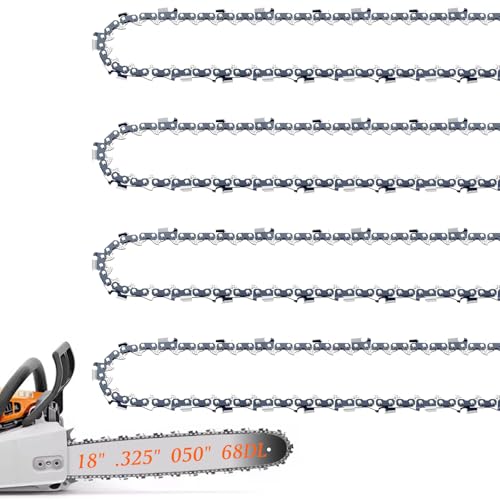 4 Pack 18 Inch Chainsaw Chain for Stihl .325" Pitch .050"9.5/10View on Amazon
- 3
 NEO-TEC Fits Stihl MS1709.6/10View on Amazon
A chain that does not fit is a saw that does not cut. The bar looks right, the saw is a Stihl, and the chain on the shelf looks right, yet the loop will not sit in the groove or the drive links will not mesh with the sprocket. The question behind every chain purchase is the same: 20 inch chainsaw chain stihl, which chain fits? The short answer is that the length is only the start: the chain must match the bar in pitch, gauge and drive links, and the bar and the manual state what it takes.
FirewoodGearHQ earns a small commission if you buy through links on this page. The price you pay stays the same. Read our affiliate disclosure.
20 inch chainsaw chain stihl: which chains fit
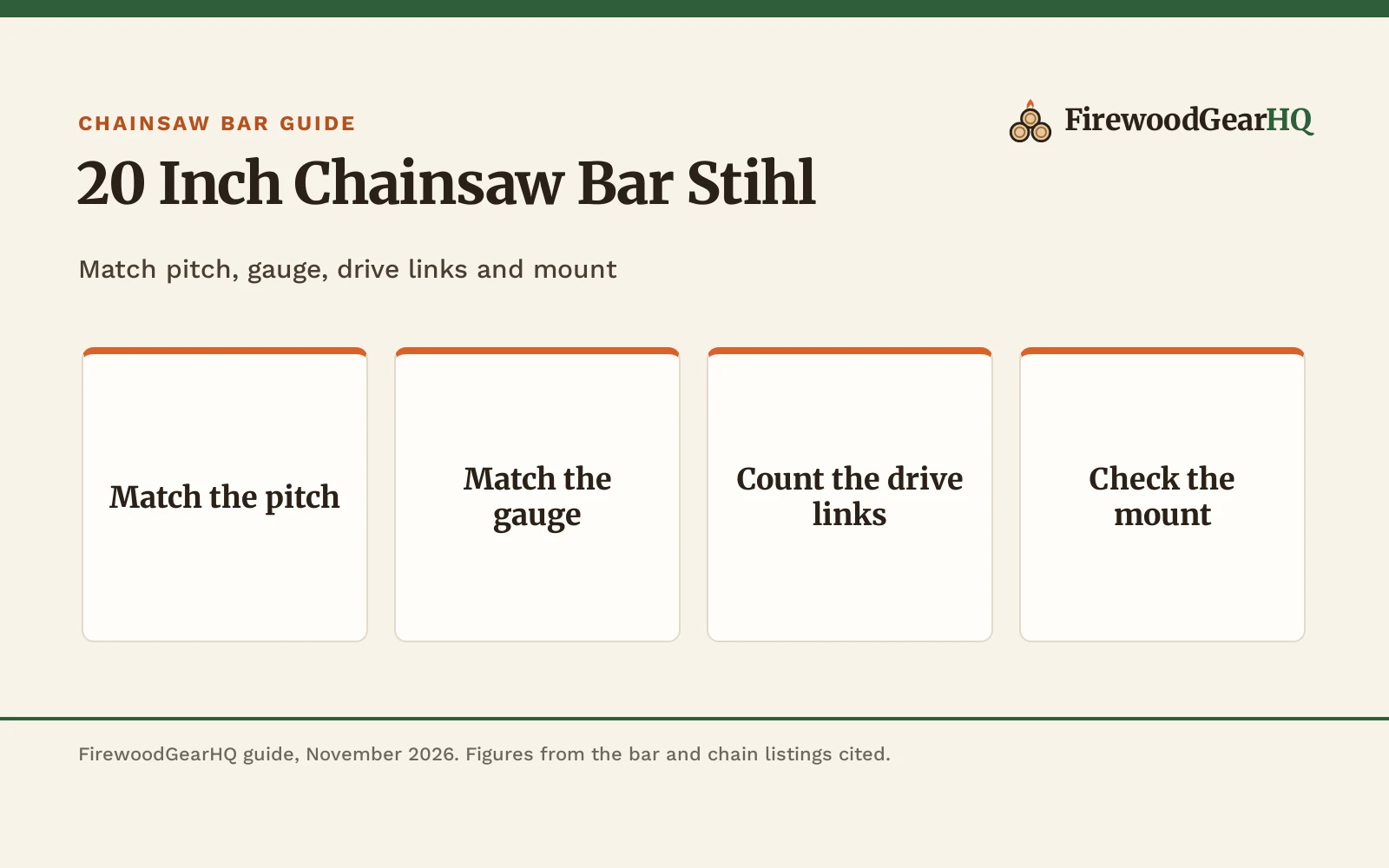
A chain that fits a Stihl saw with a 20 inch bar is a chain that matches the bar on every measurement that matters: the length, the pitch, the gauge and the drive link count. The length alone does not settle it. Chains can share the same length and still differ in pitch or gauge, and a chain that differs on any of those measurements will not run right on the bar. The bar carries the answer: its markings state the chain it takes, and the saw manual states the same figures. Read the bar, then match the chain to what the bar states.
How to read the bar
The bar is the source of truth for the chain it takes. Its markings sit near the mount end of the bar, stamped into the steel where the bar meets the saw, and they state the length, the pitch, the gauge and, on many bars, the drive link count. The saw manual states the same figures, and the chain packaging states the fit for the saw model it suits.
When the bar markings are worn past reading, the manual is the backup: it lists the chain the saw shipped with, and a chain that matches those figures fits that bar. When the manual is gone too, the old chain is the pattern, if it ran right on the bar: take it along and match the new chain to it link for link. Never guess from the shelf: a chain that looks right can still differ on pitch or gauge.
Pitch, gauge and drive links, in plain words
Pitch is the spacing between the drive links, and it must match the sprocket that drives the chain: a pitch that does not match the sprocket will not mesh, and the chain will not run true. Gauge is the thickness of the drive link that rides in the bar groove, and it must match the groove: a gauge that is too thick will not enter the groove, and a gauge that is too thin will wobble in it. Drive link count is the count of drive links in the loop, and it must match the bar length: a loop with the wrong count will not tension on the bar.
All of those measurements must match at the same time, which is why the bar markings matter: they state the set the bar takes, and the chain must match the set. Length is the measurement every buyer sees, and pitch and gauge are the measurements that decide whether the chain runs. A chain that matches on length and differs on pitch or gauge is the wrong chain, whatever the shelf tag says.
Stihl chain or aftermarket chain
Stihl makes chains for its saws, and other makers sell chains that fit Stihl saws. Either kind fits when it matches the bar on length, pitch, gauge and drive link count, and either kind fails when it differs on any of those measurements. The brand on the box is not the fit: the measurements are. Check the packaging for the saw model it suits and the measurements it states, and match them to the bar before the chain goes on the saw.
Chain types: full chisel, semi-chisel and low-kickback
Cutter shape sets how the chain cuts. A full chisel chain has square-cornered cutters that bite fast in clean wood and dull fast in dirty wood. A semi-chisel chain has rounded cutters that hold an edge longer where the wood is dirty or frozen, and it cuts a little slower in clean wood. A low-kickback chain carries guard links that limit how deep the cutters bite, which lowers kickback risk at the bar tip. The chain type does not change the fit: pitch, gauge and drive link count still decide whether the chain runs on the bar, and the cutter shape decides how it cuts in use.
Fitting the chain
Fit the chain with the saw off and the chain brake released. Loosen the bar nuts and slide the bar back toward the saw so the chain slips over the bar and around the sprocket, with the cutters facing forward on the top of the bar. Set the chain in the bar groove all the way around, then move the bar forward to tension it so it sits snug on the bar without sagging underneath. Tighten the bar nuts and turn the chain by hand along the bar to check it runs free in the groove. Gloves protect the hands from the cutters while the chain is handled, and the saw stays off until the chain is fitted and tensioned.
When to replace the chain
A chain that will not hold an edge is done: when filing brings the edge back only for a short while and the cutters are worn short, a new chain cuts better than a filed chain. Cracked or damaged links mean the chain comes off the saw right away, and a chain that has stretched past tensioning will not sit snug on the bar whatever the tensioner does. A chain that throws itself off the bar in the cut can mean a stretched loop, loose tension, or a worn bar or sprocket. Replace it, and match the new chain to the bar markings as before.
Safety around the chain
A sharp chain deserves respect. Wear chaps, a helmet with a face screen and hearing protection, gloves and boots when the saw runs, and never cut alone. Keep hands clear of the chain, keep the chain brake set when the saw is carried or left idle, and keep bystanders clear of the cutting area. Watch for kickback at the bar tip, and let the chain brake stop the chain when it trips. A chain that is fitted right and tensioned right still cuts, so gear and habits matter as much as the fit.
Mistakes that stop a chain fitting
The common mistake is matching the length and stopping there. Length is only a part of the fit: a chain with the right length and the wrong pitch will not mesh with the sprocket, a chain with the right length and the wrong gauge will not sit in the groove, and a chain with the right length and the wrong drive link count will not tension on the bar. The next mistake is reading the wrong bar: a saw can carry a bar that differs from the bar it shipped with, so read the bar on the saw, not the bar in the manual alone. The last mistake is forcing the fit: a chain that needs force to sit in the groove is the wrong chain, and forcing it risks the bar, the sprocket and the chain.
FAQ: wood, fire and gear
Will any 20 inch chain fit my Stihl saw?
No. The chain must match the bar on length, pitch, gauge and drive link count. A chain that matches on length alone can still differ on pitch or gauge, and it will not run right. Read the bar markings and match all of those measurements.
Where do I find the chain size for my saw?
On the bar and in the manual. The bar markings near the mount end state the length, pitch, gauge and, on many bars, the drive link count, and the saw manual states the same figures. The chain packaging states the fit for the saw model it suits.
What is chain pitch?
Pitch is the spacing between the drive links, and it must match the sprocket that drives the chain. A pitch that does not match the sprocket will not mesh, and the chain will not run true.
What is chain gauge?
Gauge is the thickness of the drive link that rides in the bar groove, and it must match the groove. A gauge that is too thick will not enter the groove, and a gauge that is too thin will wobble in it.
How do I count drive links?
Count the links that ride in the bar groove, all the way around the loop. The count must match the drive link count the bar markings state, since a loop with the wrong count will not tension on the bar.
Can I use an aftermarket chain on a Stihl saw?
Yes, when it matches the bar. An aftermarket chain fits when it matches on length, pitch, gauge and drive link count, and the packaging states the saw model it suits. The brand on the box is not the fit: the measurements are.
More firewood guides
See the chainsaw gear hub and the best chainsaw for firewood, with the best chainsaw chains for hardwood and the best chainsaw chains for dirty wood. Keep the edge with the best chainsaw sharpener.